On my first attempt at visiting Vienna’s best art museum, I actually walked into the wrong museum.
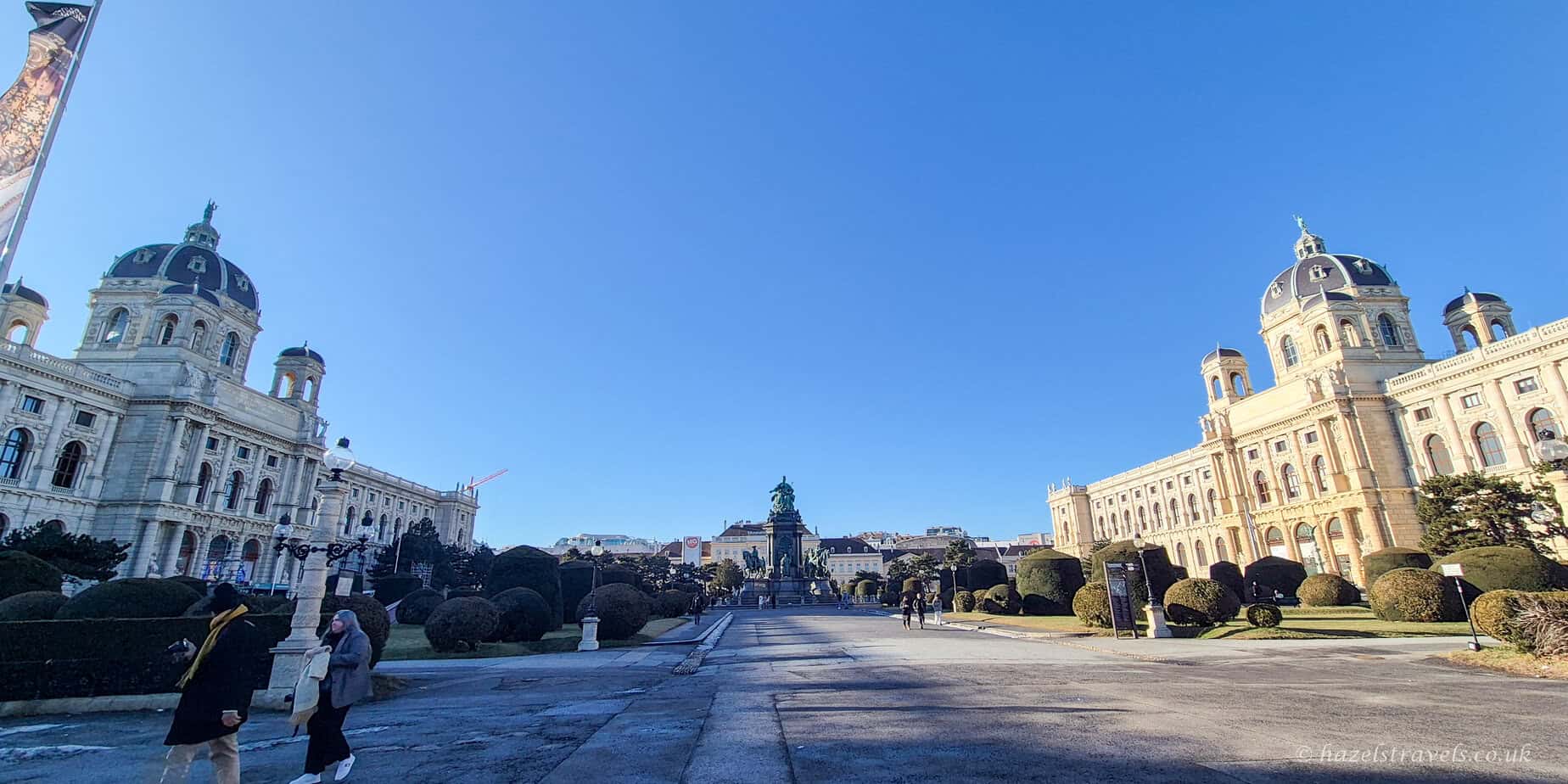
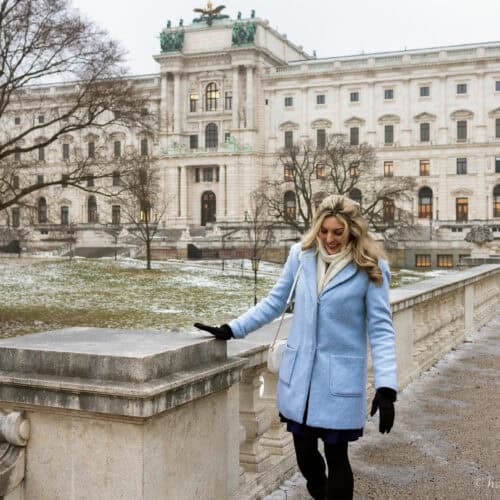
If it’s your first time in the city, here’s something useful to know: the Kunsthistorisches Museum and the Natural History Museum sit opposite each other in Maria-Theresien-Platz… and they look almost identical.
Helpful tip: the art museum is on the left. The dinosaurs are on the right.
Once I made it into the correct building, though, the day took a much better turn.
I may earn a small commission if you make a purchase using my affiliate links.
I’m Hazel, a solo traveller from the UK, and I spent a winter day inside the Kunsthistorisches Museum Vienna, completely losing track of time. I booked my ticket online beforehand, which was slightly cheaper, although you still need to scan it at the entrance.
If you’re planning a visit, these are the Kunsthistorisches Museum Vienna highlights that stood out to me most.
First Impressions: Slightly Speechless
The interior is… a lot. In a good way.
Marble everywhere. Painted ceilings. Huge staircases. Statues casually hanging out on every landing. I genuinely didn’t know where to look first. It felt like being dropped inside a very glamorous history book.
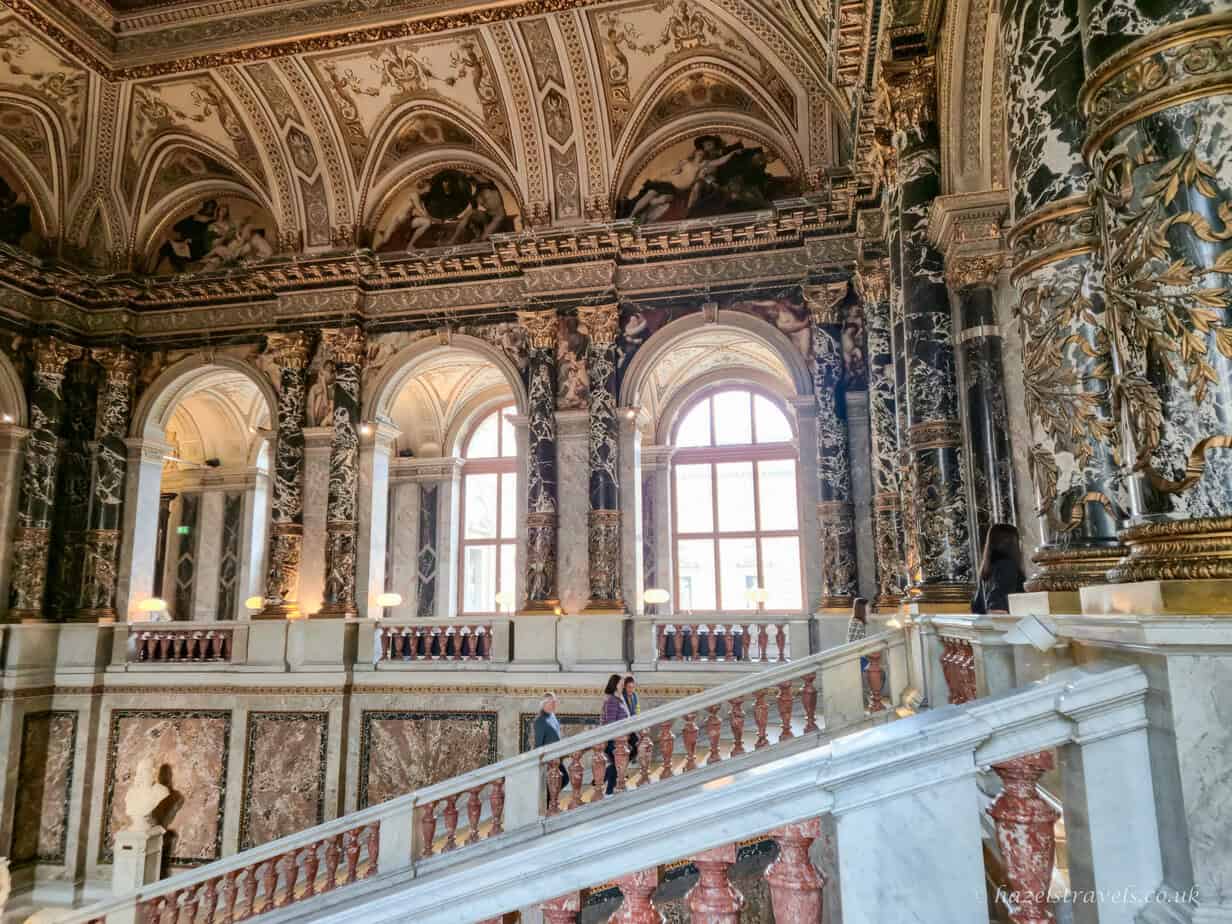
I spent a solid chunk of time just standing on the main staircase taking photos before I even reached the paintings. Honestly, the building alone is worth the entrance fee.
Look up while you’re there. The ceiling includes early work by Gustav Klimt, painted long before his famous gold phase. It’s easy to rush toward the galleries, but the architecture and decoration are very much part of the experience.
👉 Looking for Gustav Klimt’s The Kiss? That masterpiece is in the Belvedere Palace, and I’ve covered it in my Vienna Highlights Guide.
The Kunsthistorisches Museum has enormous collections: Imperial armour, musical instruments, coins, Egyptian artefacts, and Roman antiquities.
But I came for the paintings.
Pieter Bruegel the Elder: Tiny Details, Big Impact
The Kunsthistorisches Museum holds one of the largest collections of Bruegel’s work in the world.
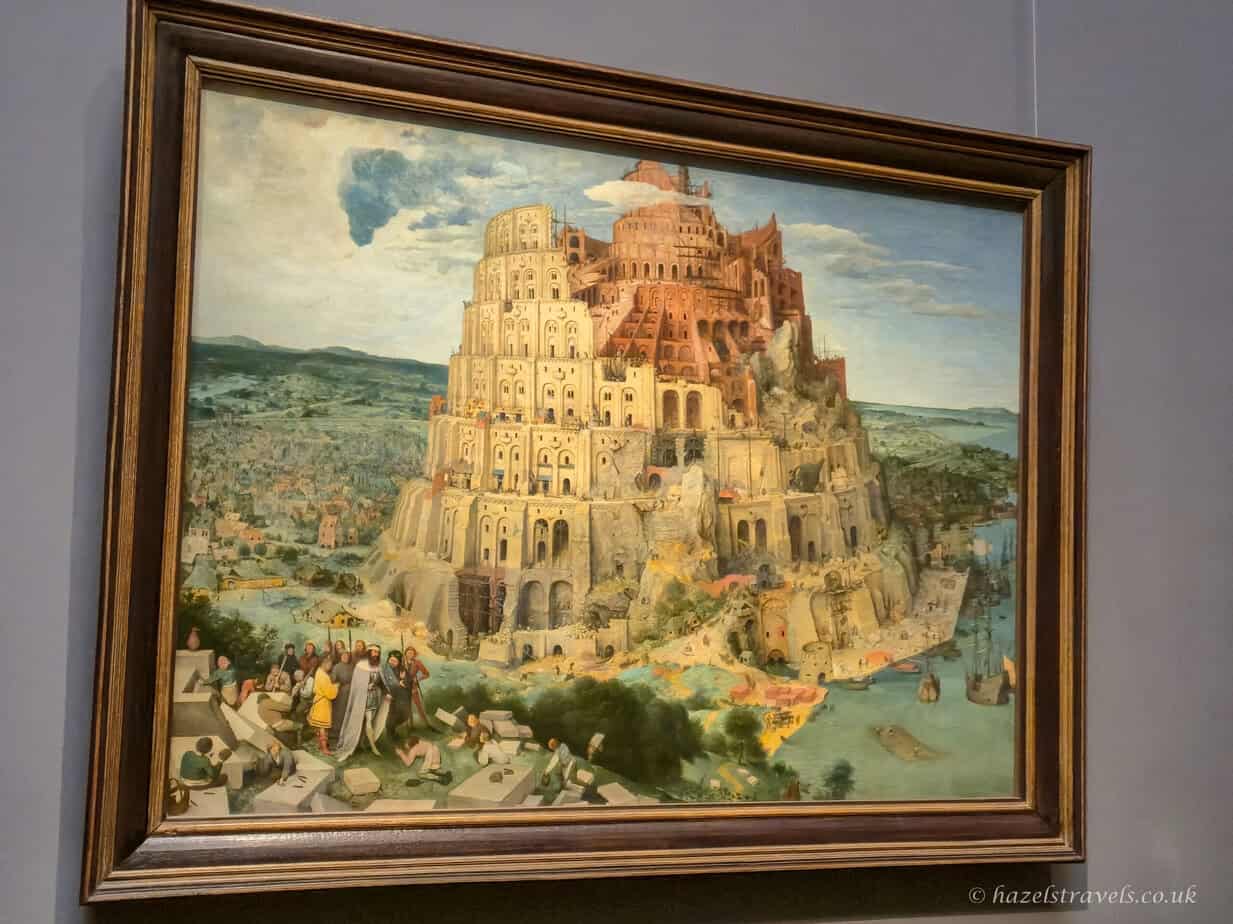
Seeing The Tower of Babel in real life was slightly surreal. The spiralling tower dominates the landscape, rising impossibly high above the surrounding city. Tiny workers swarm across the construction site below, hauling stone blocks and clambering over scaffolding. I kept stepping closer to the canvas just to catch more of the details.
Like many of Bruegel’s paintings, it rewards patience. The longer you look, the more you notice: cranes lifting stone, ships arriving in the harbour, people going about their daily lives beneath this wildly ambitious project.
And The Tower of Babel is just one highlight. The museum holds lots of Bruegel paintings, including:
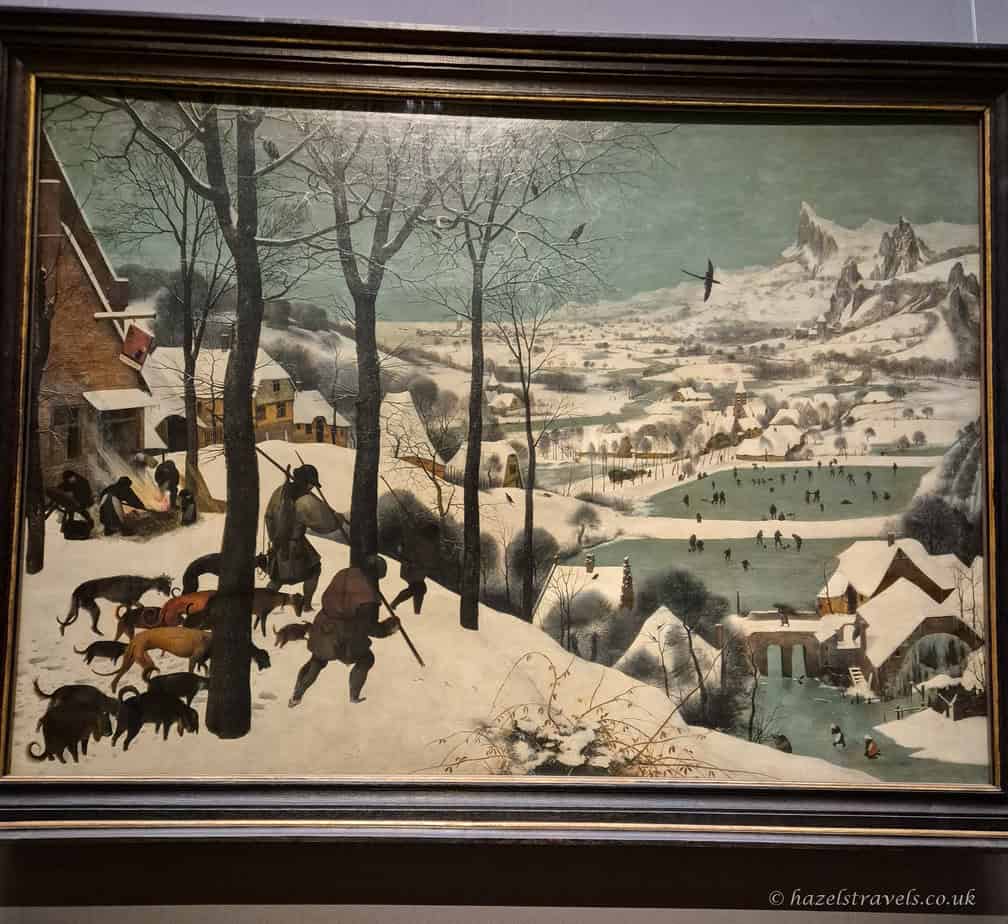
- Hunters in the Snow
- Children’s Games
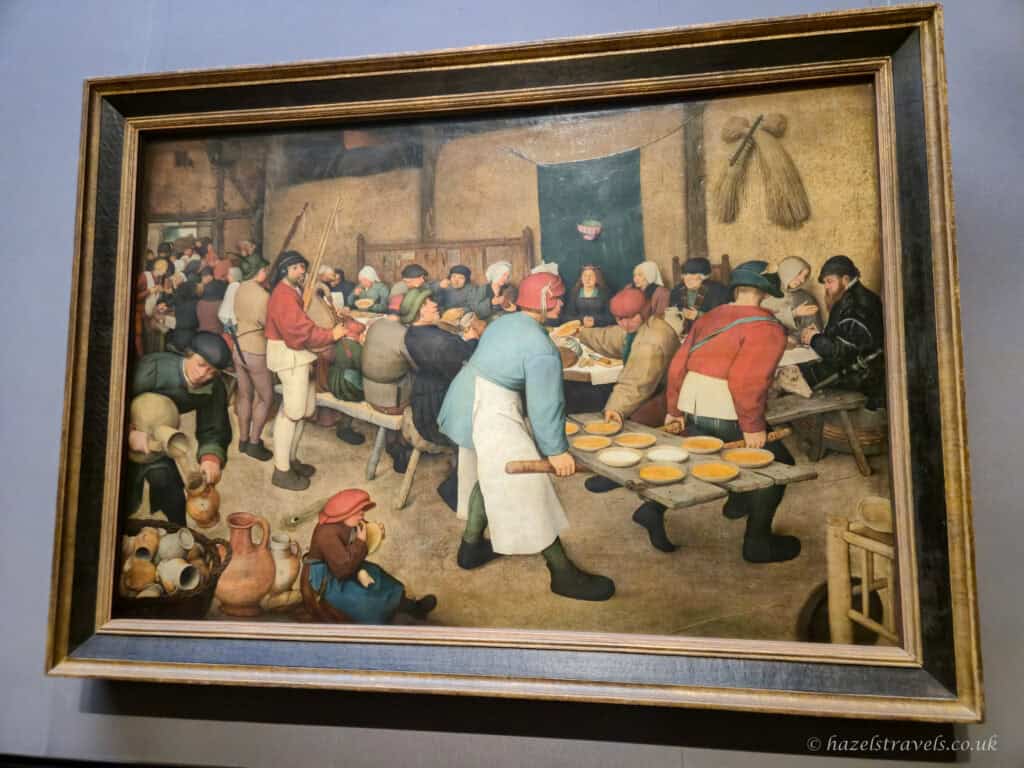
- Peasant Wedding
- The Conversion of Paul
Children’s Games really stuck with me. There are so many little scenes happening at once, and so many of them still feel oddly familiar. It’s strangely comforting to realise that centuries ago, children were basically playing the same chaotic games.
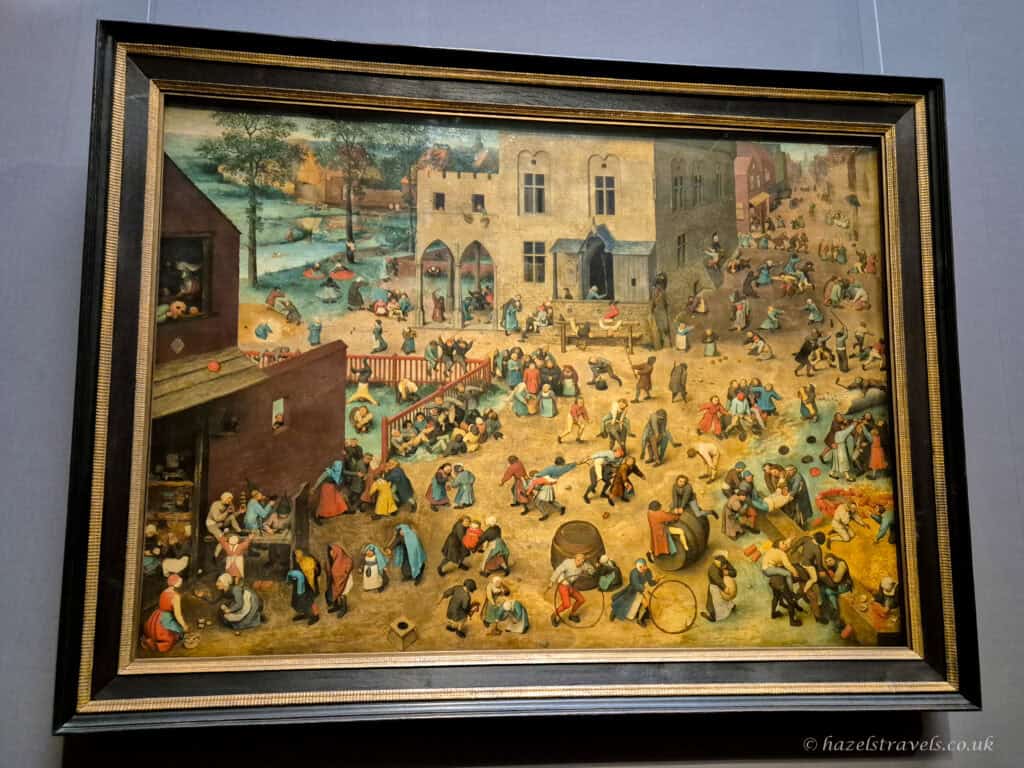
Bruegel is not a “quick glance” artist. The longer you stand there, the more you see.
Raphael, Rembrandt and Vermeer
It was my first time seeing a Raphael in person, which felt like a small life milestone.
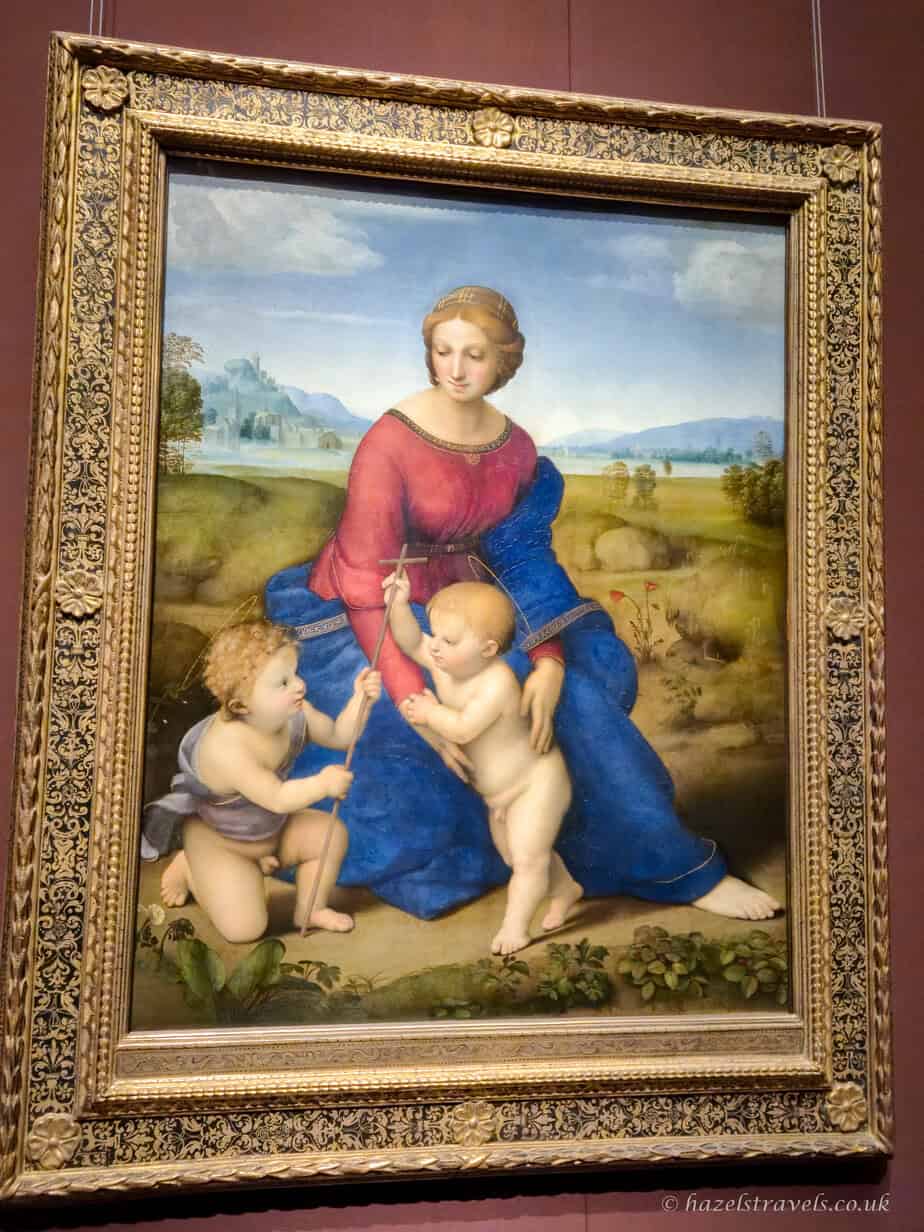
The Madonna of the Meadow has that calm, balanced composition that just works. Soft colours, gentle expressions, everything in harmony. I’ve somehow missed seeing a Raphael at the Louvre on two separate visits, so this felt like I was finally ticking something off (I wrote more about that in my Guide to Louvre Highlights).
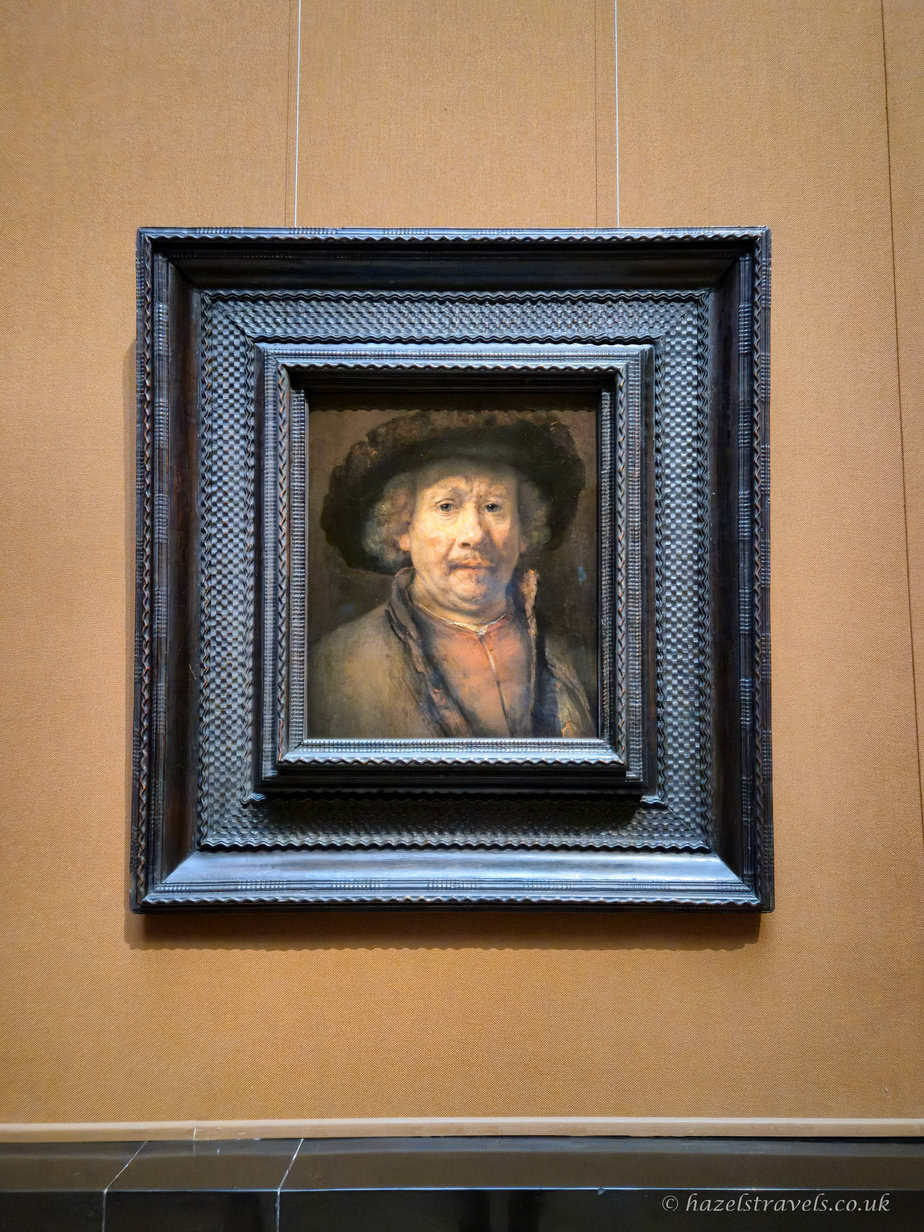
Rembrandt’s Small Self-Portrait was much quieter, but incredibly powerful. His face feels real, unpolished, ageing. There’s something deeply human about standing in front of someone who painted themselves so honestly.
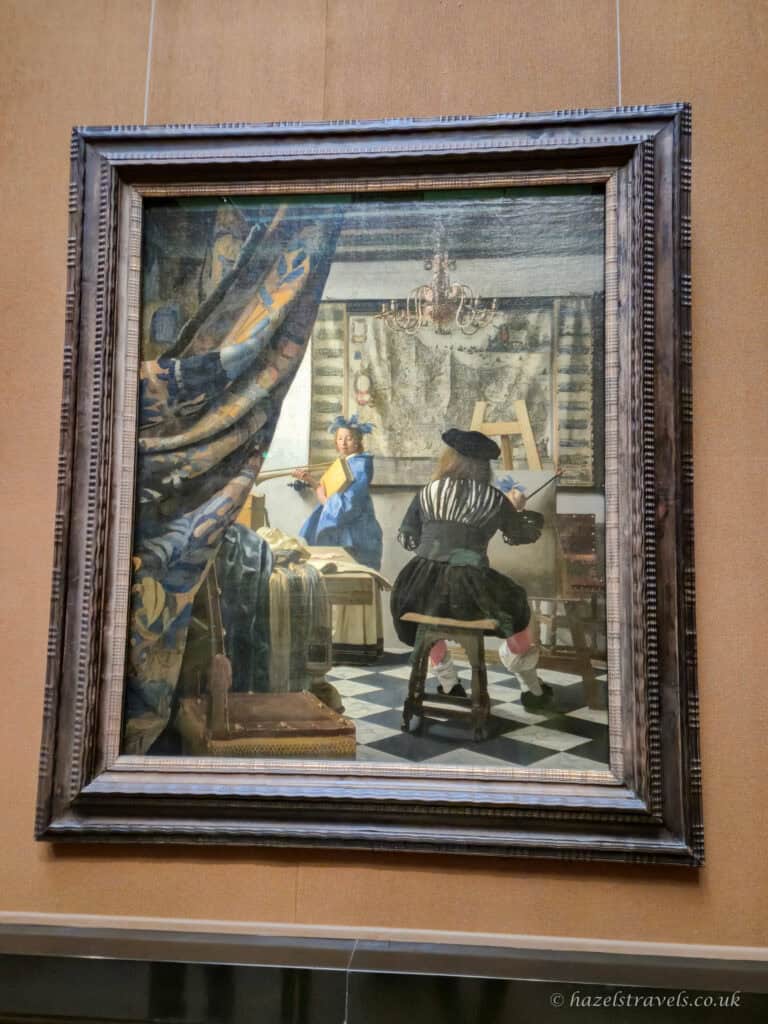
And then there’s Vermeer’s The Art of Painting. The light. The detail. The careful composition. It feels intimate and controlled at the same time. I found myself leaning in closer than usual, like that might somehow reveal the secret.
Bacchus, But Make It Defiant 🍷
One painting I almost missed entirely was Der Triumph des Bacchus by Michaelina Wautier. It was guarded, one-way, and slightly mysterious. I never managed to find the proper entrance, so I viewed it from a distance like an art-world rebel. Museum logistics can sometimes be as confusing as Renaissance allegory.
The painting itself is unapologetically theatrical. A reclining Bacchus crowned with vines, surrounded by muscular attendants, swirling drapery and just enough chaos to keep your eyes busy.
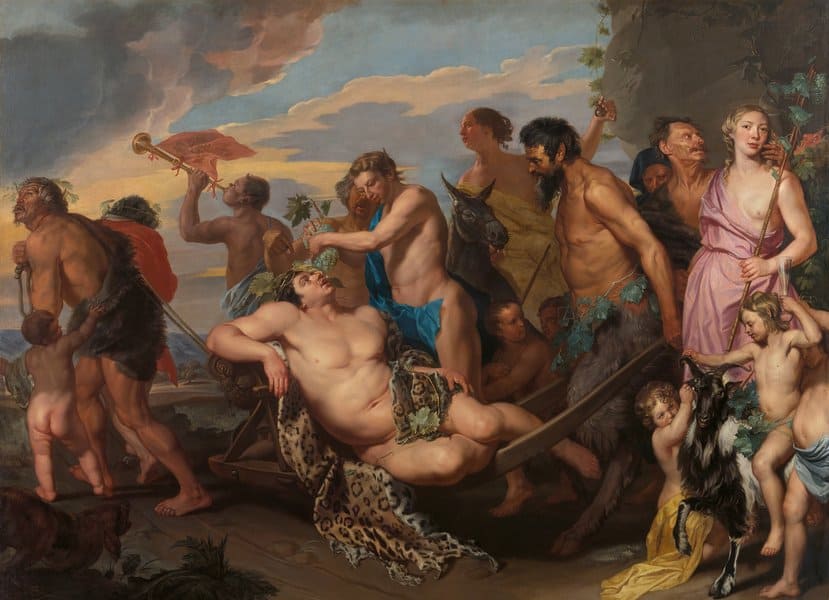
And then you notice the woman on the right. She’s the only one in pink. The only one not distracted by the revelry. She is slightly detached, meeting the viewer’s gaze while the chaos unfolds around her.
It turns out she’s not just another Bacchant. She’s Michaelina Wautier herself. A 17th-century woman artist placing her own likeness inside a large-scale Bacchic revel in the 1650s feels audacious. Almost defiant. She’s there, but not consumed by it.
Caravaggio: Drama in the Dark 🔪
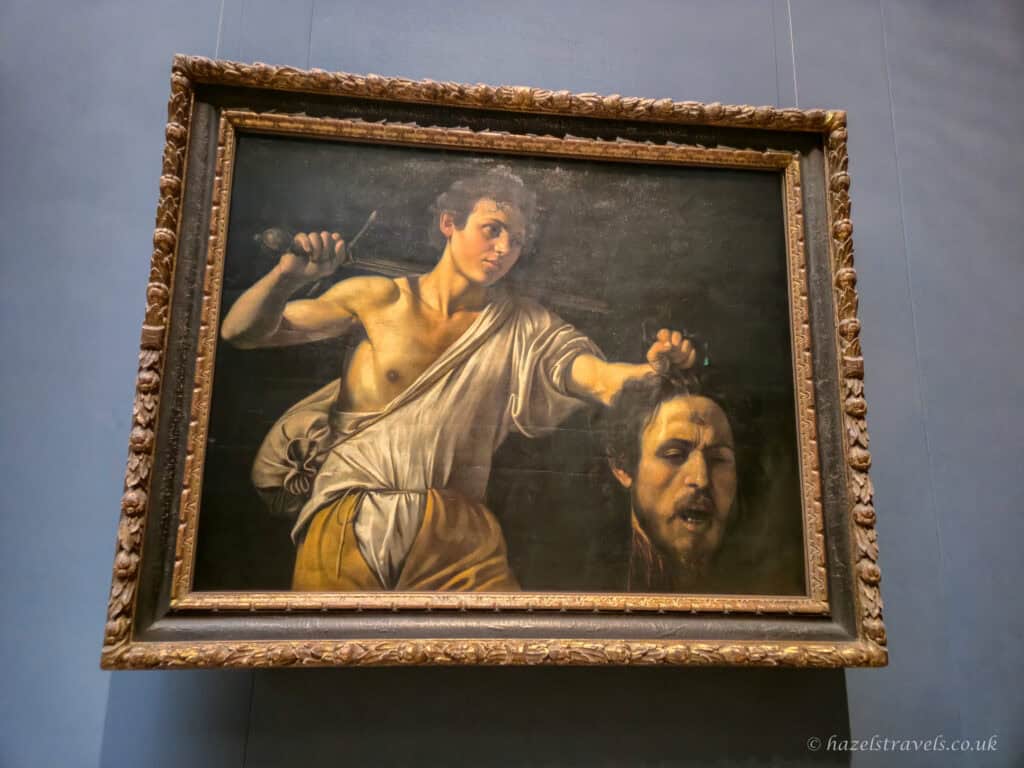
Caravaggio’s David with the Head of Goliath is impossible to ignore. The darkness, the severed head, the stark light cutting across David’s face. It feels confrontational. It pulls you in whether you’re ready or not. Subtle serenity is not his thing.
And then, just when I thought I’d settled into familiar Renaissance territory, things got strange.
Arcimboldo’s Four Seasons & Four Elements: Renaissance Surrealism 🍇🔥
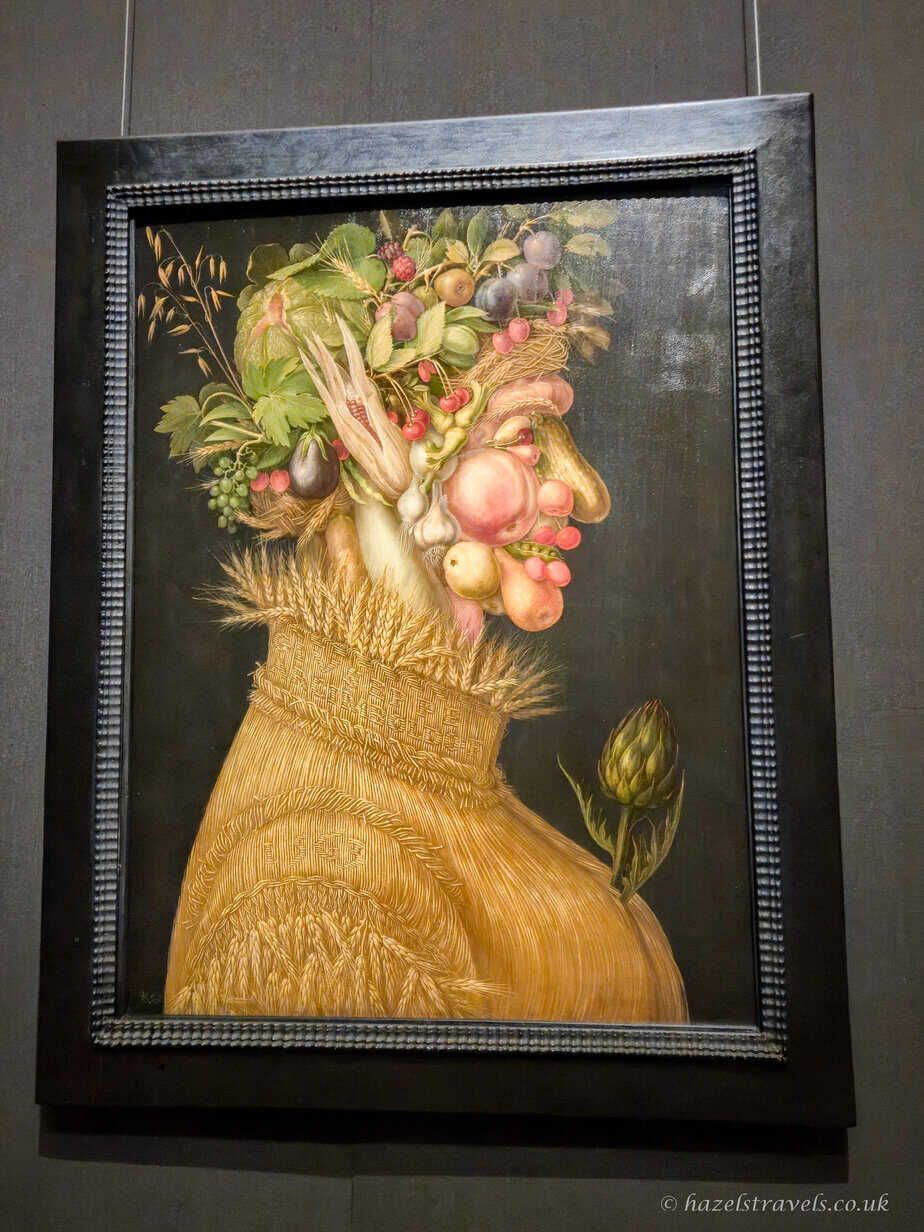
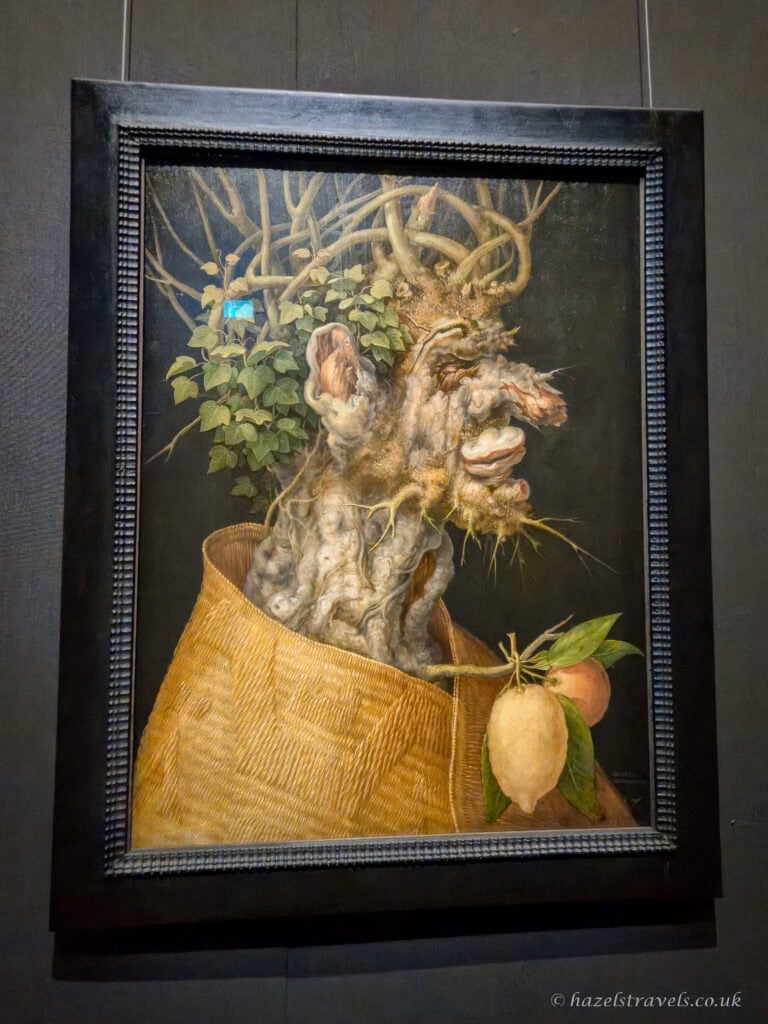
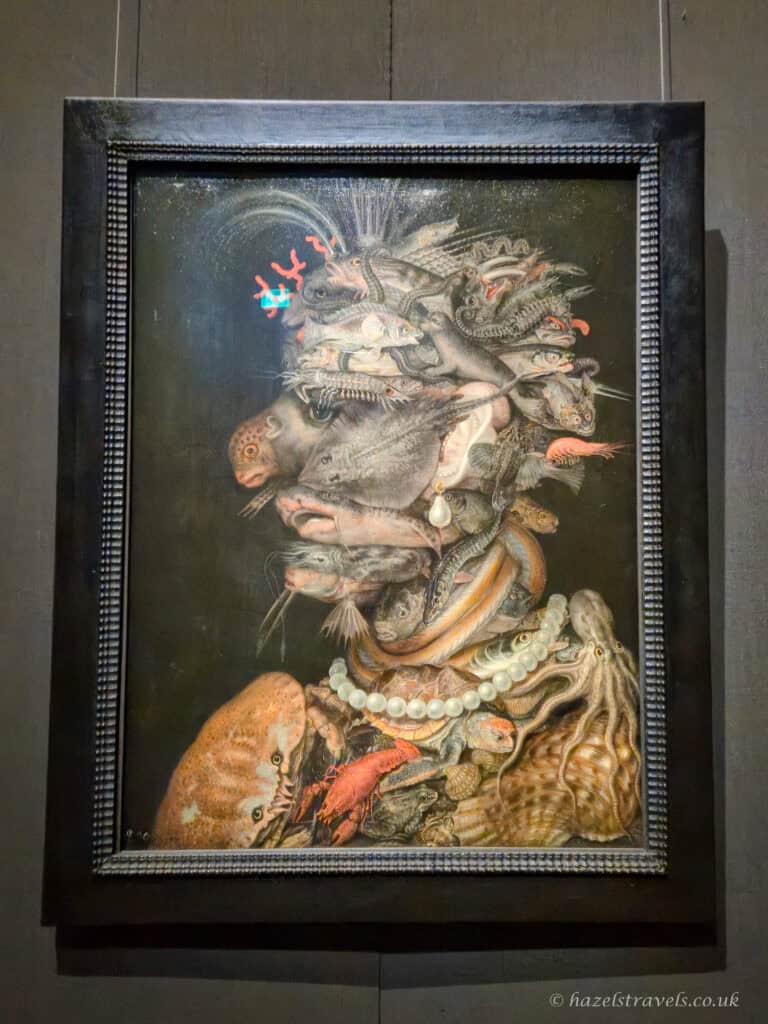
Giuseppe Arcimboldo’s Four Seasons and Four Elements paintings completely surprised me. They are faces made entirely from natural objects, and yet somehow your brain clicks them into a portrait instantly.
The two Seasons in the Kunsthistorisches Museum, Summer and Winter, are built entirely from plants and produce linked to their respective season. There isn’t a trace of painted skin anywhere, just leaves, wheat, fruit and bark arranged with almost surgical precision.
The two Elements in Kunsthistorisches Museum Vienna are Fire and Water.
Water is marine mayhem at its finest. Fish layered over fish, eels twisting into cheeks, shells and coral tucked into the composition, even a pearl earring formed from the sea. It’s an underwater pile-up that somehow resolves into a calm, dignified profile.
Fire is sharper and more aggressive, constructed from burning wood, candles and weaponry. All flicker and heat, it feels like the opposite of Water’s fluid complexity.
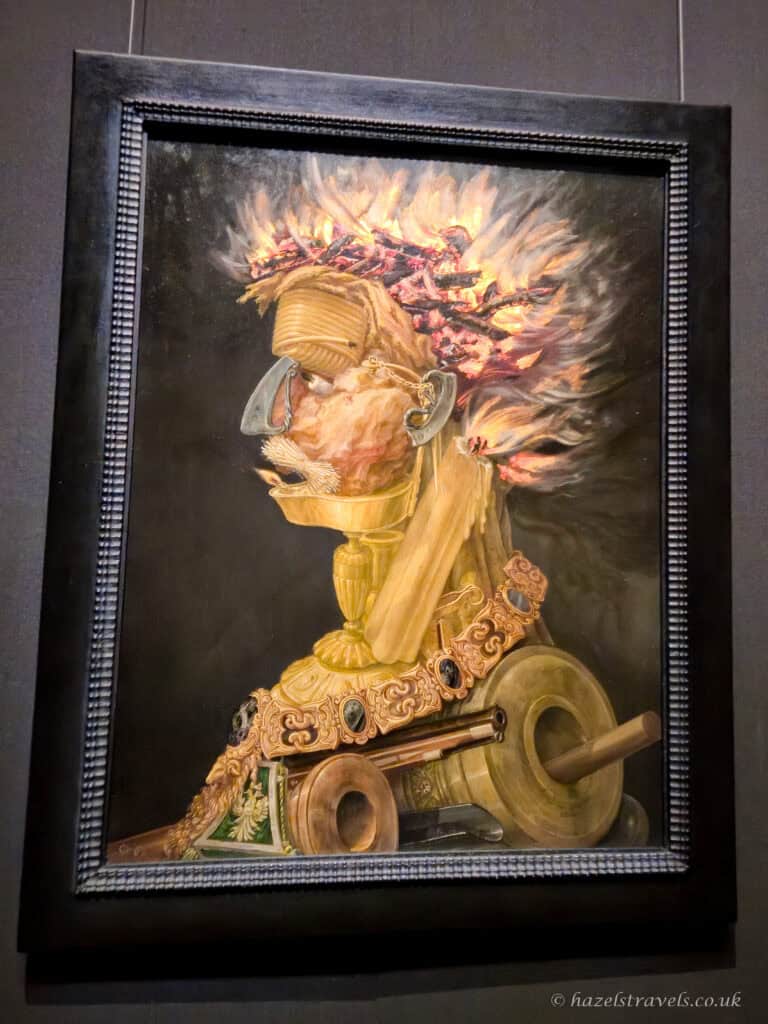
They feel weirdly modern, surreal before surrealism was even a thing.
The four paintings are displayed in a small area that gets crowded, but they’re more than worth the shuffle.
The Flower Room 🌸
I wandered into what I initially assumed was “the flower vase section” and quickly realised it was far more interesting than that.
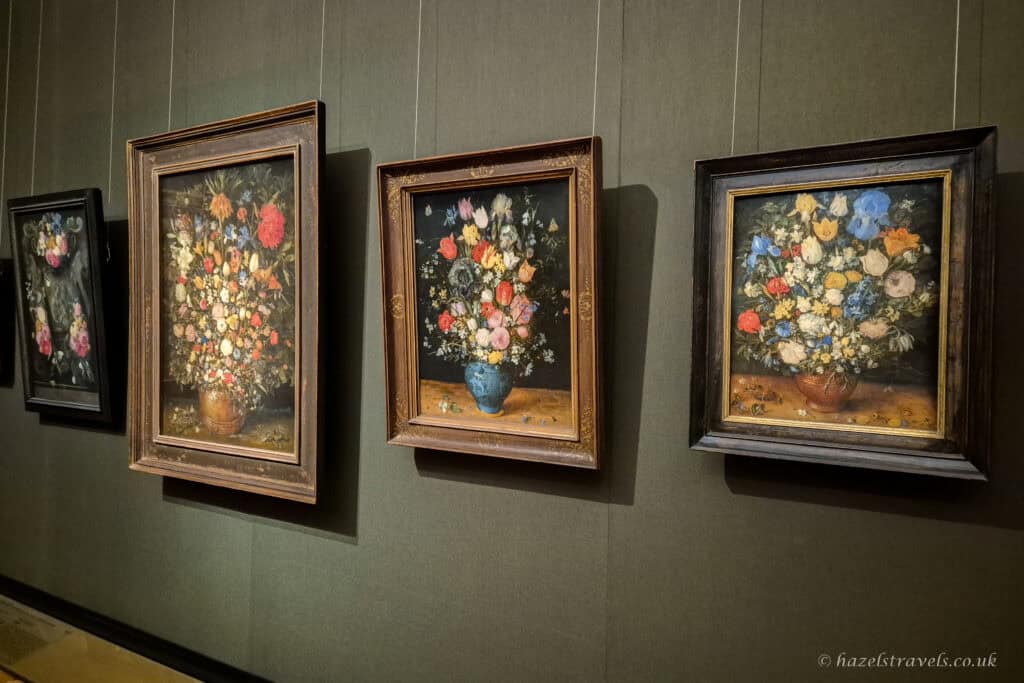
Jan Brueghel the Elder’s Bouquet in a Wood Vase was a highlight. The level of detail is outrageous. Insects crawling across petals, fallen blossoms on the table, flowers that would never bloom in the same season somehow coexisting perfectly. They’re not just decorative. They’re meticulous.
I actually assumed all the elaborate flower vases were by the same artist. They weren’t. The room quietly reveals a competition of sorts, Jan Brueghel’s jewel-like precision, Rachel Ruysch’s dramatic depth, Jan van Huysum’s theatrical abundance. It’s a masterclass in how many ways you can paint the same subject and make it entirely your own.
Unexpected Favourites
Not all my favourite moments were the obvious big names.
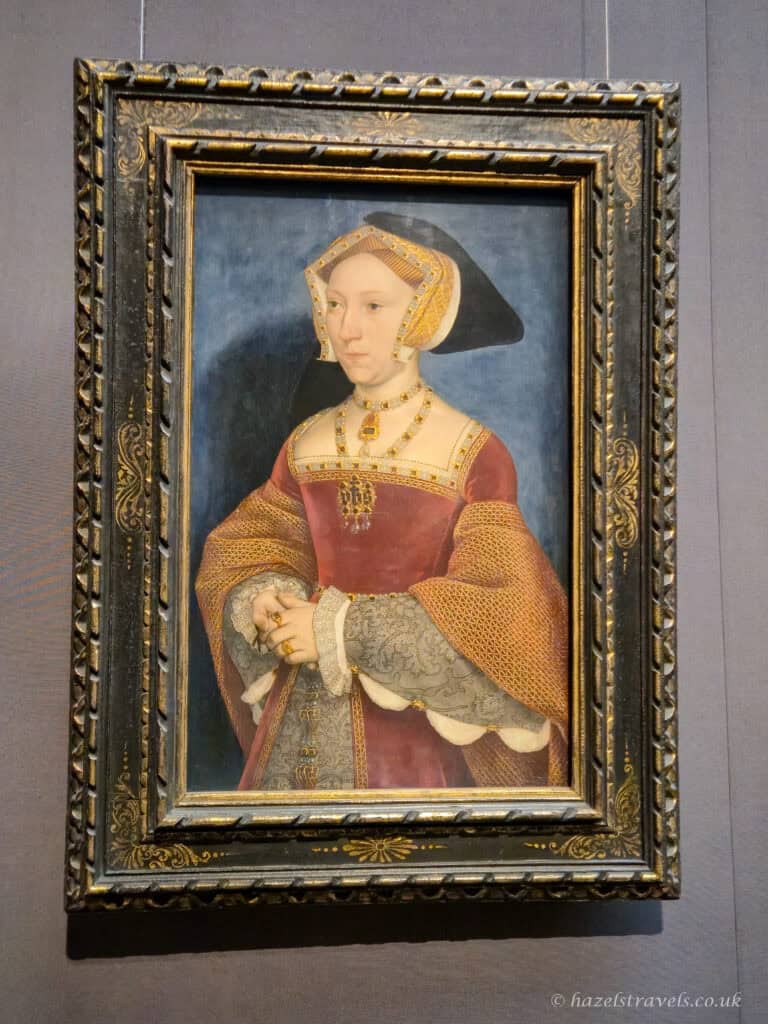
Holbein’s portrait of Jane Seymour hit a personal history nerve. As someone who has read far too much about Henry VIII, it was strange to stand in front of the image that helped shape royal history.
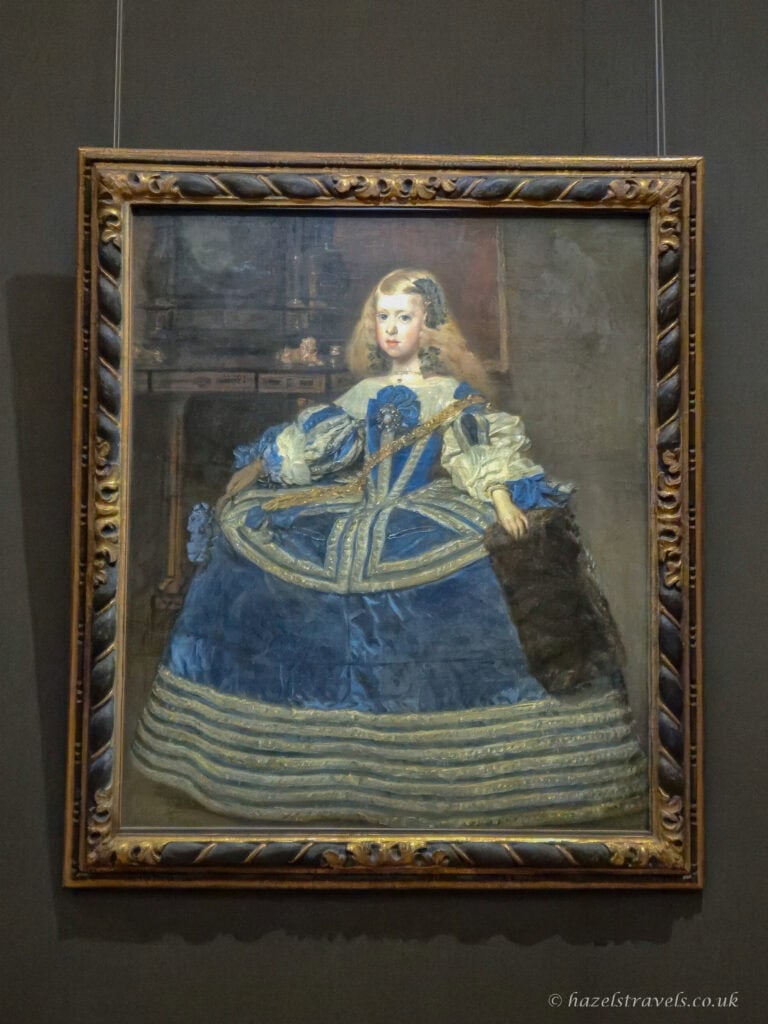
I also paused in front of Velázquez’s Infanta Margherita in a Blue Dress for longer than expected. I still can’t fully explain why. Sometimes a painting just stops you. That particular one changes as you move around the room.
Federico Barocci’s Portrait of Monsignor Giuliano della Rovere unsettled me more than I expected. The faint, almost hollow smile. The heavy black and grey veil. The diagonal lines pulling your eye across the canvas. It’s technically beautiful, but slightly eerie.
Lucas I van Valckenborch’s Winter Landscape drew me in too. The tiny falling snowflakes and the busy scene feel almost modern from a distance.
A Minor Museum Eye-Roll 🙄
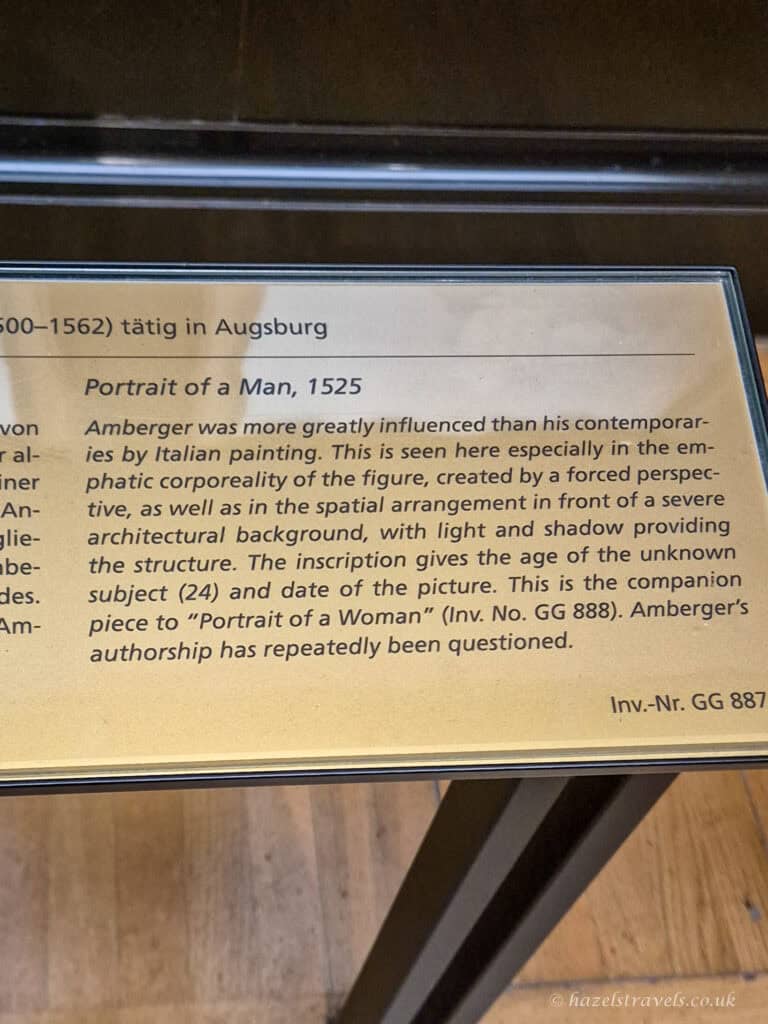
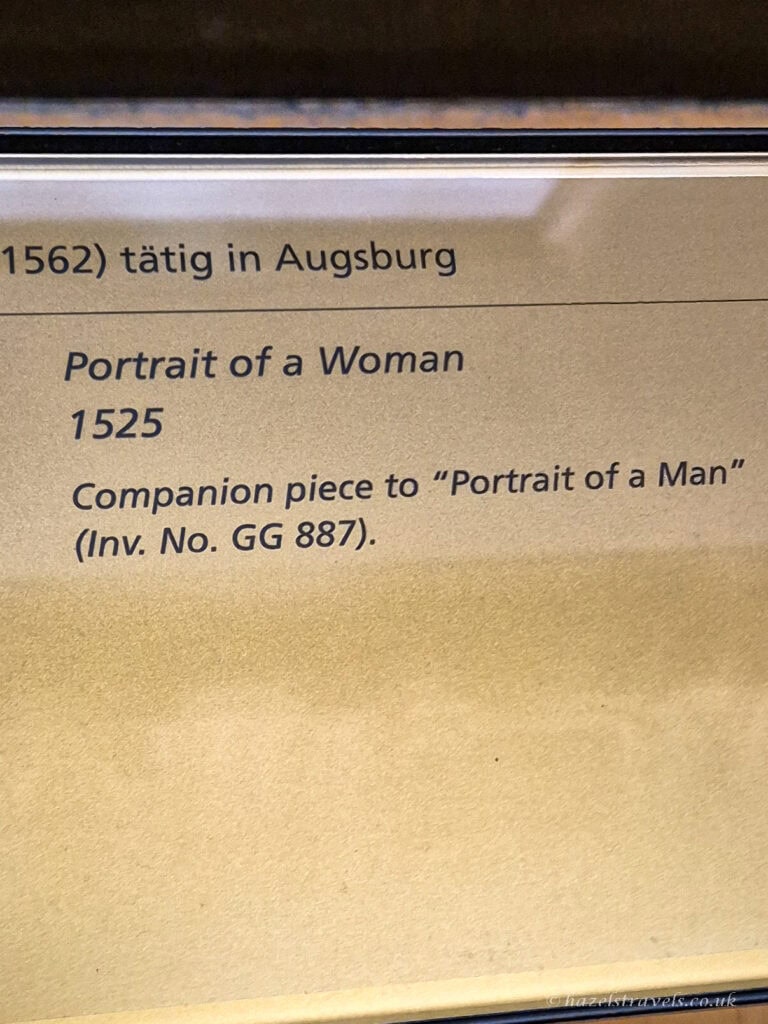
One minor eye-roll moment: the twin portraits attributed to Amberger. The Portrait of a Man had a full explanation panel. The Portrait of a Woman, labelled as the companion piece, had almost no information at all. Of course.
Practical Notes for Visiting
I skipped the audio guide and just read the plaques, occasionally googling extra context when curiosity won.
I spent around three hours in the painting galleries alone.
After lunch, I optimistically tried to explore the coin and instrument collections… and quickly accepted defeat. Museum fatigue is real.
If art is your main focus, head straight to the picture gallery first. The museum is enormous, and you won’t see everything in one visit unless you have superhero stamina.
One unexpected soundtrack to the afternoon was the museum alarm system. It went off constantly as visitors leaned too close to the paintings or tapped the plaques. It must have gone off at least fifteen times when I was there. Consider this a gentle public service announcement: don’t touch the plaques.
The Café: Worth the Queue
The café inside the museum deserves its own moment.
Yes, I queued for about twenty minutes. Yes, it was worth it.
I ordered tea, and Viennese sausages with goulash, and Kaiserschmarrn (both Viennese specialities – read more in my Guide to Vienna Food).
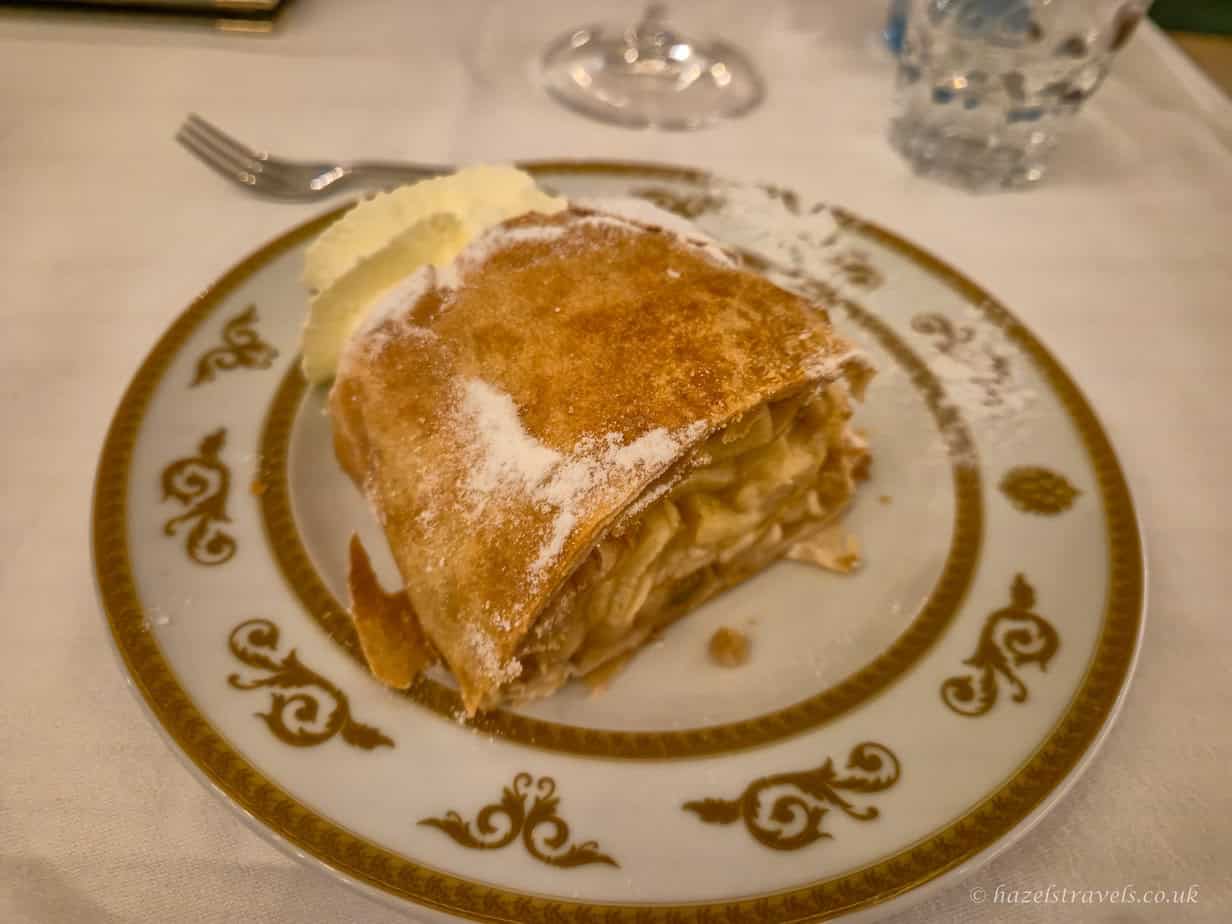
Sitting under those painted ceilings eating lunch felt faintly surreal. At one point, I was even given a complimentary slice of cake just because. No complaints.
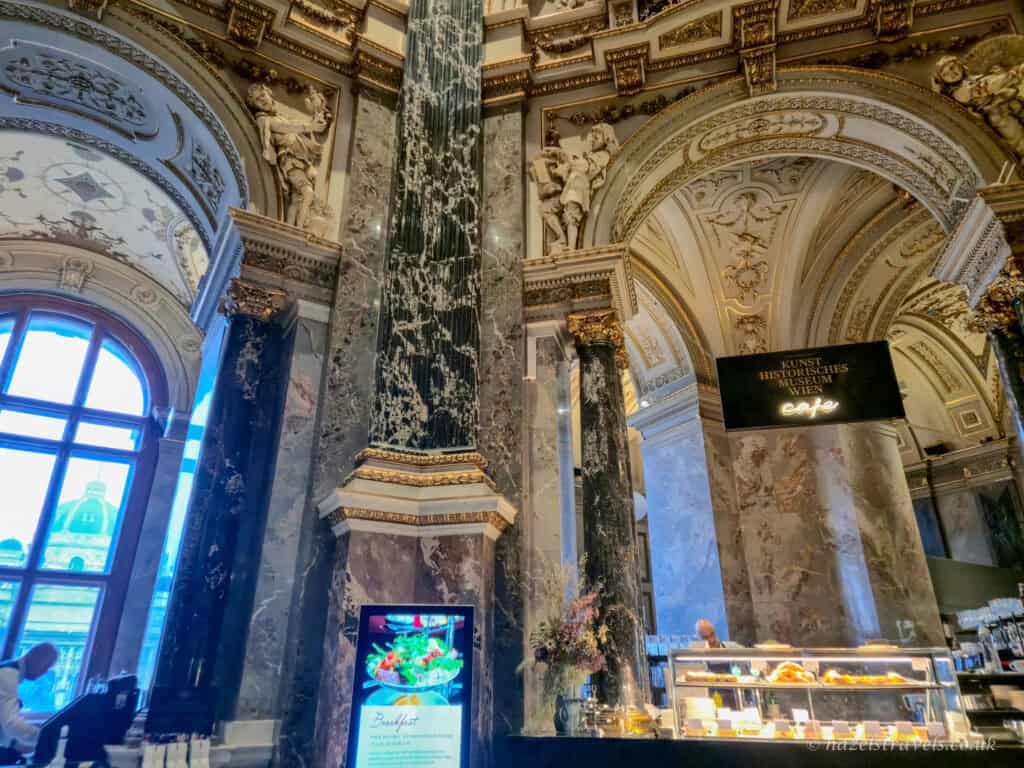
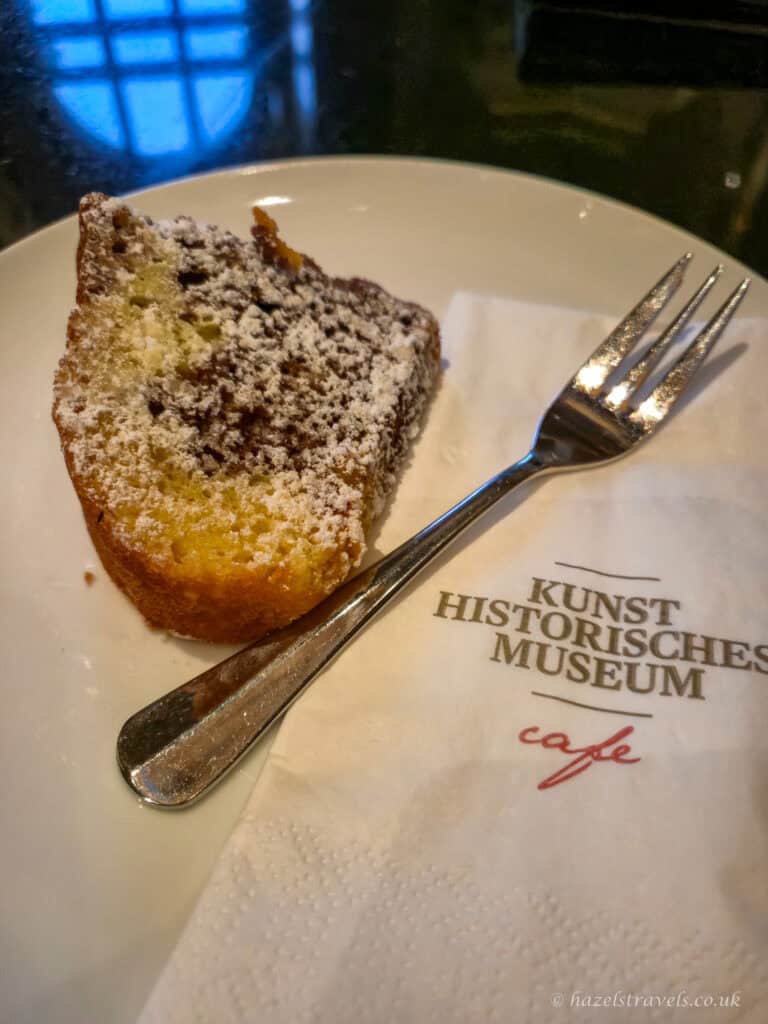
If you can, time your visit to include a break here. It’s part of the experience.
👉 If you’re interested in Vienna’s café culture beyond the museum walls, I’ve also written about the famous Vienna coffee houses I visited (and what they’re really like).
Is the Kunsthistorisches Museum Worth It?
Very much so.
Even if you’re not an art historian. Even if you only have a few hours. Even if you feel slightly overwhelmed at first.
It’s one of those museums where the building and the collection compete for your attention, and somehow both win.
Go early. Pick your highlights. Take breaks. Accept that you won’t see everything.
Just double-check you’re walking into the right museum.
FAQs About Visiting the Kunsthistorisches Museum 💡
Planning a visit to Vienna’s most famous art museum? Here are a few practical things to know before you go.
How long do you need at the Kunsthistorisches Museum?
You could easily spend half a day here. I spent around three hours just in the painting galleries and still didn’t make it through every collection. If you want to explore armour, antiquities and decorative arts as well, allow at least four to five hours.
Is the Kunsthistorisches Museum worth visiting if you’re not an art expert?
Yes. You don’t need an art history degree to enjoy it. The building alone is spectacular, and if you focus on a handful of highlights rather than trying to see everything, it feels far less overwhelming.
Should I book tickets in advance?
Booking online is slightly cheaper and saves queue time at the entrance. You still need to scan your ticket when you arrive, but the process is straightforward.
What are the must-see paintings at the Kunsthistorisches Museum?
If you’re short on time, head straight for Bruegel’s Tower of Babel, Vermeer’s The Art of Painting, Caravaggio’s David with the Head of Goliath, Arcimboldo’s Four Seasons and Four Elements, and Michaelina Wautier’s Triumph of Bacchus.
Is the museum overwhelming?
It can be. The collections are vast, and it’s easy to hit museum fatigue. Start with the picture gallery, take breaks, and accept that you won’t see everything in one visit.
Is the café inside the Kunsthistorisches Museum worth it?
Yes. Even if you just stop for coffee, sitting beneath those painted ceilings feels like part of the experience. Expect a short wait during busy periods.
Related Reading About Vienna and European Art 📚
If you enjoyed this deep dive into Vienna’s art scene, you might also like:
🎨 The Best European Cities for Art: A Solo Traveller’s Guide – My favourite art cities across Europe, from Renaissance masters to modern galleries.
🖼️ 10 Louvre Highlights: What to See (and What I’ve Seen So Far) – The paintings and moments that stood out to me inside Paris’s most overwhelming museum.
👑 Inside Schönbrunn Palace: Is the After Hours Tour Worth It? – Vienna’s imperial side, chandeliers and all.
🎭 What I Learned on a Shoreditch Street Art Tour – A very different kind of art experience, and why it surprised me.
🇦🇹 More Things to Do in Vienna – The main highlights of Vienna, and what not to miss.
Pin This for Later 📌
Planning a trip to Vienna? Save this guide to the Kunsthistorisches Museum so you’ve got all the highlights in one place.
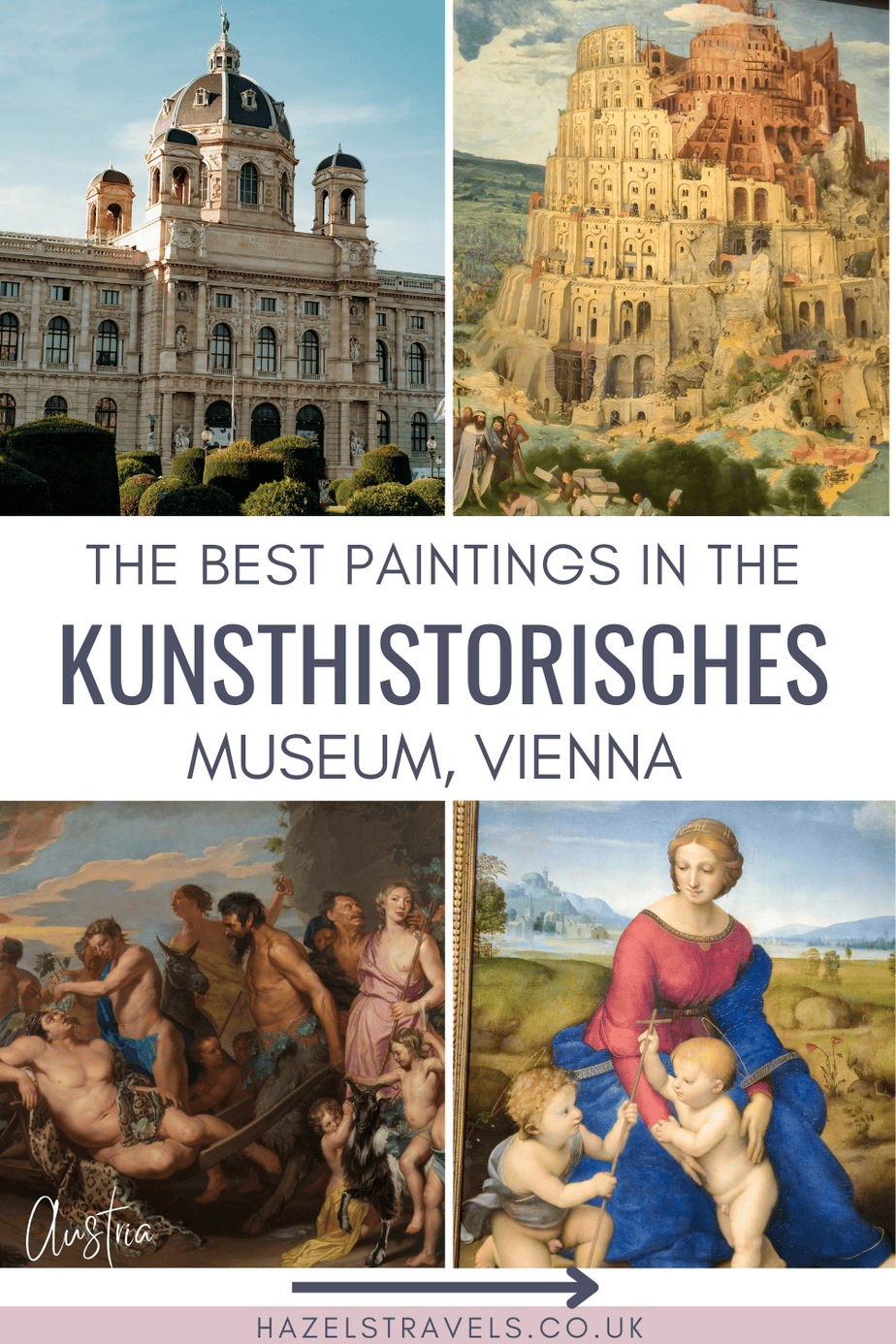
Pin it to your Vienna, Austria travel, or European art cities board and come back to it when you’re mapping out your trip.
👉 Looking for practical travel tools? Check out my Travel Resources page.
Tags: Art, Museums, Vienna
Leave a Reply