Schönbrunn Palace in Vienna is far more than a single palace building. It’s gardens, museums, glasshouses, performances, and even a zoo, all spread across an enormous complex.
I may earn a small commission if you make a purchase using my affiliate links.
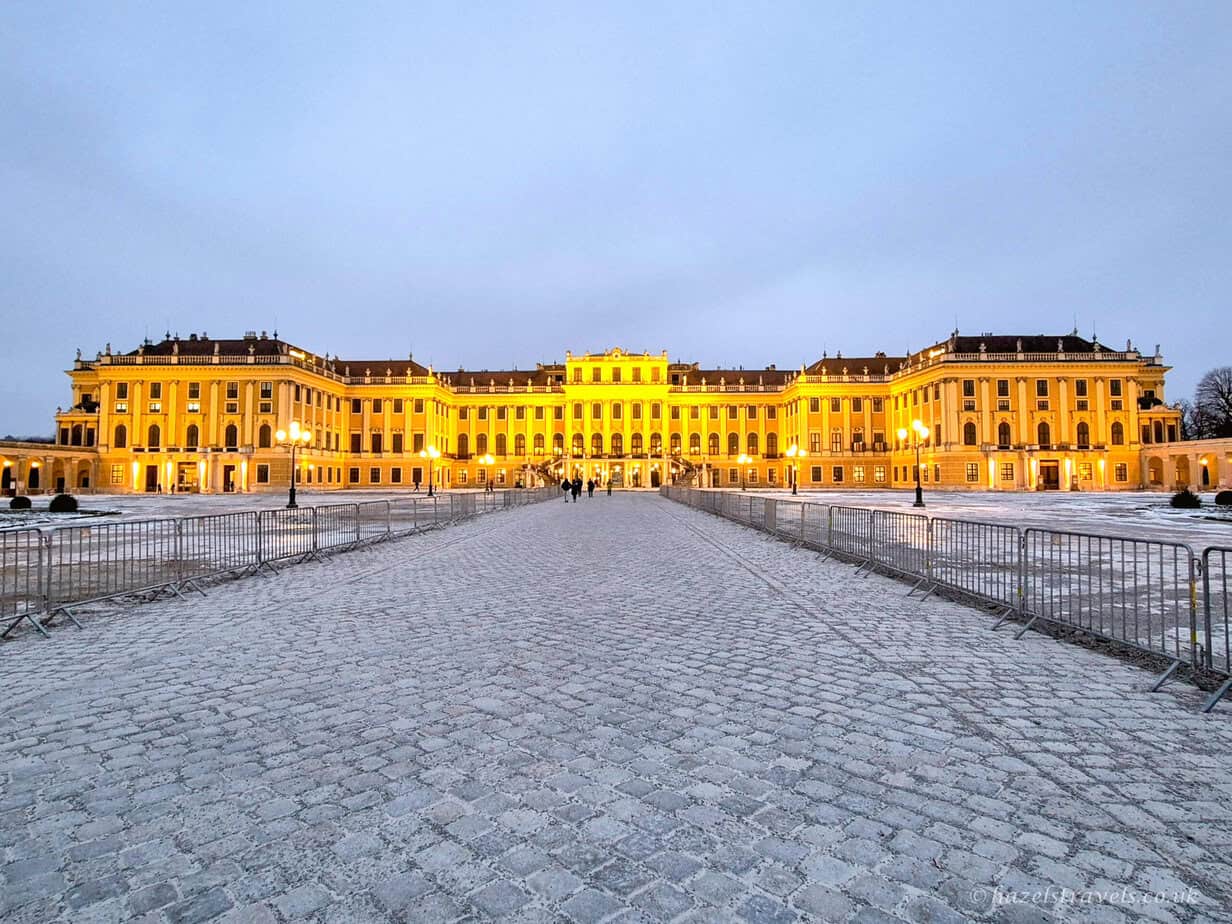
I’m Hazel, a British solo traveller and writer, and I visited Schönbrunn in winter, expecting to spend a couple of hours there before heading back into central Vienna. Instead, I stayed all day, from early snowfall to after-dark tours – and realised very quickly how much I had underestimated it. It is not a quick stop. It is a full experience.
There are things I’m glad I prioritised, and a few I wish I’d known more about in advance.
If you’re planning a visit to Schönbrunn, it helps to understand what’s actually inside the grounds, what’s worth prioritising, and what can wait for another season (or another trip).
Here’s a list of things to do at Schönbrunn Palace, and what I’d do differently next time.
The Palace Interior
This is the main event.
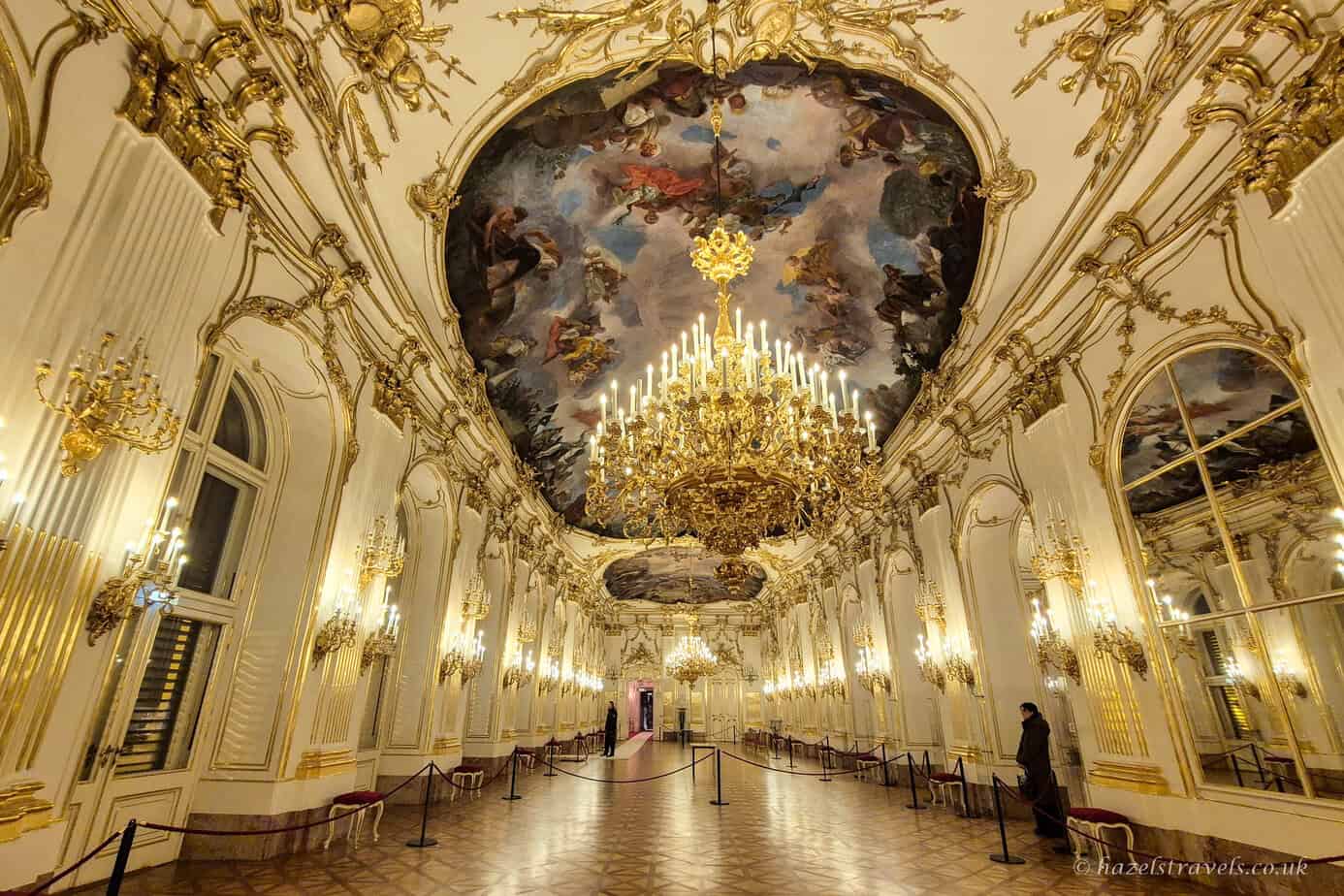
Inside, you’ll move through state rooms dripping in chandeliers and gold leaf, Sisi’s surprisingly delicate apartments, and the bedroom where Emperor Franz Joseph died (yes, the actual bed is still there, and it’s slightly surreal standing in front of it).
There are different ticket routes available, from shorter tours to the more extensive Grand Tour. Timed entry is standard, so booking ahead is wise.
If you want something more unusual, look into after-hours experiences. Walking through the palace once it has closed to the public feels completely different – quieter, stranger, and oddly intimate.
👉 Read about my experience of the Schönbrunn Palace After Hours Tour.
The Imperial Carriage Museum
This is the one that surprised me most.
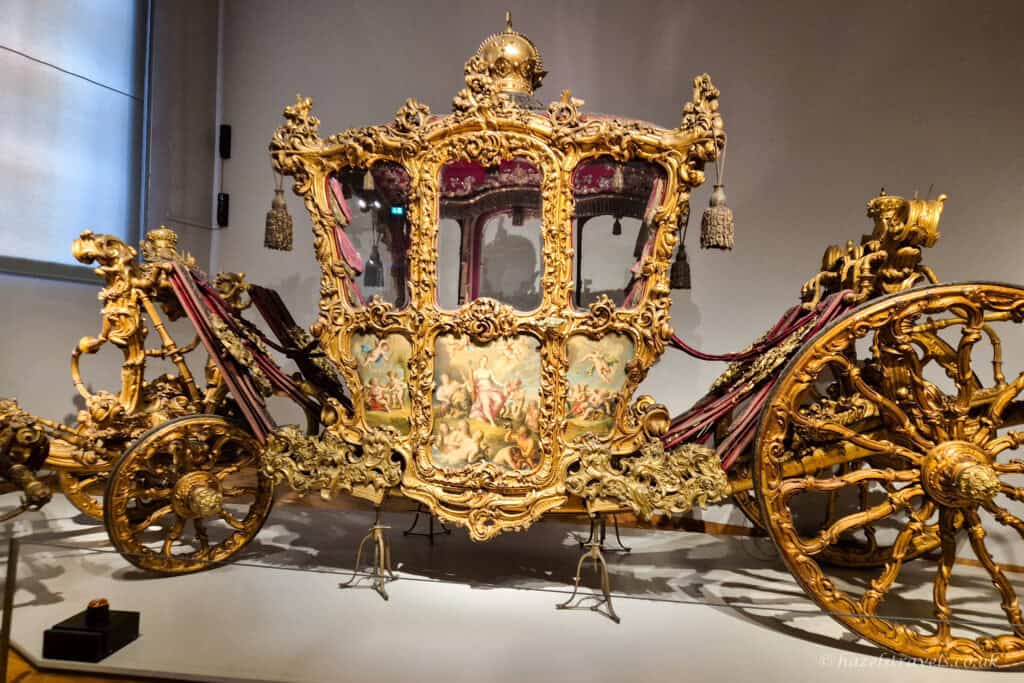
The Imperial Carriage Museum isn’t just a few decorative vehicles lined up for show. It houses the real ceremonial carriages used by the Habsburg court, heavy and ornate and slightly absurd in their grandeur.
There are uniforms, dresses, and enough velvet to wallpaper a small country. You also learn a lot about the empress Sisi, whether you intended to or not. It’s fascinating.
And then – inexplicably – there is a Formula Renault race car at the end. I’m a motorsport fan, so I stood there grinning like a child. It’s not what you expect in a Habsburg carriage museum, which somehow makes it better.
Entry is paid, but it’s well worth the time, especially if the weather turns cold or wet.
The Gardens (Free to Enter)
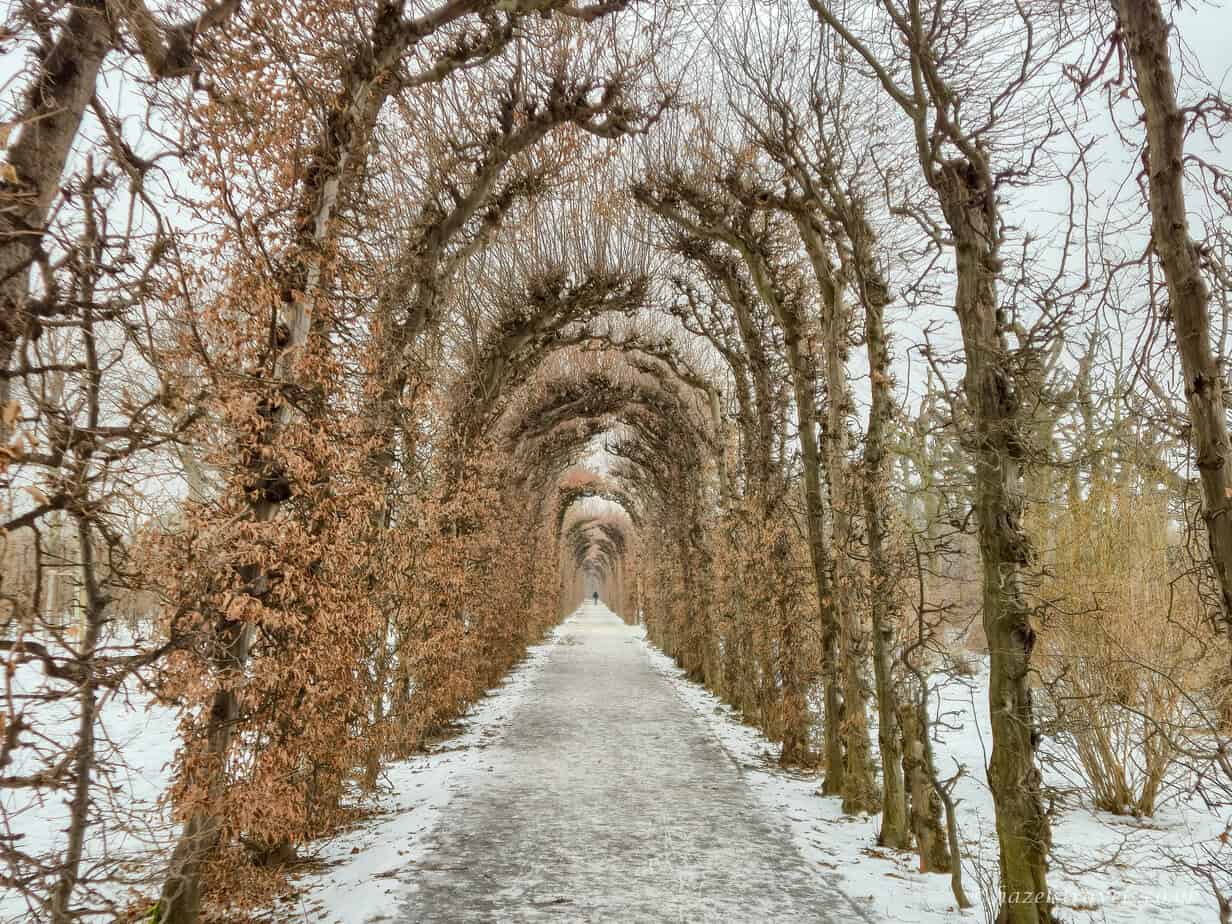
The formal gardens are iconic in spring and summer, with symmetry, fountains and sweeping lawns designed to impress. In winter, they are stripped back and dramatic.
Highlights include:
- The Neptune Fountain
- Sculptures lining the pathways
- The Orangery
The palace gardens themselves are free to enter and open to the public. Even if you skip everything else, walk the grounds. You can wander the main grounds without buying a palace ticket.
The Gloriette
The Gloriette sits at the top of the hill overlooking the palace grounds and is one of the most photographed features of Schönbrunn.
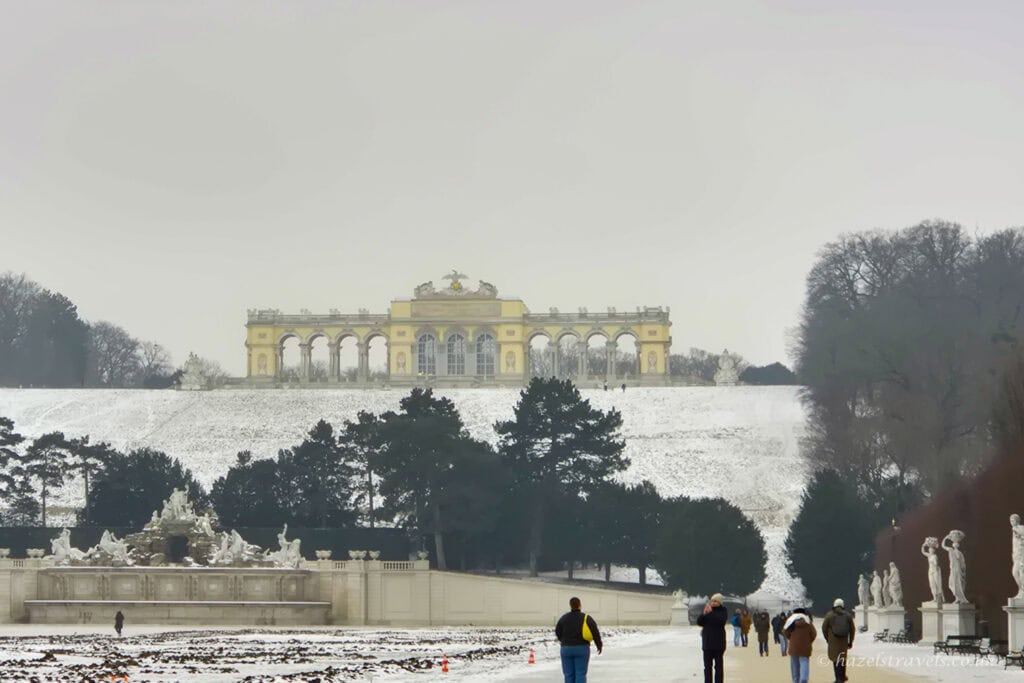
You can reach it via a winding slope or a long set of steps. In good weather, both are fine. In snow or ice, the steps feel heroic. When I visited in winter, the slope – slightly gritted – felt like the more dignified option.
There’s a café inside the Gloriette, so if you do make it to the top, you can reward yourself properly.
The Palm House
The Palm House feels like stepping into another climate entirely. It’s a tropical glasshouse filled with exotic plants and warm, humid air.
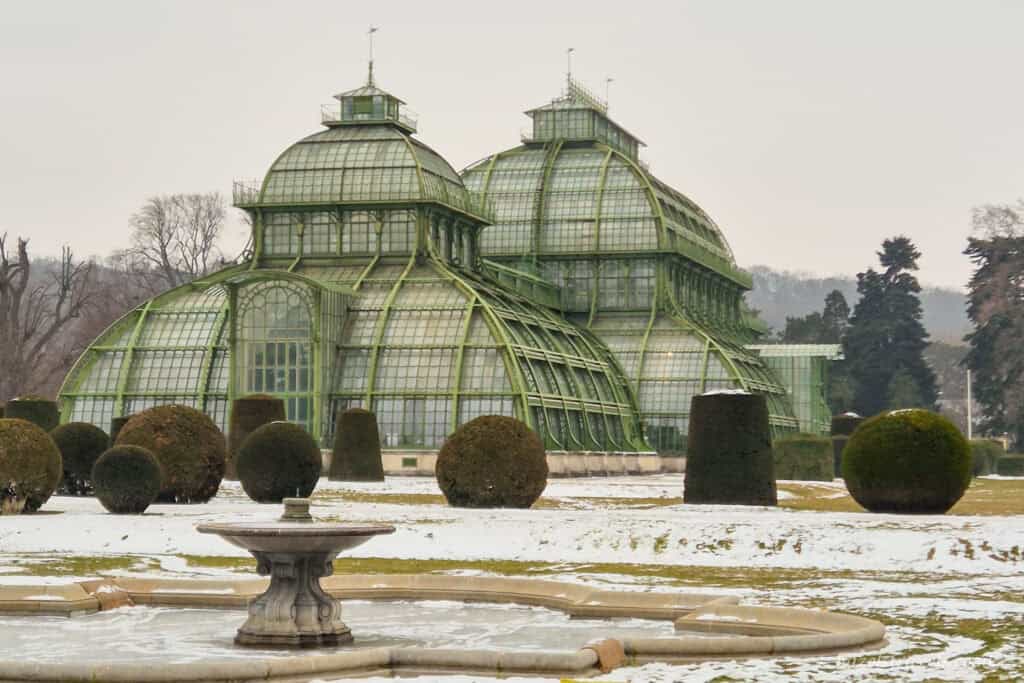
Huge lily pads float in shallow pools. A delicate spiral staircase winds upward. Benches are tucked among tropical plants, inviting you to sit and defrost. Which you will need if you are visiting in winter.
It’s not enormous, but it’s beautiful – especially if you’re visiting in winter and need to remember what warmth feels like.
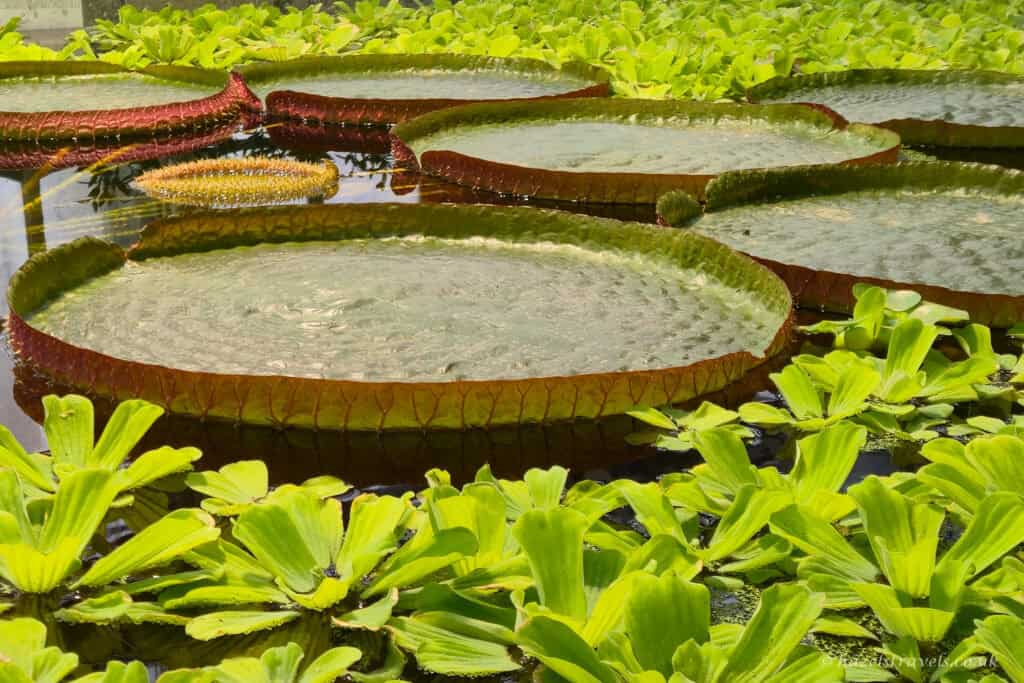
In winter especially, the contrast between snow outside and lush greenery inside makes it feel almost surreal.
Entry is paid, and combination tickets with the Desert House are available.
The Desert House
Smaller but oddly compelling, the Desert House contains cacti, reptiles, snakes, fish and the most unexpected residents of all: naked mole rats.
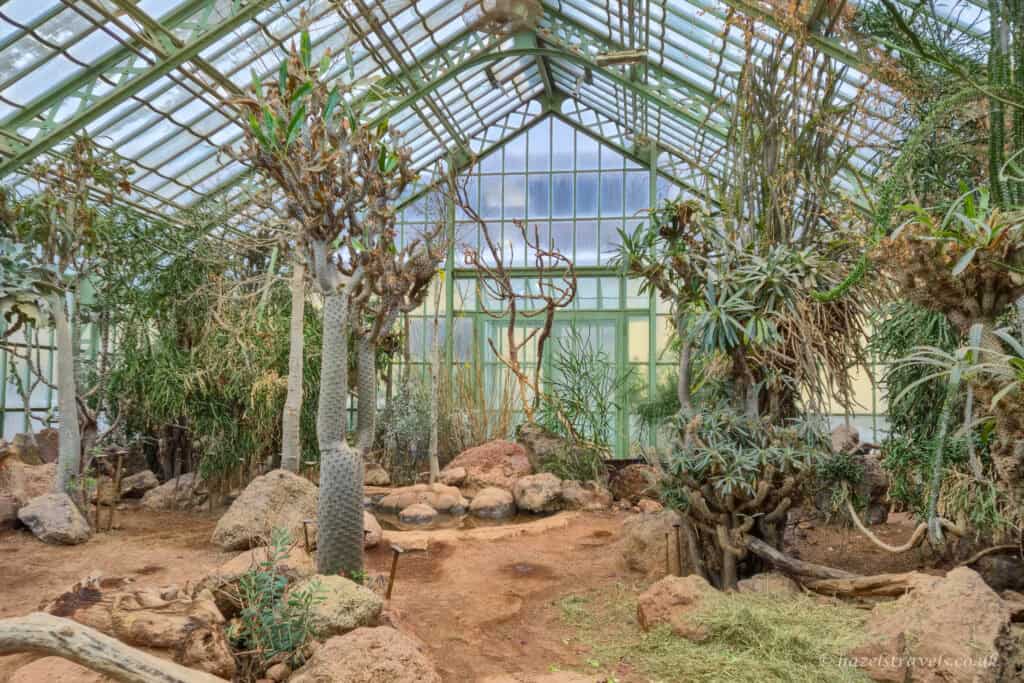
There are also display boxes containing desert artefacts – at one point I found myself staring at what appeared to be an old boot and a bottle of tequila. Without German language skills, I couldn’t tell whether they were serious exhibits or slightly tongue-in-cheek additions.
Either way, it adds character.
Like the Palm House, entry requires a ticket, and the two are often visited together.
Schönbrunn Zoo
Schönbrunn Zoo is located within the palace grounds and is the oldest zoo in the world, dating back to 1752.
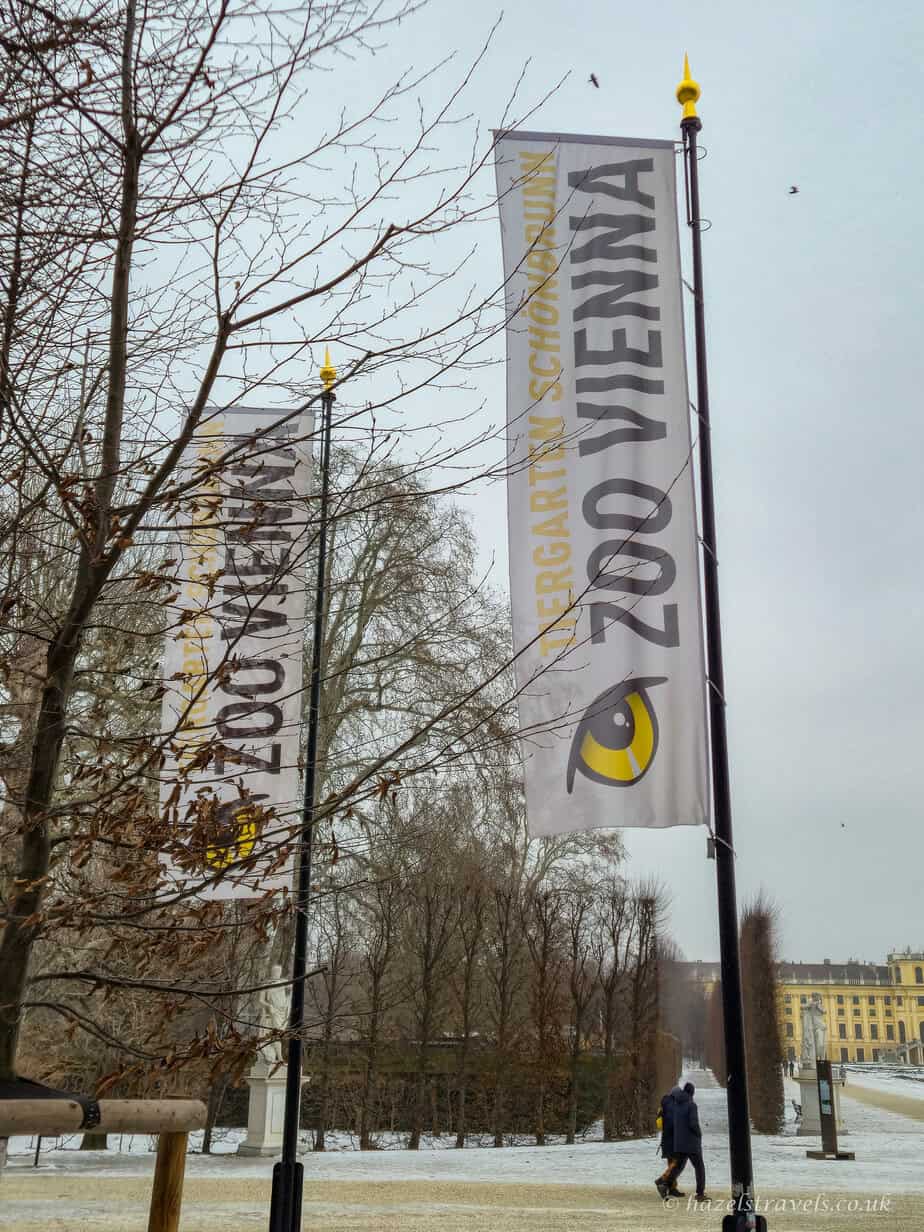
I didn’t go inside – it was getting dark, and I had already committed to an evening palace tour – but discovering its history afterwards made me wish I had planned differently. If I planned my visit again, I would definitely schedule a stop here.
The Maze and Labyrinth
Tucked within the grounds is a historic maze and labyrinth – something I fully intended to explore until I saw it half-buried under snow.
In summer, it looks like a playful addition to an otherwise grand setting. In winter, it was less inviting. I’ll be back for it when the hedges are green and the ground isn’t frozen solid.
If you’re visiting in warmer months, it’s worth factoring in, especially if you enjoy a bit of structured wandering.
The Palace Theatre and UNESCO Status
Schönbrunn Palace and its gardens form part of a UNESCO World Heritage Site, recognised for their historical and architectural significance.
Within the complex, there is also a Baroque palace theatre, still used for cultural events and performances. It’s a reminder that Schönbrunn isn’t just a preserved monument; it’s a living historical space that continues to host music and theatre today.
Schönbrunn Evening Experiences
Once darkness falls, Schönbrunn shifts mood.
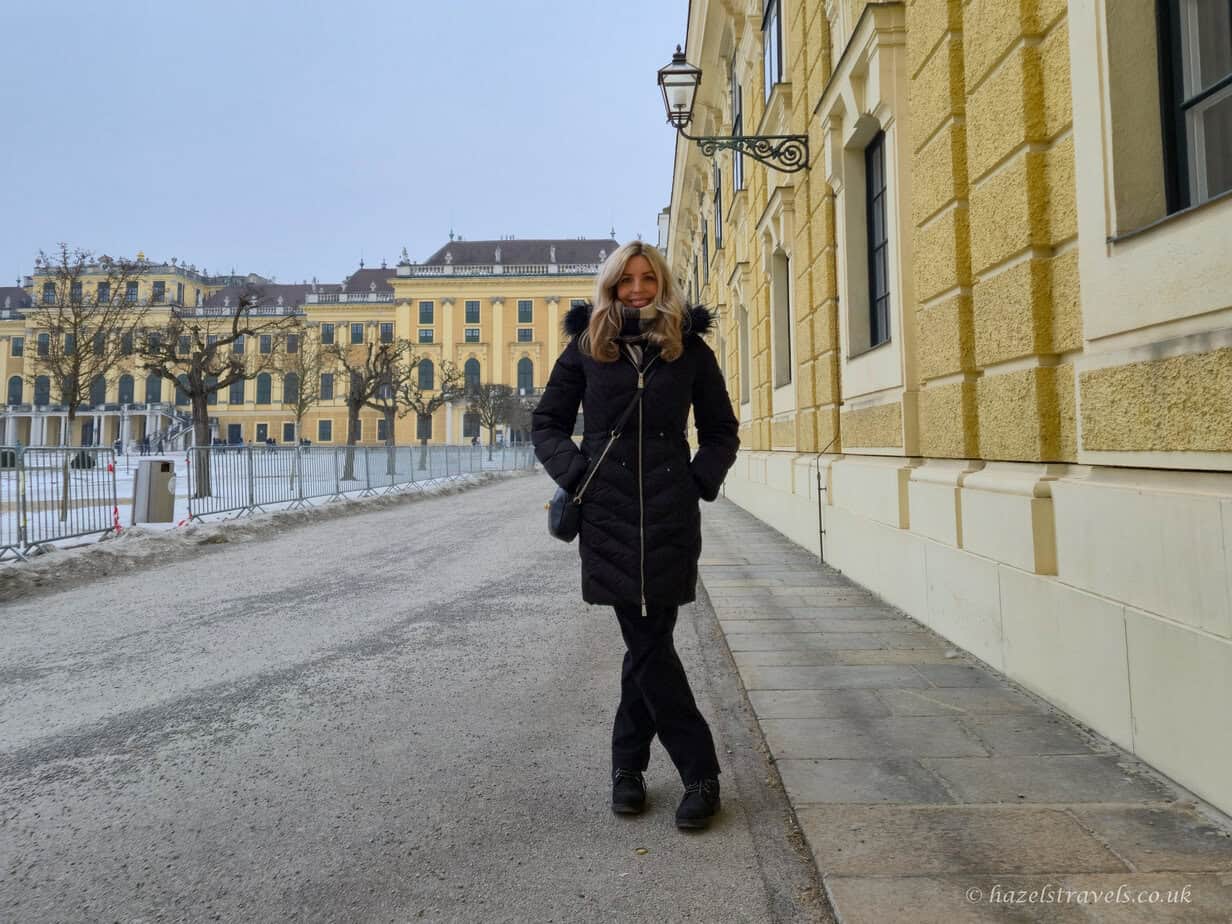
The crowds thin. The facade is lit from below. The scale of the palace feels more theatrical.
There are occasional after-hours palace tours, classical concertsand dinner packages held within the complex. Extending your visit into the evening transforms the experience from a sightseeing stop into something far more memorable.
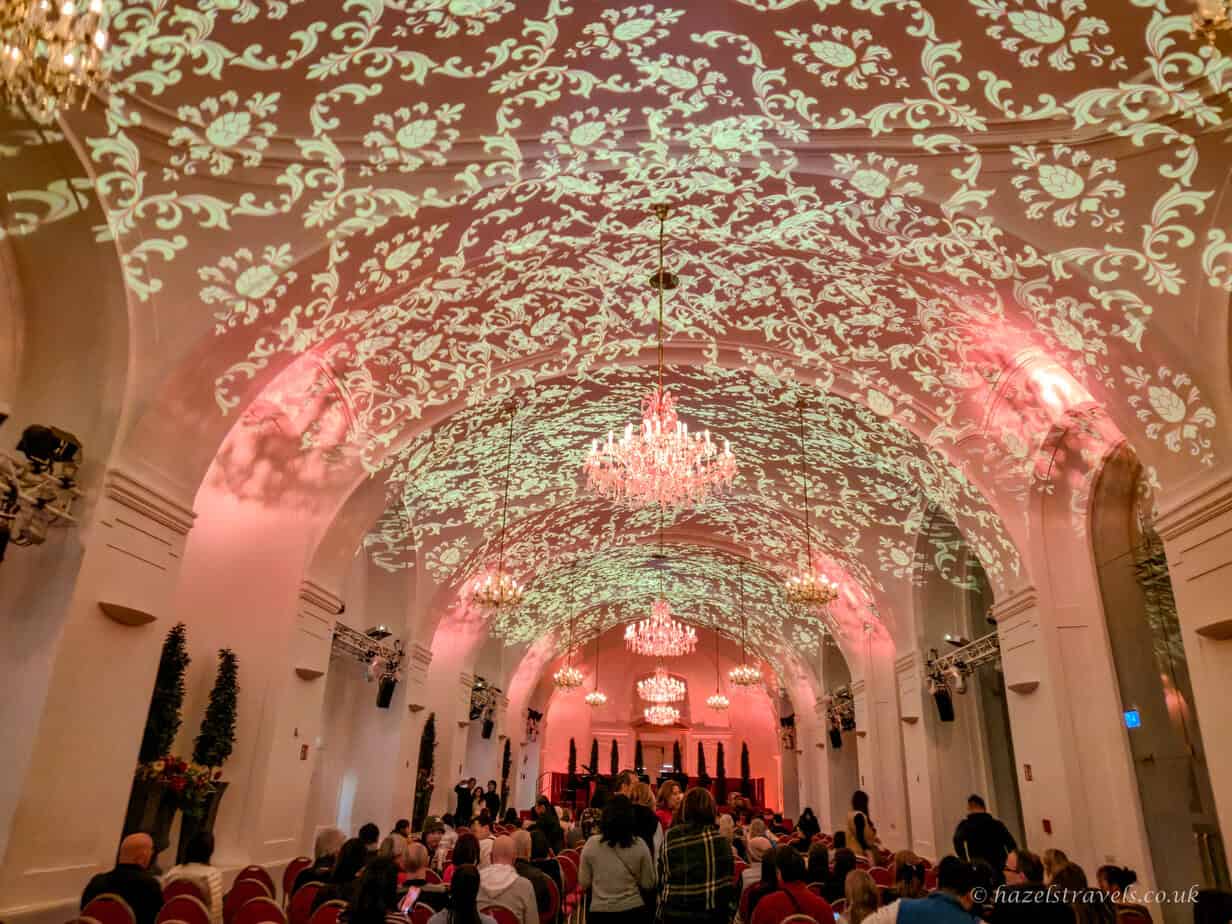
I attended a Mozart concert inside the palace complex, and it was genuinely one of the highlights of my Vienna trip. The atmosphere was incredible – refined but surprisingly energetic.
👉 Read about my Schönbrunn Mozart concert experience.
Cafés and Food
Schönbrunn is large enough that you’ll almost certainly need a pause.
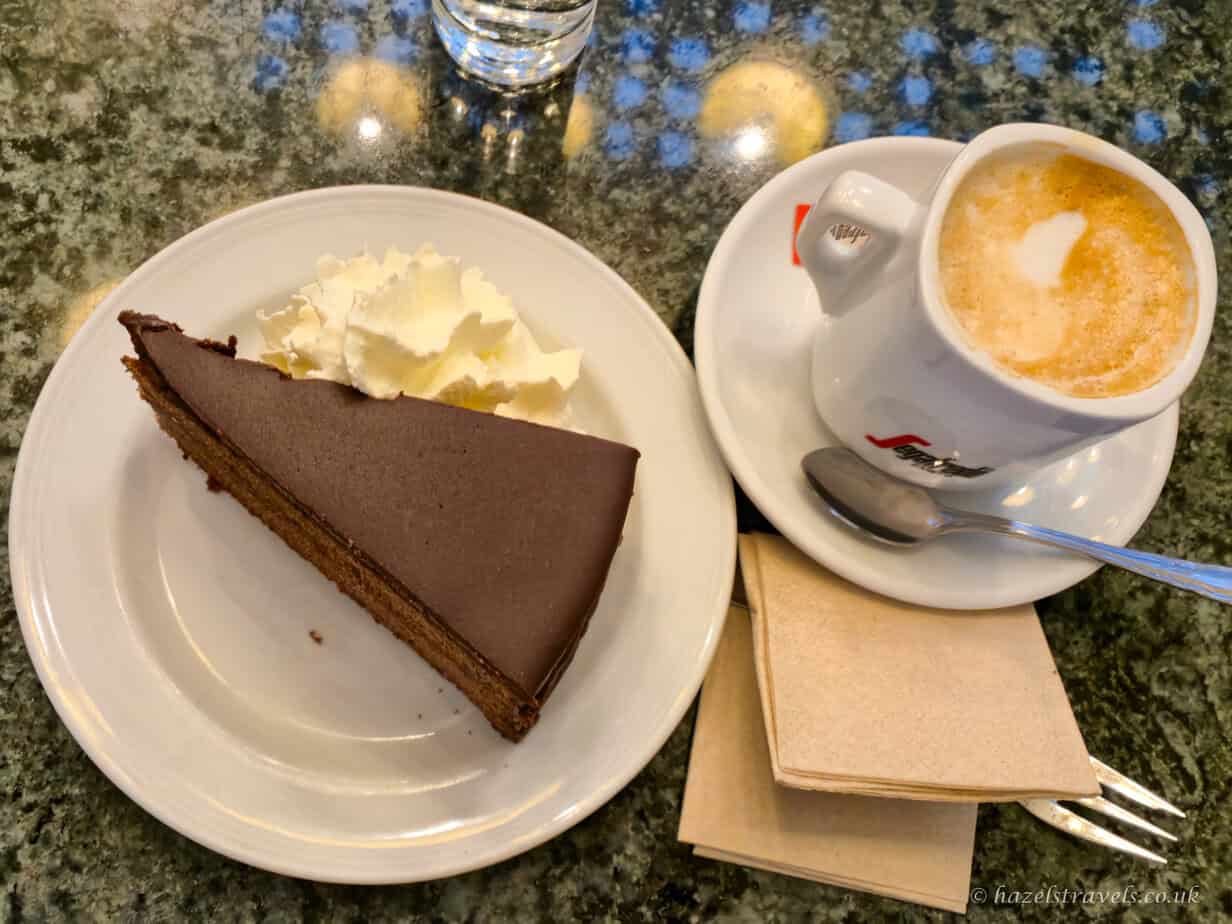
There are several cafés and dining options within the complex, from smaller coffee stops to traditional Austrian restaurants. Planning in a coffee or lunch break makes the day far more enjoyable – especially if you’re combining indoor and outdoor spaces.
It’s not somewhere you rush. And you shouldn’t try to.
How Long Do You Need at Schönbrunn Palace?
- 2–3 hours: Palace interior only
- Half day: Palace + one additional attraction
- Full day: Palace, museums, gardens and indoor spaces explored properly
The site is extensive, so comfortable footwear and realistic planning make a significant difference.
Getting to Schönbrunn Palace
Schönbrunn Palace is easily reached from central Vienna via the U4 metro line. The station is a short walk from the main entrance.
Schönbrunn is easy to underestimate. I did. But once you step through the gates, you realise it’s not just a palace, it’s an entire world. Plan properly, give yourself time, and let it unfold slowly.
FAQs About Visiting Schönbrunn Palace 💡
Planning a visit to Schönbrunn? Here are a few quick answers to help you avoid underestimating it like I did.
What are the absolute must-sees at Schönbrunn Palace?
If it is your first visit, prioritise the palace interior and a walk through the formal gardens up to the Neptune Fountain or Gloriette. Everything else is a bonus, depending on time and weather.
Can you visit Schönbrunn Palace without going inside?
Yes. The gardens are free to enter, so you can wander the grounds, photograph the palace, and climb to the Gloriette without buying a palace ticket. It still feels impressive, even from the outside.
Is Schönbrunn Palace worth a full day?
If you enjoy history, architecture, and a bit of wandering, yes. Between the palace, museums, glasshouses, zoo, maze, cafés, and evening experiences, it is far more than a quick photo stop. Rushing it would be a mistake.
Is Schönbrunn Palace easy to reach from central Vienna?
Very easy. The U4 metro line takes you directly there, and the station is just a short walk from the main entrance. No complicated logistics required.
Do you need to plan ahead for Schönbrunn?
A little planning helps. Timed palace tickets can sell out, and the complex is large enough that knowing your priorities in advance makes the whole experience smoother and far less overwhelming.
Related Reading
If you’re planning your time in Vienna, you might also enjoy:
• Visiting Schönbrunn Palace in Winter: Is It Worth It? – what it’s really like in snow and minus six degrees
• Vienna Highlights: The Main Sights (and What They’re Really Like) – an overview of the city’s essential attractions
• Attending a Mozart Concert at Schönbrunn Orangery – what to expect for a Mozart experience you will never forget
• Inside the Schönbrunn Palace: Is the After Hours tour Worth It? – Photos from inside the palace, and whether the tour is worth it.
• Where to Stay in Vienna for Solo Travellers – A breakdown of the best districts, what each area feels like, and hotel suggestions that are calm, well-connected, and easy to manage on your own.
📌 Save This for Your Schönbrunn Visit
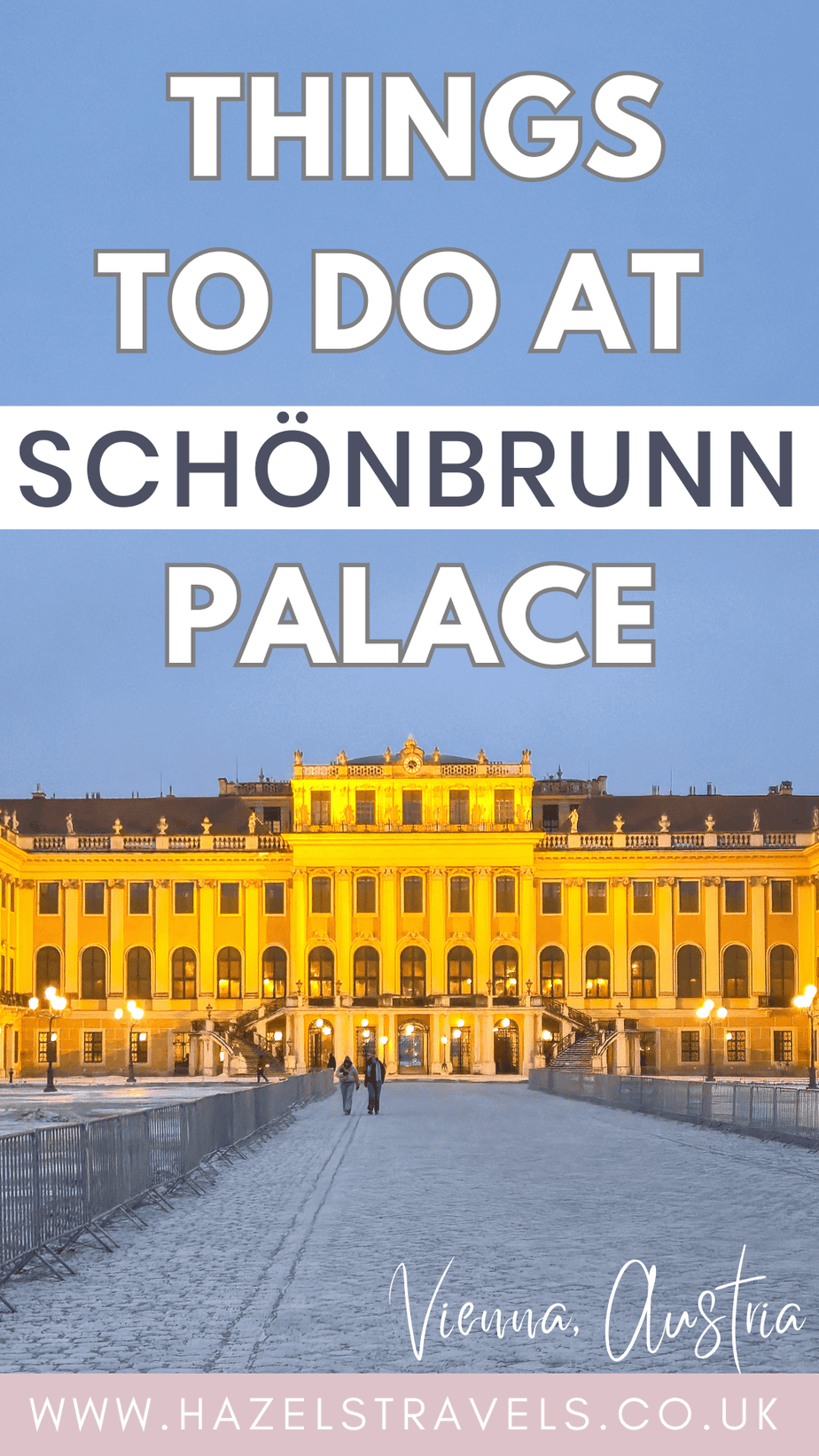
Schönbrunn Palace is much bigger than you think. Pin this guide to help you plan what to see – from imperial carriages to tropical glasshouses.
👉 Looking for practical travel tools? Check out my Travel Resources page.
Tags: Austria, Schönbrunn, Vienna
Leave a Reply