It feels slightly rebellious to visit a summer palace in minus six degrees.
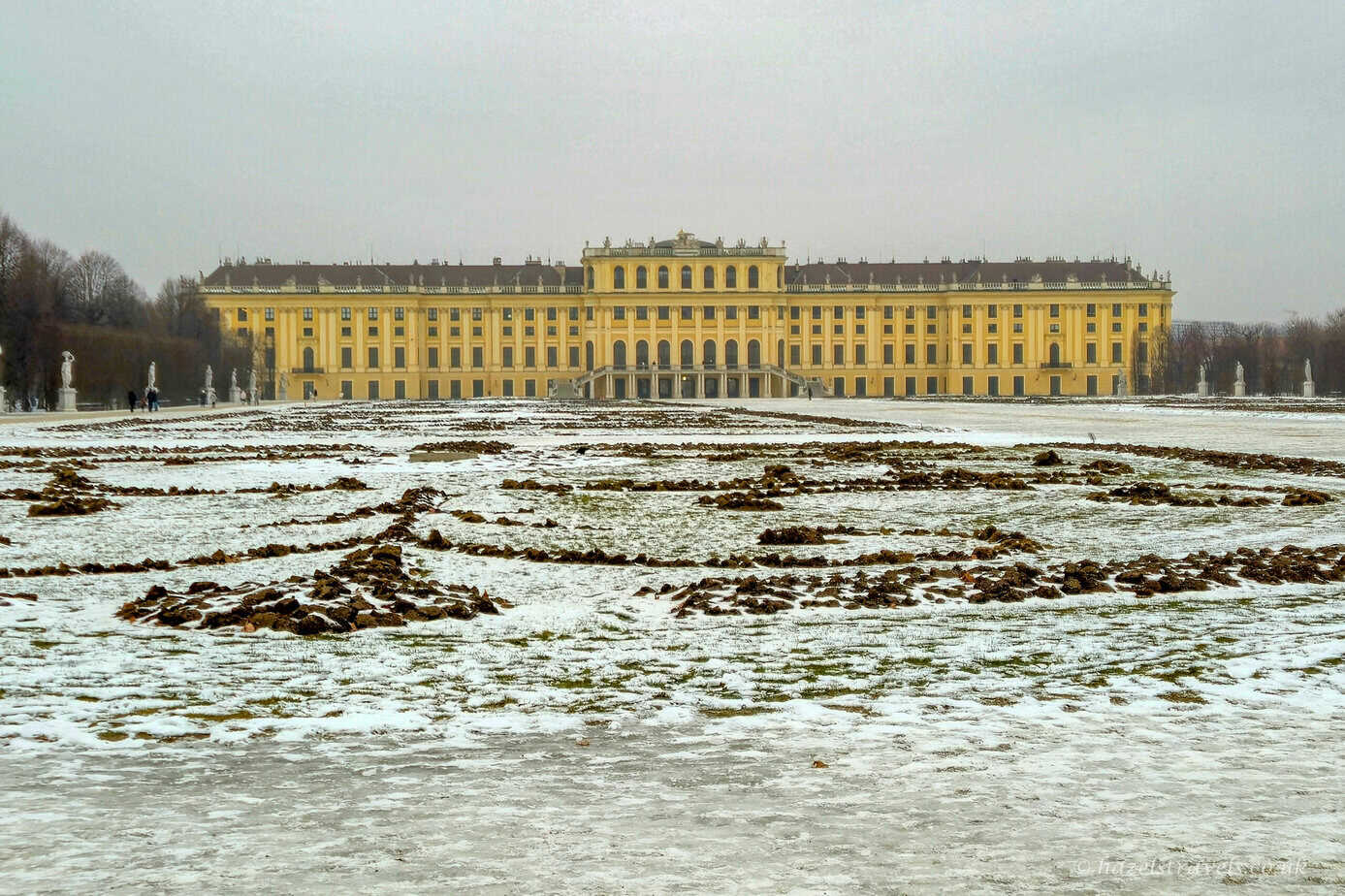
Schönbrunn Palace was designed for sunshine, symmetry and imperial display. It was never meant to be experienced under a sky the colour of tin, with snow falling steadily from morning to night.
And yet, that’s exactly how I saw it.
I may earn a small commission if you make a purchase using my affiliate links.
I’m Hazel, a British solo traveller and writer, and I spent an entire day and night solo at Schönbrunn Palace (Vienna, Austria), arriving in falling snow and leaving long after dark.
I hadn’t quite expected Schönbrunn Palace in winter to feel so completely transformed by the season.
Morning: Snow and Silence
It snowed all day. Not flurries. Proper snow. The kind that softens edges and swallows sound.
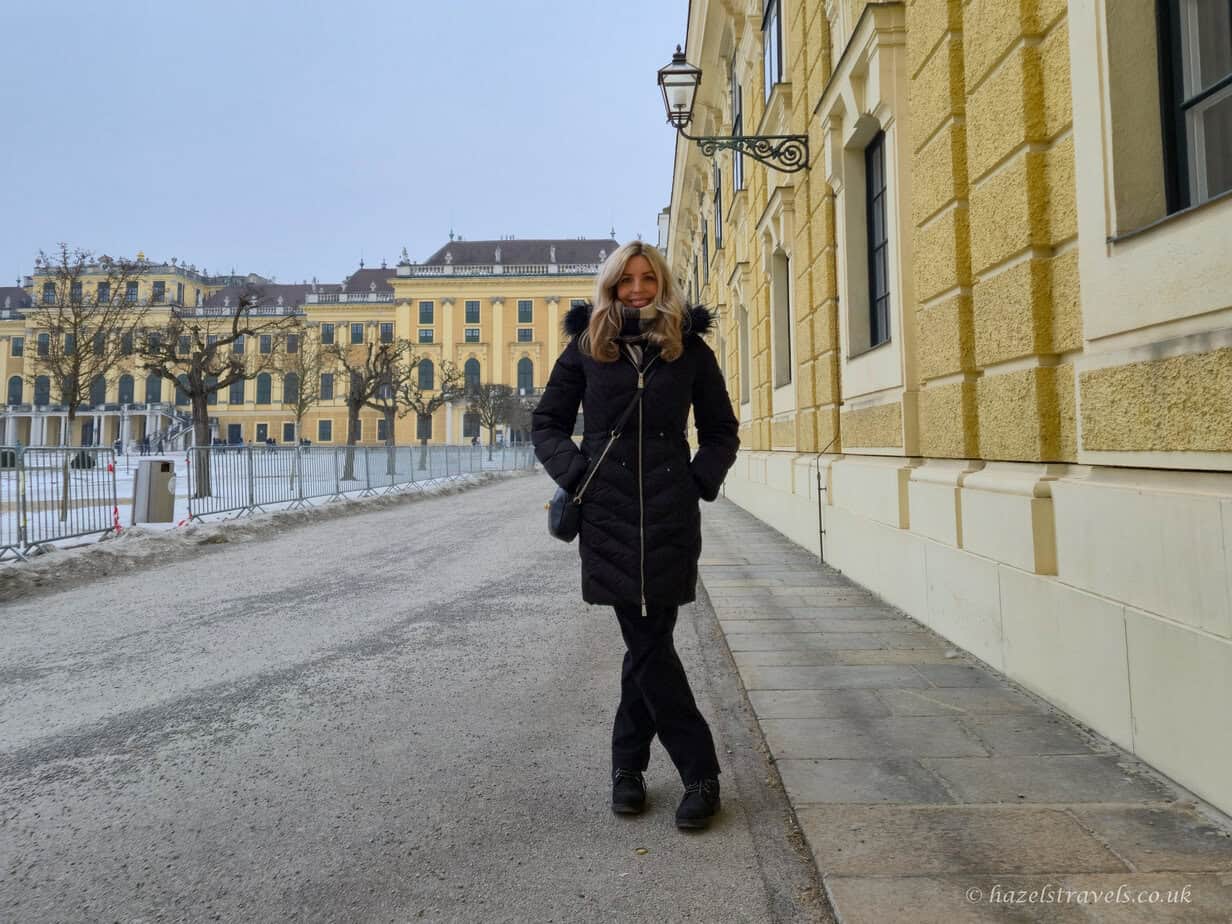
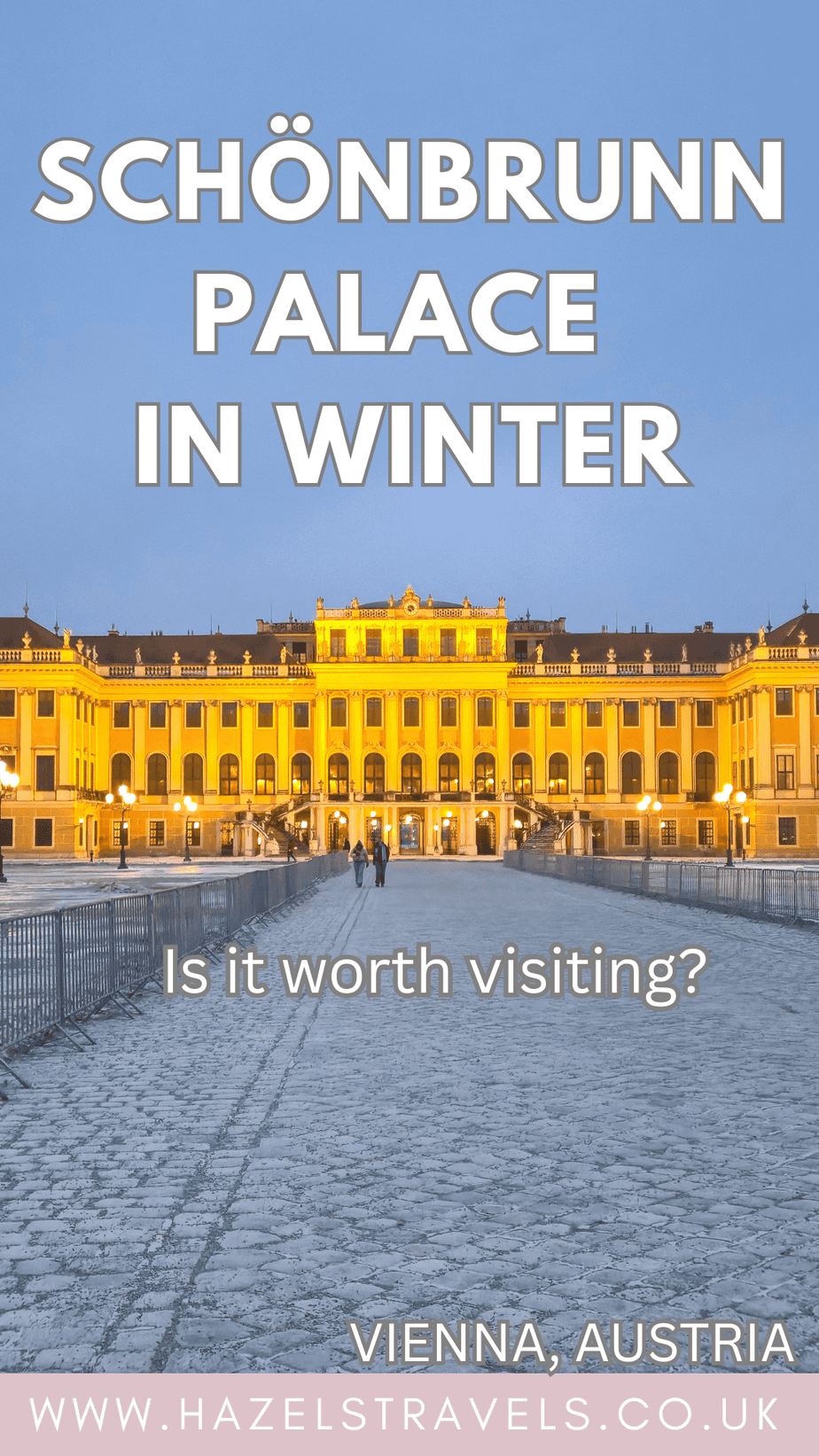
By the time I arrived, the grounds were almost empty. I probably saw thirty people in total across the entire day. No tour groups. No queues. Just wide white paths and the yellow facade of the palace glowing faintly against the grey sky.
It felt vast. Stark. A little severe.
And strangely beautiful.
The gardens, famous in summer for their colour and symmetry, were stripped back to their bones. Statues looked more dramatic against the snow. Fountains were frozen solid. Paths disappeared under fresh powder, and at one point I genuinely lost the signs and wandered off course. Which feels oddly appropriate in a baroque garden.
It didn’t matter. Getting slightly lost felt appropriate.
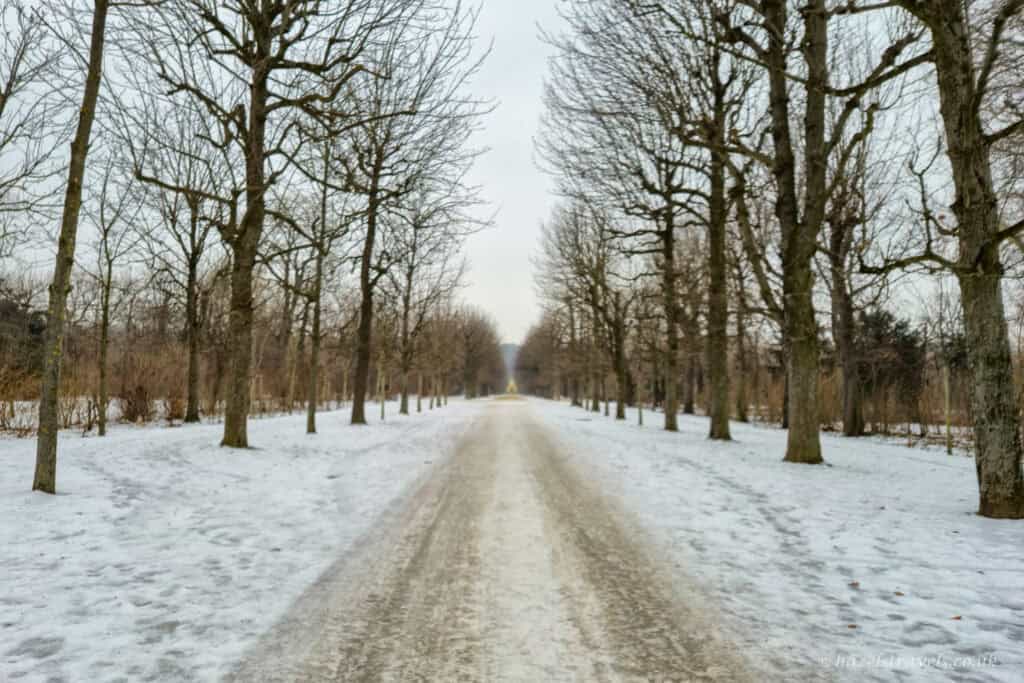
If you’re wondering whether Schönbrunn Palace is worth visiting in winter, this is where the answer starts to become clear.
First Refuge: The Carriage Museum
After prowling the grounds long enough for my fingers to go numb, I ducked into the Imperial Carriage Museum.
I expected a quick wander to warm up. Instead, I stayed far longer than planned.
There are no replicas here. Every carriage is the real thing, ornate, heavy, impossibly intricate. Court uniforms and dresses line the displays. A whole world of imperial pageantry preserved in velvet and gold.
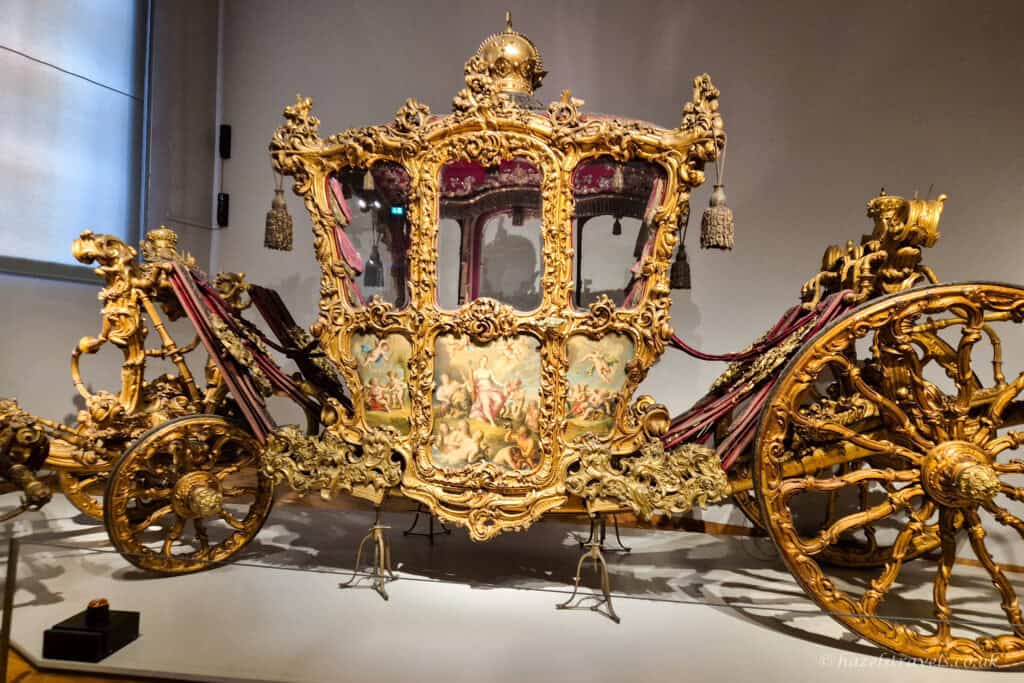
I knew almost nothing about Empress Elisabeth – Sisi – before visiting, but the video displays pulled me in. Her story, her image, her mythology. It added a human layer to all that imperial grandeur.
And then, unexpectedly, at the very end, I came face to face with a Formula Renault 1.6 race car. I stood there laughing (I am a motorsport fan). Of course this palace museum would somehow contain a motorsport surprise for me.
Tropical Warmth in the Snow
By early afternoon, the cold had settled into my bones. It was time to seek refuge once more.
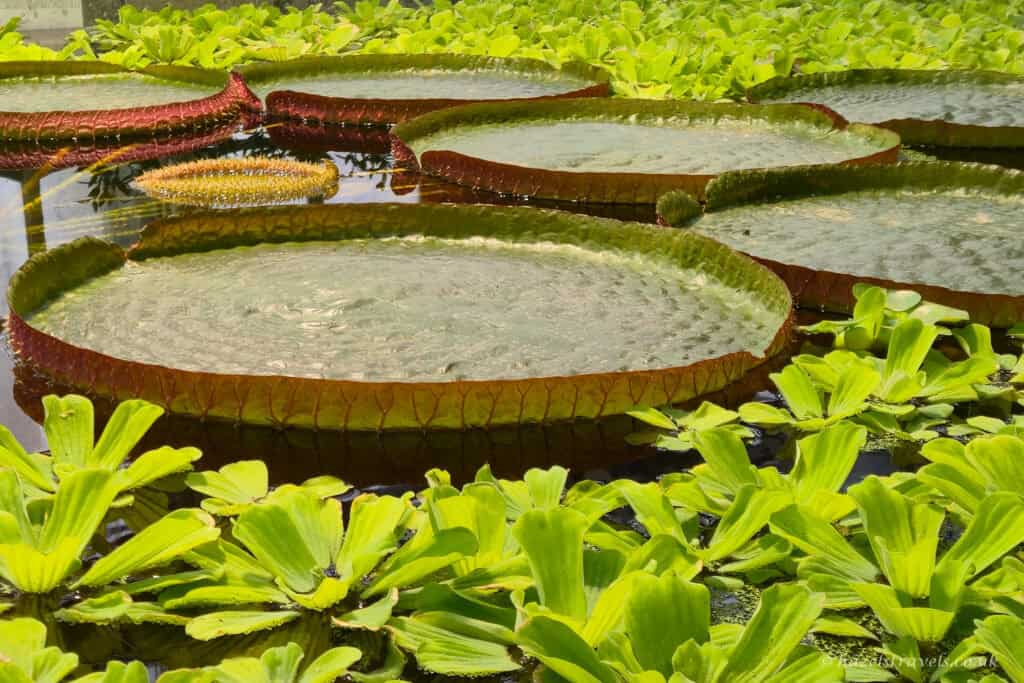
The Palm House felt almost surreal. Outside, snow continued to fall. Inside, it was positively balmy. Lush greenery. Moist air. Tropical flowers glowing against grey skies.
The Desert House next door was even stranger. Cacti framed against drifting snow. Lizards moving slowly in warm light while winter pressed against the glass.
It is the kind of juxtaposition you cannot plan. I felt like I was moving through some sort of strange winter/desert dream – and I loved it.
Dusk and the Gloriette
As the afternoon faded, I headed back outside in search of the Gloriette.
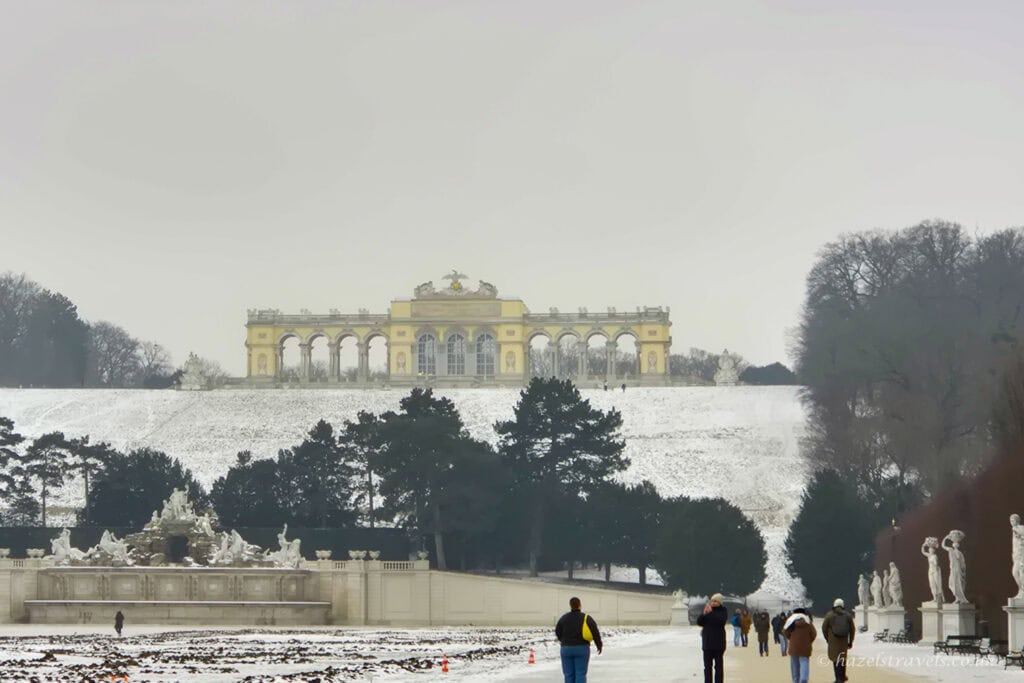
It rises grandly at the top of the hill, a triumphant structure designed to dominate the view. I started the climb, then I chickened out halfway up. It was getting dark. The ground was icy. Sliding down a frozen imperial slope in the dark did not feel remotely dignified.
So I stopped. Took photos from below. Accepted the moment.
Not every view needs conquering.
After Hours: Inside the Palace
At 5pm, when most visitors had long since left, I joined a small group for an after-hours palace tour.
The guide unlocked the first door using an enormous stone key – the sort you only see in historical dramas. It felt theatrical, almost unreal. Cleaners and maintenance staff moved quietly in the background. The palace was eerily still.
Walking through room after room without crowds felt almost intimate. I photographed nearly every grand hall and chamber.
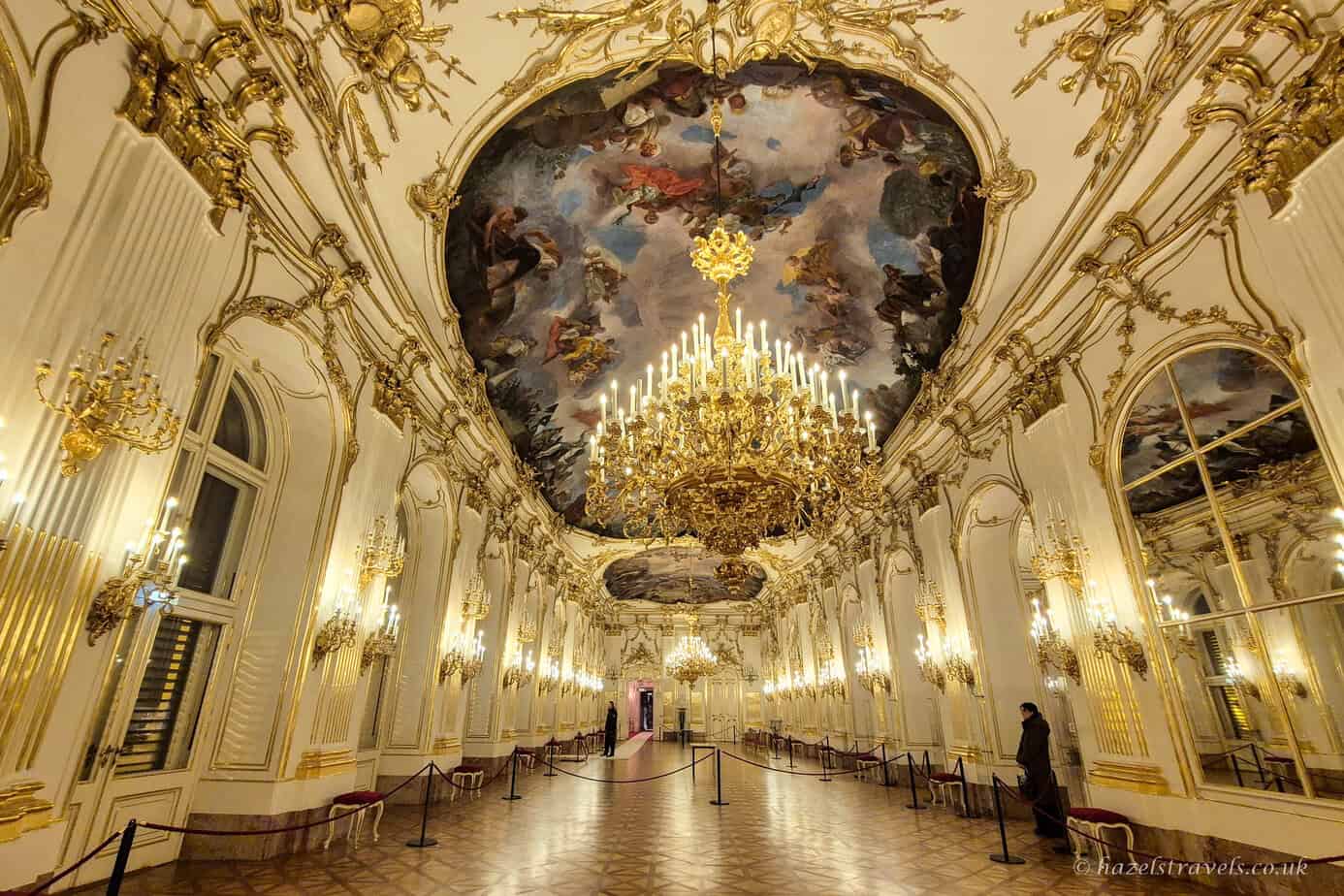
The Great Gallery, with its painted ceilings and chandeliers, was impressive. Sisi’s rooms were unexpectedly delicate, full of chintz wallpaper and softness. And then there was the bedroom where Emperor Franz Joseph died – the actual bed still there. It felt oddly personal standing in that space.
History seemed less staged after hours. Somehow more human.
👉 Read about my experience of the Schönbrunn Palace After Hours Tour.
Nightfall
By the time I left the palace interior, darkness had settled properly.
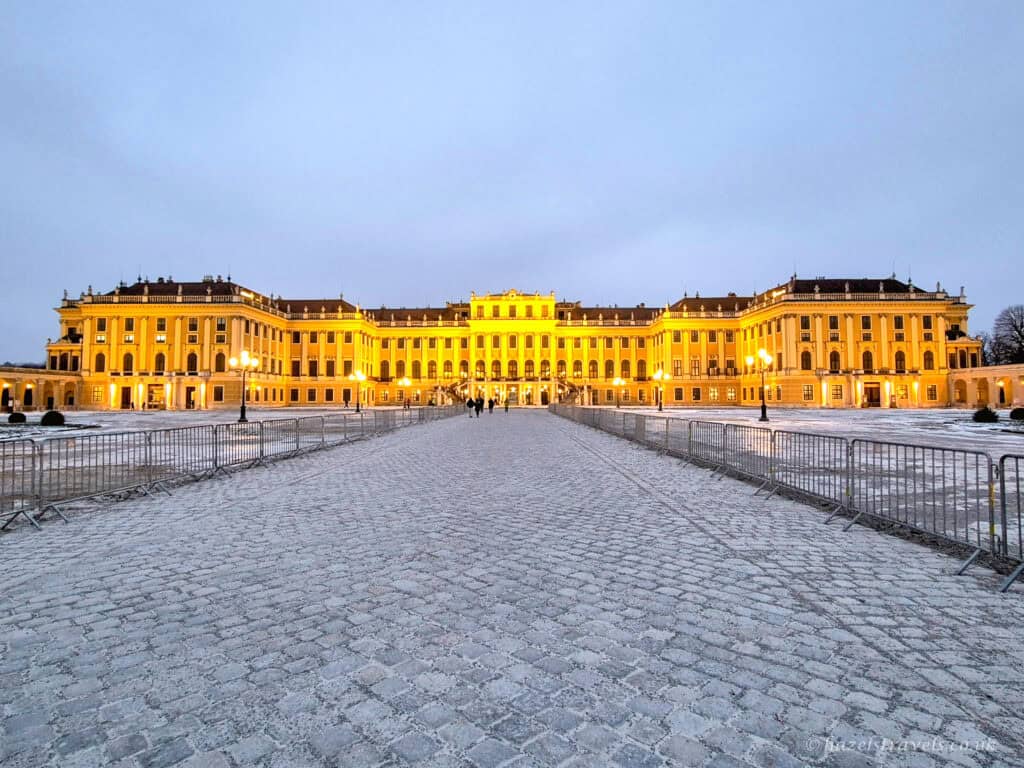
The facade was lit from below, glowing warmly against the snow. It looked entirely different from the grey daytime version I had seen that morning.
I had spent the entire day here. From early snowfall to night lighting. From frozen fountains to tropical palms.
So, Is Schönbrunn Palace Worth Visiting in Winter?
If you are coming for blooming gardens and perfect symmetry, winter is not the season.
But if you are asking whether Schönbrunn Palace is worth visiting in winter, the answer depends on what you’re looking for. If you are open to something quieter – something more stripped back and reflective – it is extraordinary.
The emptiness changes everything. The cold sharpens the experience. The indoor spaces feel richer after hours outside. The contrast between snow and warmth makes every building feel purposeful.
Schönbrunn Palace in winter is not postcard-pretty.
It is atmospheric. Slightly austere. Occasionally inconvenient. Utterly memorable.
I would go again in summer without hesitation.
But I am very glad my first visit was in the snow. It made it feel entirely my own.
Planning a Winter Visit to Schönbrunn
If you are considering visiting Schönbrunn Palace in winter, here are a few things worth knowing.
The palace interiors, Carriage Museum, Palm House and Desert House are open year-round, and they become especially welcome when temperatures drop. The grounds are far quieter than in summer, which makes wandering feel almost private.
Allow at least half a day to explore the gardens and indoor attractions properly.
If you book a special experience, such as an after-hours palace tour or an evening concert inside the palace, you could easily spend the entire day there, as I did.
Evening concerts are held regularly in the palace complex and are well worth considering if you enjoy classical music. They add a completely different atmosphere once darkness falls.
Public transport from central Vienna is straightforward via the U4 line, making Schönbrunn Palace easy to reach from the historic centre.
And if you are in Vienna in Winter, you might like my post Things to Do in Vienna in Winter (Beyond the Christmas Markets).
FAQs About Visiting Schönbrunn Palace in Winter 💡
Thinking about seeing Schönbrunn Palace in the snow? Here are a few quick answers to help you decide if winter is your season.
Is Schönbrunn Palace worth visiting in winter?
Yes, if you are open to a different kind of beauty. You won’t get blooming gardens, but you will get near-empty grounds, dramatic statues against snow, and a far quieter, more reflective atmosphere. It feels less postcard, more cinematic.
Is Schönbrunn Palace less crowded in winter?
Very much so. On my visit, I saw barely anyone in the gardens, and there were no long queues. Winter transforms the experience from busy tourist attraction to something that feels almost private.
What should you wear when visiting Schönbrunn in winter?
Dress properly. Layers, a warm coat, gloves, and waterproof shoes make all the difference. You’ll likely move between freezing outdoor paths and warm indoor spaces like the Palm House or palace interior, so being able to adjust is key.
Related Reading
If you’re planning more time in Vienna, you might also enjoy:
• Things to Do at Schönbrunn Palace: What to See and How to Plan Your Visit – a practical guide to the palace, gardens, zoo and Palm House
• Attending a Mozart Concert at Schönbrunn Orangery – what to expect for a Mozart experience you will never forget
• Inside the Schönbrunn Palace: Is the After Hours tour Worth It? – photos from inside the palace, and whether the tour is worth it.
• Vienna Highlights: The Main Sights (and What They’re Really Like) – an overview of the city’s essential attractions
• Things to Do in Vienna in Winter (Beyond the Christmas Markets) – snowy palaces, opera nights, museums, and cosy café stops.
📌 Pin This Schönbrunn Palace Winter Guide
Wondering if Schönbrunn Palace is worth visiting in winter? Save this post for tips on what it’s really like in snow, minus six degrees, and near-empty grounds.
👉 Looking for practical travel tools? Check out my Travel Resources page.
Tags: Austria, Schönbrunn, Vienna
Leave a Reply