There is something slightly surreal about walking into an imperial palace after it has closed to the public.
At 5pm, while most visitors were making their way back into central Vienna, I was waiting outside the entrance to Schonbrunn Palace with around fifteen other people, ready for an after-hours tour.
I may earn a small commission if you make a purchase using my affiliate links.
I visited Vienna as a solo traveller and booked the after-hours tour specifically to avoid crowds.
The guide unlocked the first door inside Schönbrunn Palace using an enormous stone key. Not metaphorically enormous. Actually enormous. The kind of key that feels like it belongs in a period drama.
The door creaked open and we were ushered inside. It immediately felt different.
A Different Kind of Quiet
The tour lasted around an hour and fifteen minutes and felt entirely unhurried.
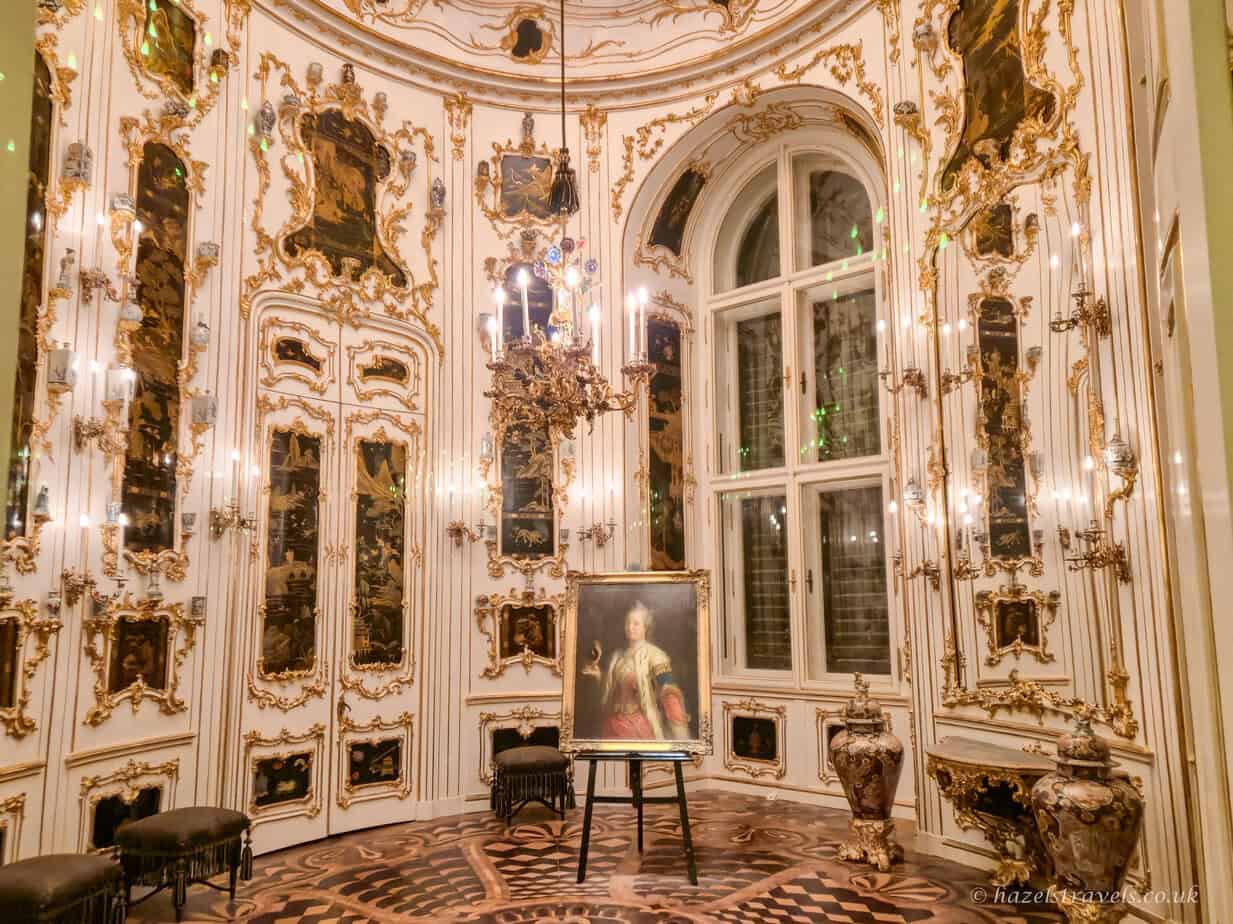
Each of us was given an audio guide in our own language. That meant we drifted through the rooms at slightly different speeds. Even people who had arrived together often found themselves standing apart, headphones on, absorbed in their own narration.
It was unexpectedly solitary.
The guide’s role was mostly practical. She opened doors, ushered us into rooms, and then waited while we listened. At times she looked almost painfully bored, which I suppose is inevitable when you are supervising rather than storytelling.
But the quiet worked.
Without daytime crowds, the palace felt calm rather than chaotic. There was space to stand back and look, to notice details, to linger.
Inside Schönbrunn Palace: Rooms Without the Rush
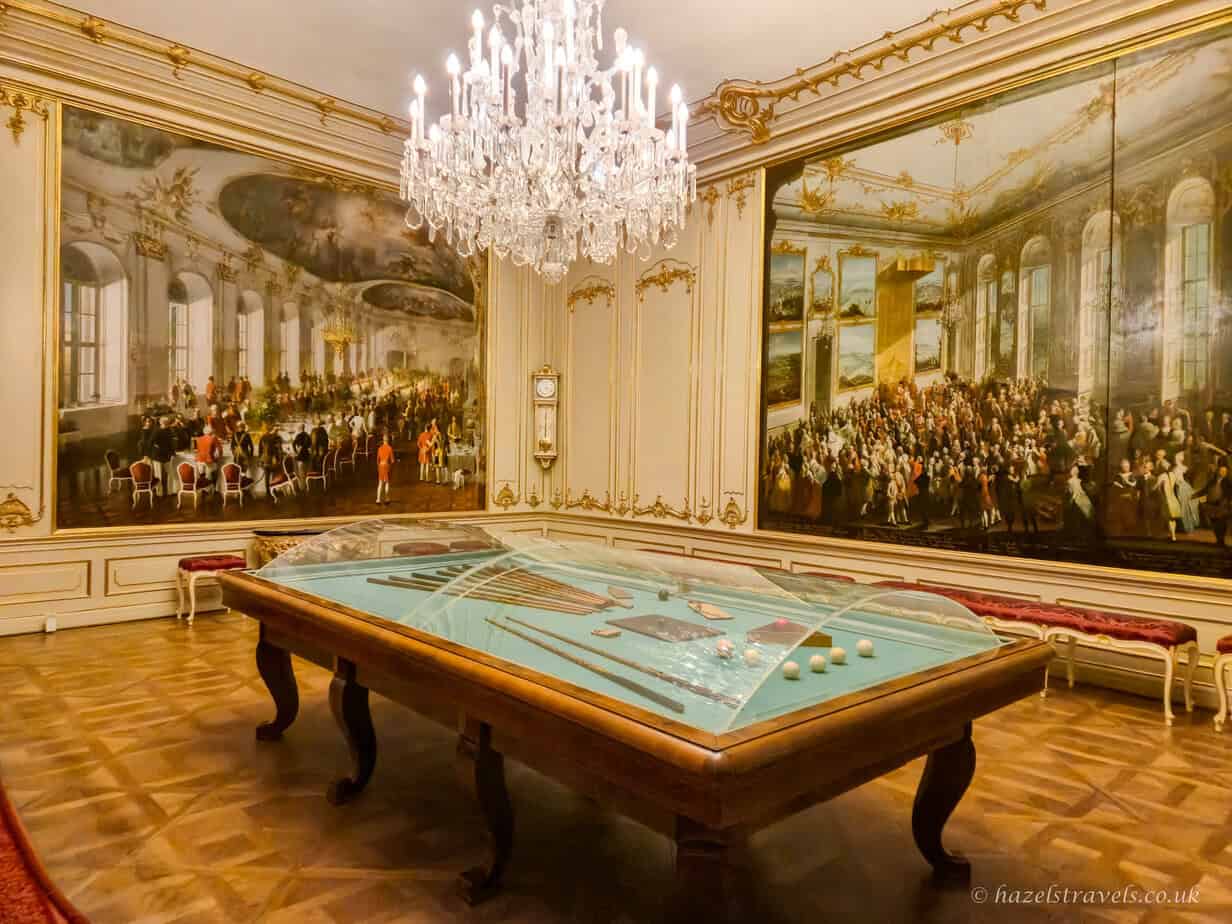
We moved through the state rooms, Sisi’s apartments and the private chambers of Emperor Franz Joseph.
In one room, a long dining table had been laid out as it would have been for an imperial dinner, set for eight guests. According to the audio guide, the emperor would sit at one end and Sisi at the other, when she chose to attend (she was famously conscious of her figure and often ate very little).
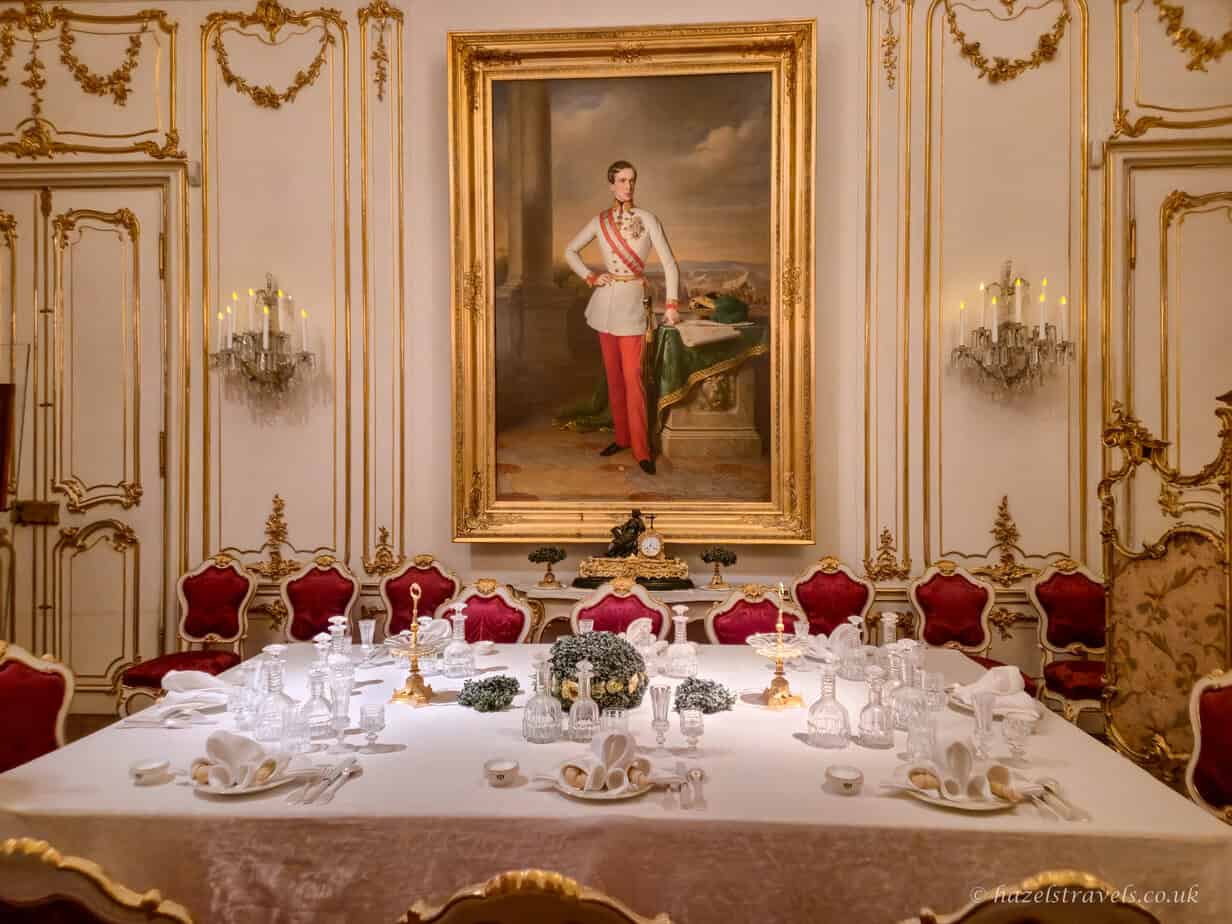
Standing in front of that table in an empty palace, it was surprisingly easy to imagine the scene. Cutlery clinking against bone china, or whatever it was they actually ate from. Laughter. Awkward silences. The emperor in whatever mood he happened to be in that evening.
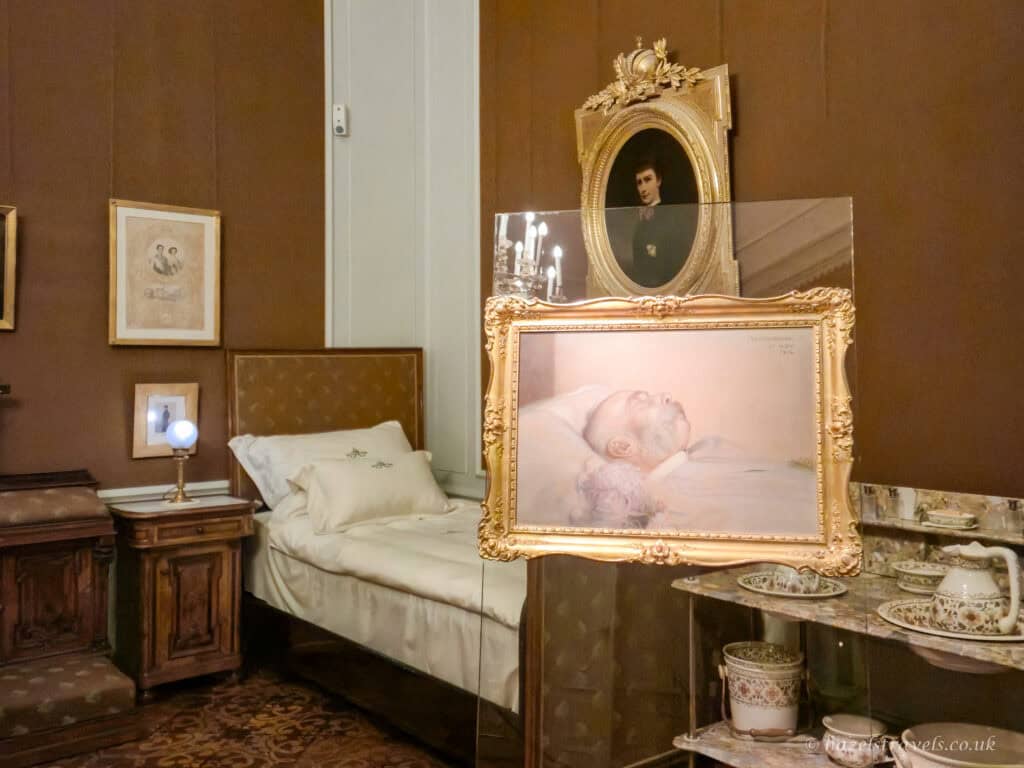
In Franz Joseph’s bedroom, the mood shifted completely. The bed where he died in 1916 is still there, modest and narrow, far less grand than the reception rooms that surround it. For all the chandeliers and ceremony elsewhere in the palace, this room felt strangely simple. It was an unexpectedly sobering moment.
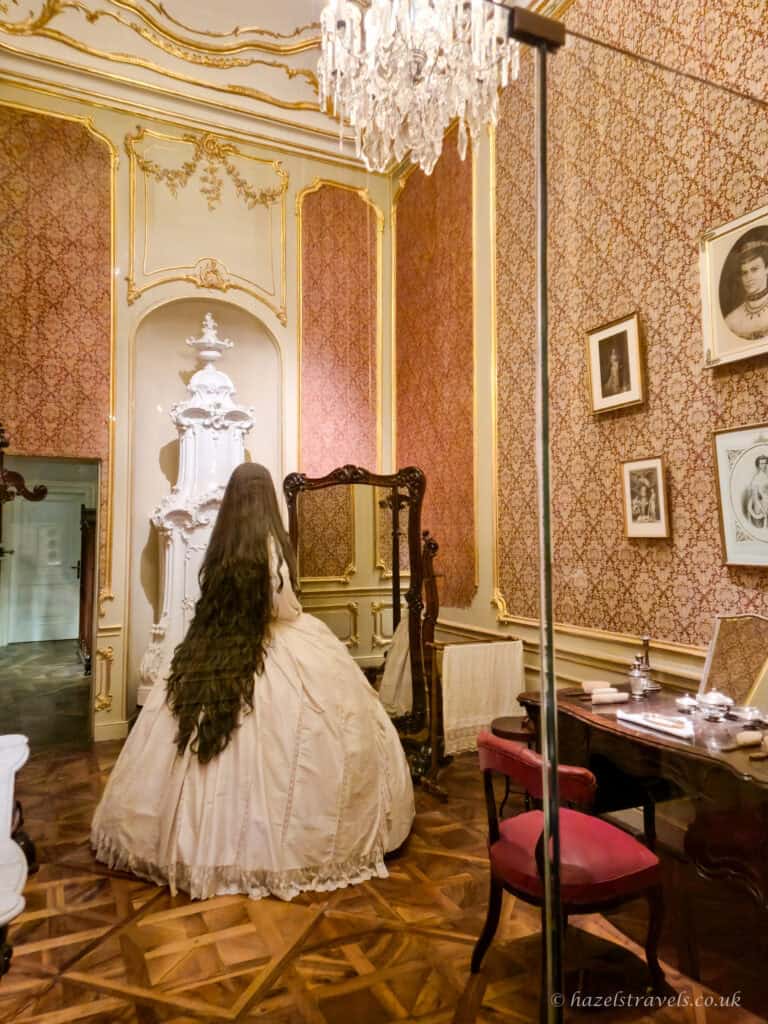
In Sisi’s dressing room, there was a model of her positioned in front of a mirror, her famously long hair cascading down her gown.
Nearby stood a gold table clock designed so that its face could be read in the mirror behind it. The one on display no longer works that way, but the idea alone felt wonderfully excessive.
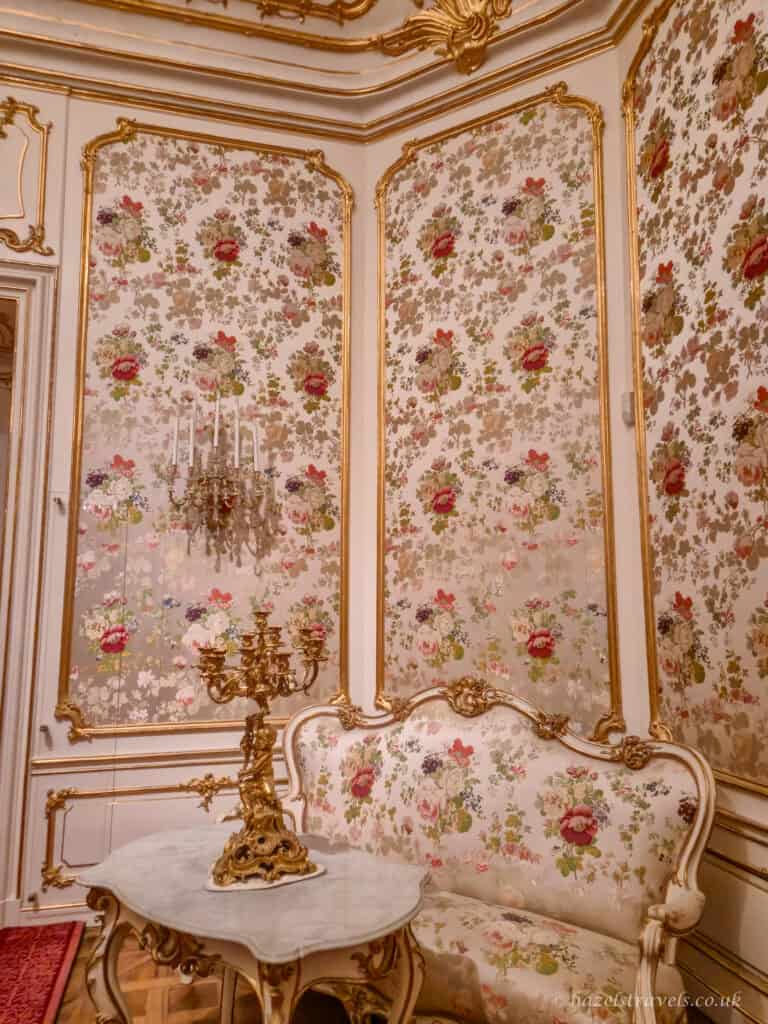
Her chambers were extravagant in a way that somehow managed to feel both romantic and faintly impractical. The chintz wallpaper was fabulous. I briefly considered installing some in my own bedroom. I may also start referring to it as my chambers, why not.
These are the kinds of details that are easy to miss when you are being gently pushed along by daytime crowds.
The Great Gallery (and the Chandeliers)
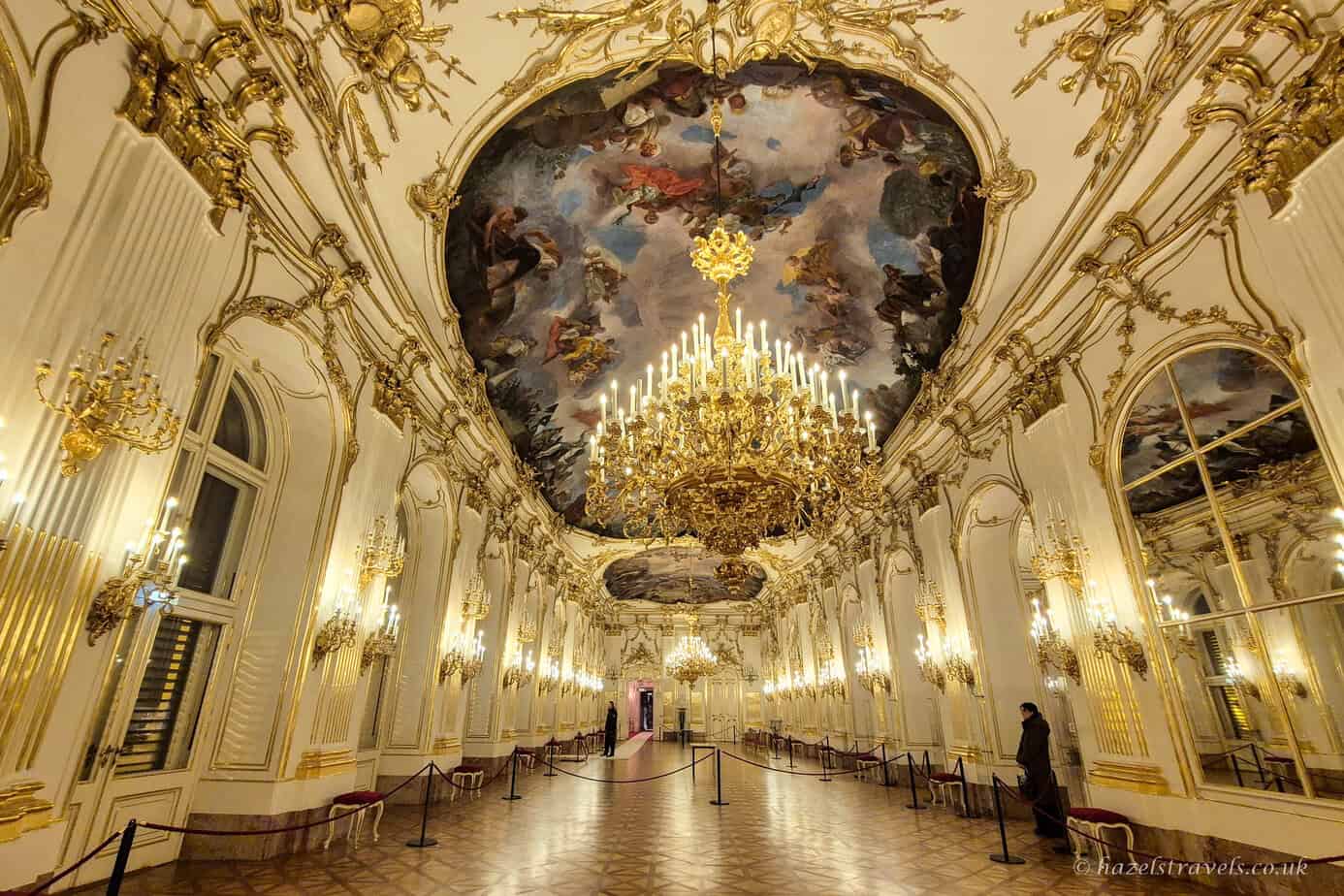
The Great Gallery, with its painted ceilings and glittering chandeliers, is the visual crescendo of the tour.
Frescoes stretch overhead. Crystal catches the light. Gold frames everything in sight. It is undeniably opulent.
And yet, if I am honest, there comes a point when you realise there are only so many chandeliers one person can process in a single day. Vienna is very committed to them. The coffeehouses have them too. The Viennese chandelier is alive and well.
But seeing the gallery almost empty gave it a different presence. It felt vast. Almost intimidating in its scale. As our small group moved quietly through it, I found myself wanting to ask the guide a question, but not wanting to speak out loud in case it echoed.
Cleaners, Maintenance and Reality
One of the most grounding aspects of the after-hours tour was the presence of cleaners and maintenance staff quietly working in the background.
It reminded me that this is not a frozen museum. It is a functioning historic building that requires care and constant upkeep.
In fact, we could not enter the last room because maintenance was underway. The team inside looked genuinely baffled by the sight of fifteen tourists attempting to enter their workspace. Absolutely not, was the very clear, very silent response.
So we retraced our steps back into the Great Gallery, which looked entirely different when viewed from the opposite end. Even familiar spaces shift when seen from another angle.
And perhaps that is the point of visiting after hours.
It is not about exclusivity. It is about perspective.
Is the After-Hours Tour Worth It?
If your main goal is simply to see the inside of Schönbrunn Palace, a standard daytime ticket will show you the same rooms.
The difference here is atmosphere.
The after-hours tour offers:
- A smaller group, around fifteen people
- Time to linger
- Space for photographs without crowds
- A quieter, more reflective experience
There is no live guide commentary, only the audio guide, so if you prefer interactive storytelling, that is worth noting.
For me, it felt special. Not dramatic or theatrical. Just calm and considered.
Walking back out into the evening air afterwards, with the palace lit against the dark sky, I felt quietly pleased that I had chosen this version of the experience.
It is not essential. But it is memorable.
If you value space, stillness and the chance to see imperial rooms without a hundred other visitors in them, it is very hard to beat.
FAQs About the Schönbrunn After Hours Tour 💡
Thinking about booking the after-hours tour? Here are a few quick answers to help you decide.
Is the Schönbrunn after-hours tour worth it?
If you dislike crowds, yes. The palace feels calmer, quieter, and far more atmospheric once the daytime visitors have gone. You’re not rushed, you can actually see the details, and the whole experience feels a little bit special.
How long does the after-hours tour last?
Around 1 hour and 15 minutes. It’s relaxed rather than hurried, with time to linger in each room while listening to the audio guide at your own pace.
Is the after-hours tour guided?
Not in the traditional storytelling sense. You’re given an audio guide in your own language, and a staff member unlocks rooms and guides the group through the palace. It’s more independent than a live tour, which actually adds to the quiet, almost solitary atmosphere.
Related Reading
If you’re planning your time at Schönbrunn, you might also enjoy:
• Things to Do at Schönbrunn Palace: What to See and How to Plan Your Visit – a practical overview of the palace complex.
• Visiting Schönbrunn Palace in Winter: Is It Worth It? – snow, silence and tropical glasshouses.
• Is a Mozart Concert at Schönbrunn Palace Worth It? – what it’s like to spend the evening in the Orangery.
If you’re combining daytime sightseeing with an evening experience, Schönbrunn can easily fill an entire day.
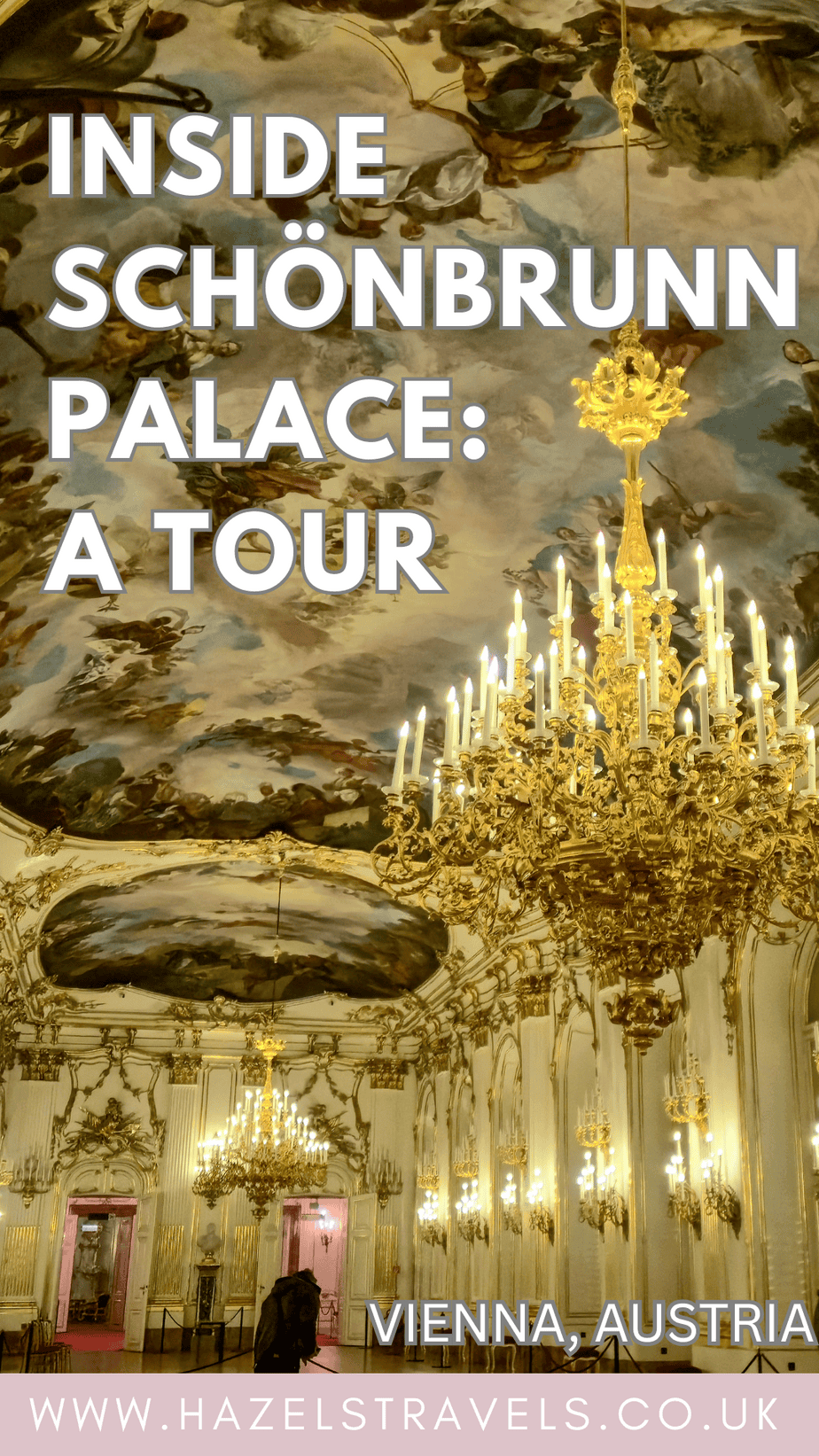
Pin This After-Hours Schönbrunn Guide 📌
Thinking about booking a Schönbrunn Palace after-hours tour? Save this guide to see what it’s really like once the palace closes to the public.
👉 Looking for practical travel tools? Check out my Travel Resources page.
Tags: Austria, Schönbrunn, Vienna
Leave a Reply