I visited the Shoes on the Danube Bank on a cold, grey afternoon, the kind where the city feels slightly muted. The sky was low and colourless, the ground damp from recent rain, and the Danube moved past without ceremony. It wasn’t dramatic weather, exactly. Just heavy. Flat. Unforgiving.
The shoes sit quietly along the river’s edge, unguarded and unannounced. You come upon them almost by accident, especially if you’re walking without a map. Sixty pairs of iron shoes, fixed in place, facing the water. Some look worn. Some look formal. Some are small enough to stop you short.
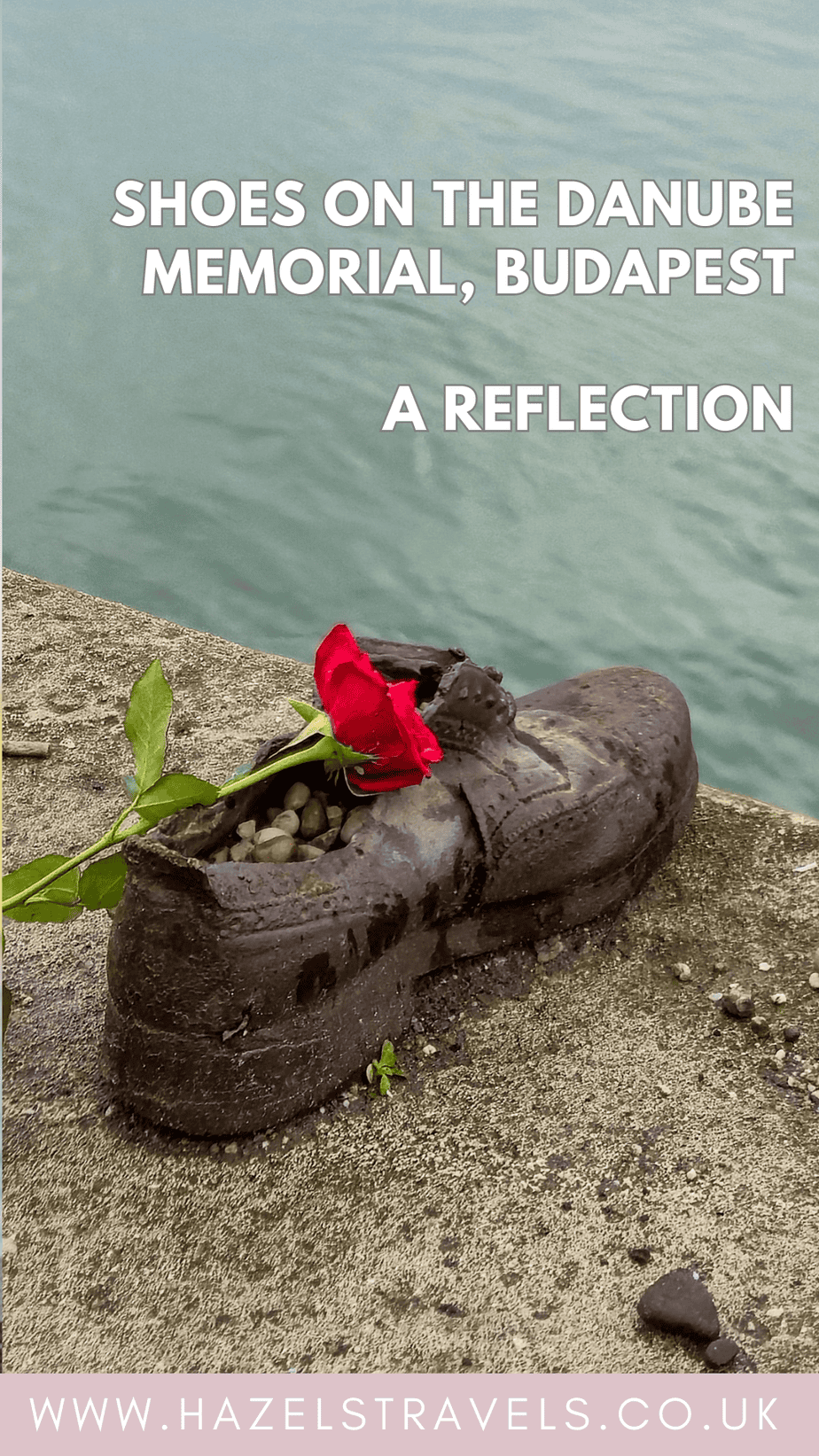
Some of the shoes held small offerings: roses laid carefully inside, candles melted down into the iron. Signs that people had stopped here before me and left something behind.
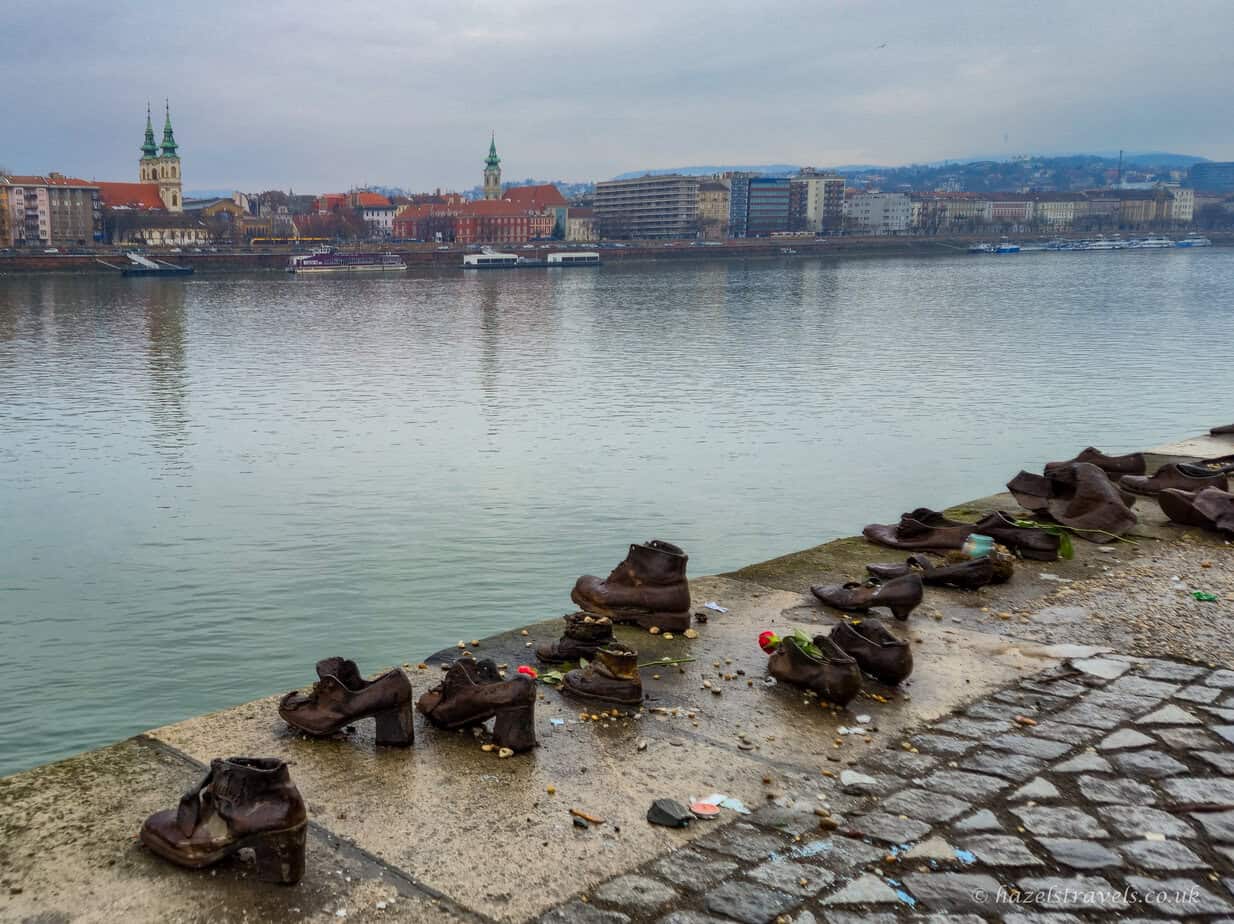
The memorial marks the spot where Jewish people were shot on the banks of the Danube during World War II, forced to remove their shoes beforehand because they had value.
There’s no obvious place to stand. No designated viewing point. You just… arrive.
People slow down instinctively here. Conversations drop off. Even the rhythm of footsteps changes, as if the pavement itself demands a different pace. I noticed how few people spoke, and how no one stayed for very long. Not because it felt rushed, but because lingering didn’t feel like the point.
Photographing a Memorial
I wasn’t sure whether to take a photo.
That hesitation surprised me. I photograph constantly when I travel. Architecture, streets, details, weather. But here, the act of capturing something felt different. I tried to frame the shoes up against the river, aware of the wet stone beneath my feet and the dull light flattening everything it touched. The shoes weren’t beautiful. They weren’t meant to be. They were stark, ordinary, and deeply unsettling.
I took a few photographs, carefully, then stopped. It felt like enough.
The Danube didn’t look dark or dramatic that day. It was pale and flat under a grey sky, moving steadily past as if nothing had happened here at all. That ordinariness was unsettling in its own way.
It didn’t offer comfort either. It was easy to imagine how cold it must have been here in winter, how quickly the river would have swallowed sound. The city carried on just metres away, trams rattling past, traffic flowing, life continuing with complete indifference.
That contrast is what stays with me.
Budapest is a city that wears its history visibly, but here it doesn’t perform it. There’s no grandeur, no scale to soften the impact. Just shoes. Just absence. Just the river.
I stood there for a few minutes longer than I meant to, watching people approach, pause, and step back again. No one posed. No one smiled. No one tried to turn it into something shareable. It felt, quietly, like a collective agreement.
This wasn’t a place to consume.
After the Shoes
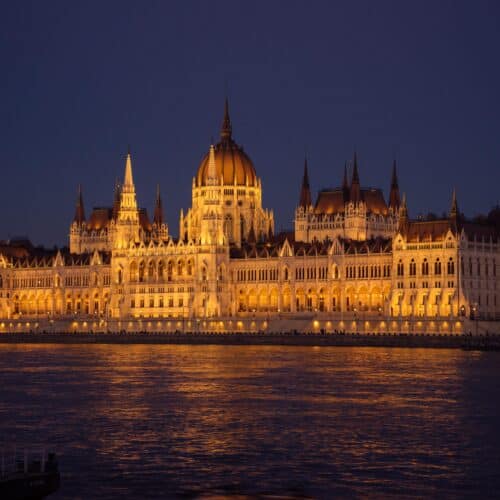
When I eventually moved on, the rest of the city felt louder, brighter, almost impatient. Cafes steamed up their windows. Bridges glowed. The Parliament rose theatrically out of the dark. Budapest is very good at spectacle, especially at night. But the shoes resist that. They sit low to the ground, exposed to rain, frost, and time.
Later, when I looked back at the photos, they didn’t feel like souvenirs. They felt more like reminders of where I had stood. Of how the river had looked that day. Of how quickly I had wanted to look away, and how important it was not to.
Some places don’t ask for interpretation or explanation. They ask only that you stop, notice, and leave without resolution.
The shoes on the Danube do exactly that.

Leave a Reply