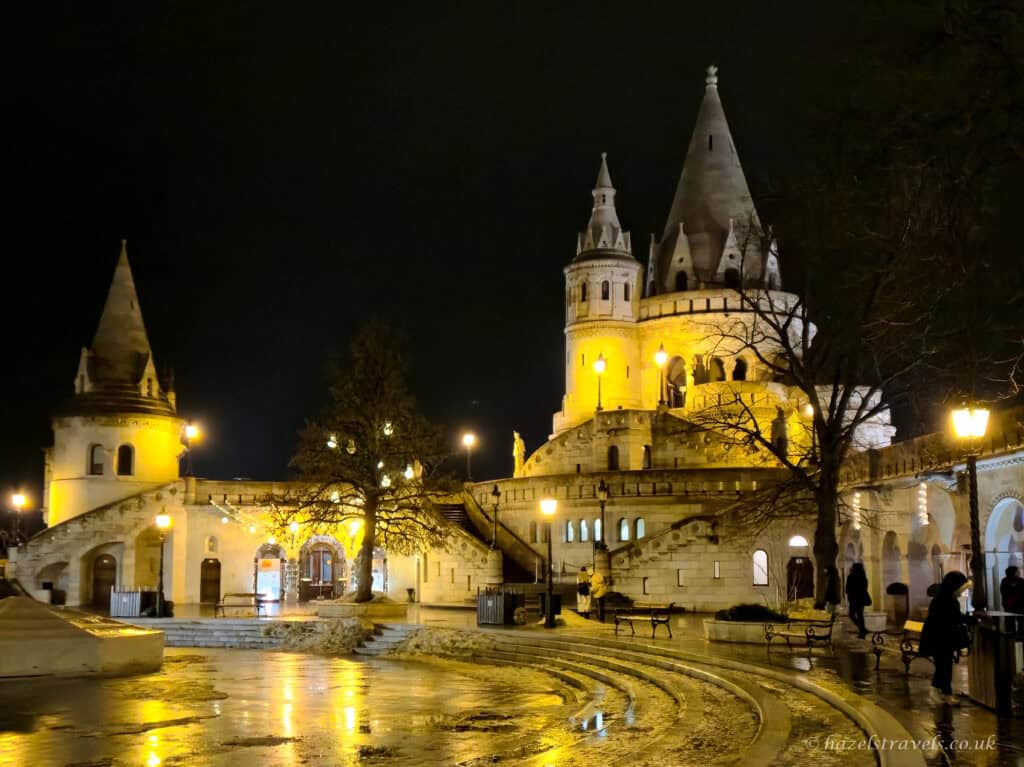
Budapest is beautiful by day, but Budapest at night feels cinematic. Buildings glow, the Danube turns into a mirror, and familiar landmarks slow down, becoming quieter and more theatrical after dark.
I may earn a small commission if you make a purchase using my affiliate links.
I’m Hazel (a British travel blogger), and I visited Budapest on a short winter stop as part of a wider European trip. With limited daylight and even less time, much of what I experienced happened in the evening – and that turned out to be part of the magic rather than a drawback.
This isn’t a checklist or a guide to everything you can do after sunset. It’s a reflection on how Budapest at night feels when time is tight, the air is cold, and the city reveals itself through light, shadow, and atmosphere.
Along the Danube After Dark 🌉
Walking beside the Danube at night is one of the easiest ways to experience Budapest at its most dramatic. The landmarks line up along the water, lights ripple across the surface, and the city feels expansive rather than busy.
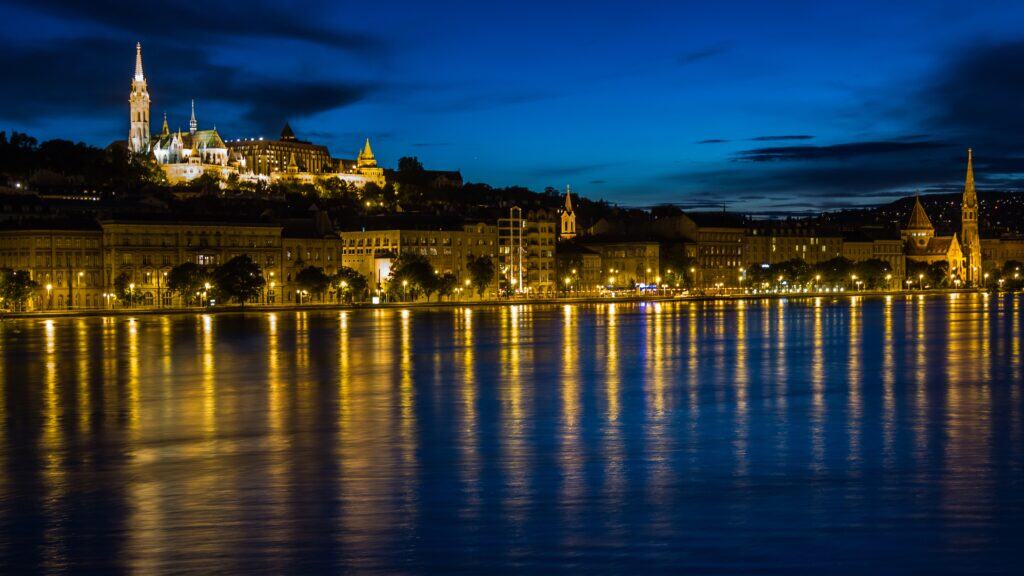
The river acts like a stage, reflecting the buildings back on themselves. Even a short evening walk gives you a strong sense of Budapest’s scale and elegance, without the crowds or the pressure to rush.
The Parliament, Lit Like a Stage Set 🏛️
The Hungarian Parliament Building is spectacular in daylight, but at night it becomes something else entirely. Floodlit and reflected in the Danube, it feels theatrical, almost unreal.
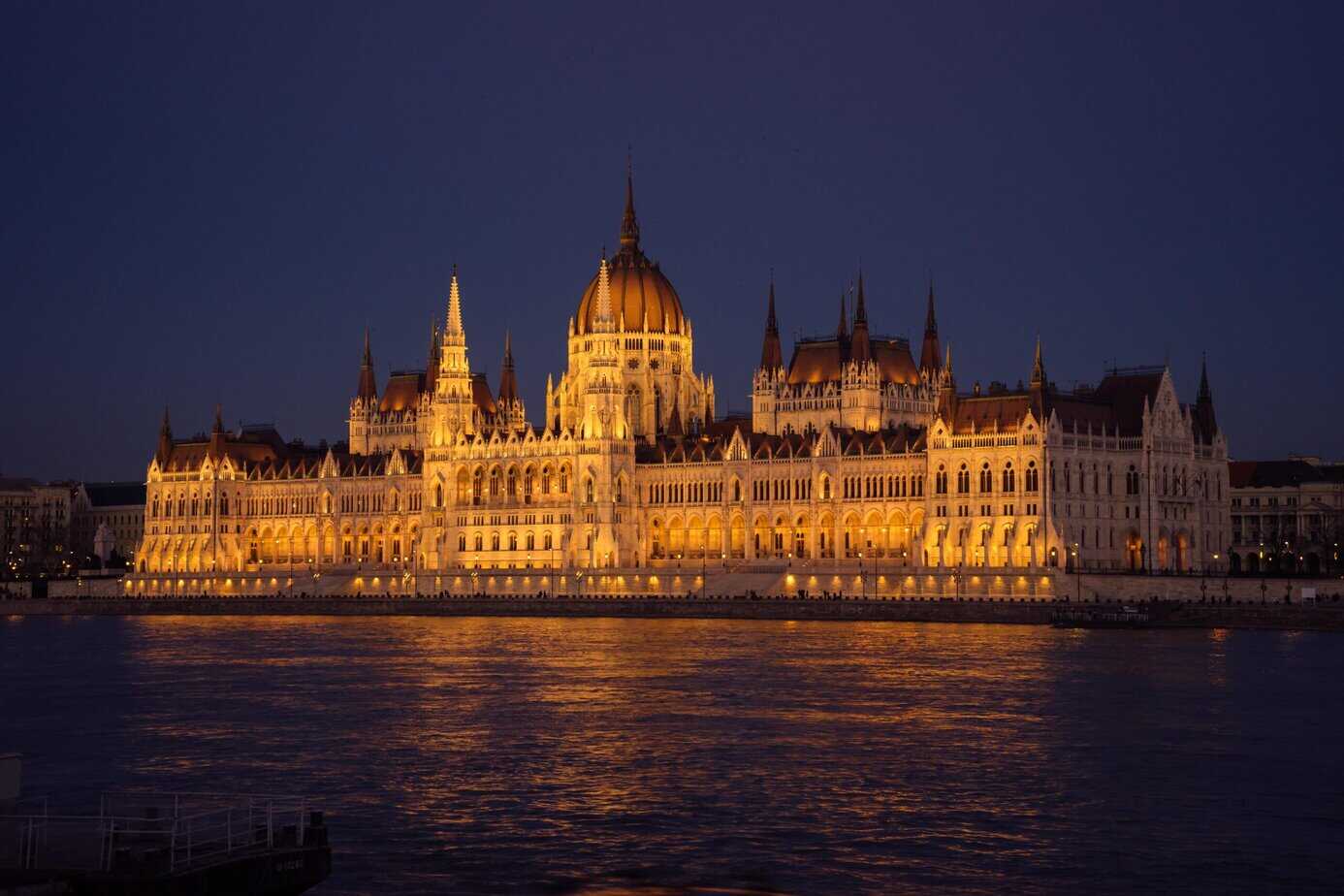
This is one of those landmarks that rewards lingering. Even in drizzle or cold, it draws your attention and holds it. You do not need to go inside or know the history in detail. Just standing nearby is enough to feel its presence.
An Unexpected Gothic Neighbour
Directly opposite the Parliament, the Ministry of Agriculture often catches people by surprise. With its ornate facade, pointed towers, and neo-Gothic detailing, it looks every bit as grand as its more famous neighbour.
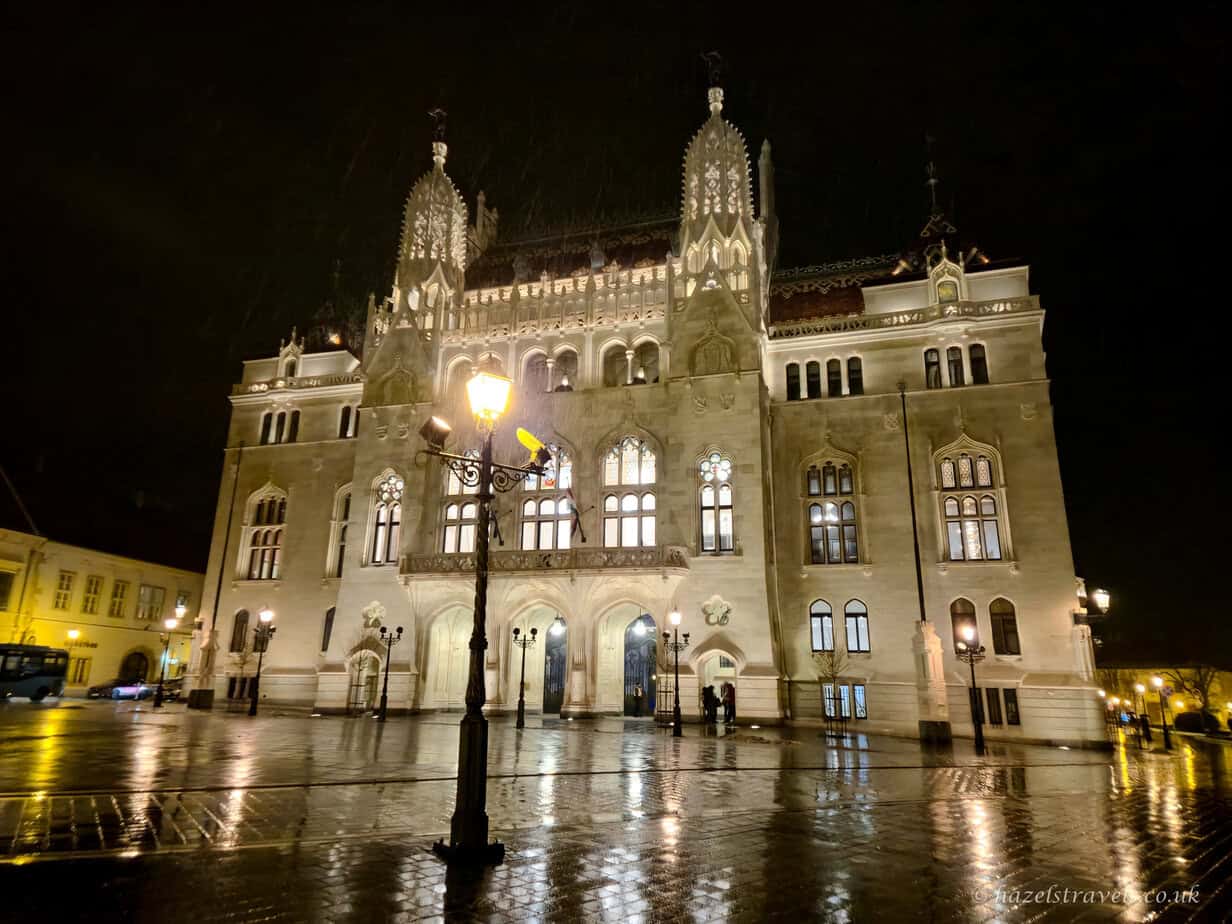
At night, especially after rain, the wet pavement reflects its lights beautifully. It is easy to assume it is part of the Parliament complex, but it stands on its own, quietly impressive and often overlooked.
Crossing the Chain Bridge at Night 🚶♀️
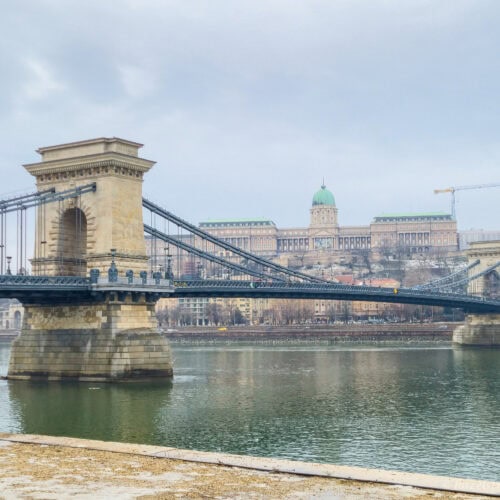
Crossing the Chain Bridge after dark feels quietly iconic. The lamps stretch ahead, the stone lions keep watch, and the views open up on both sides of the river.
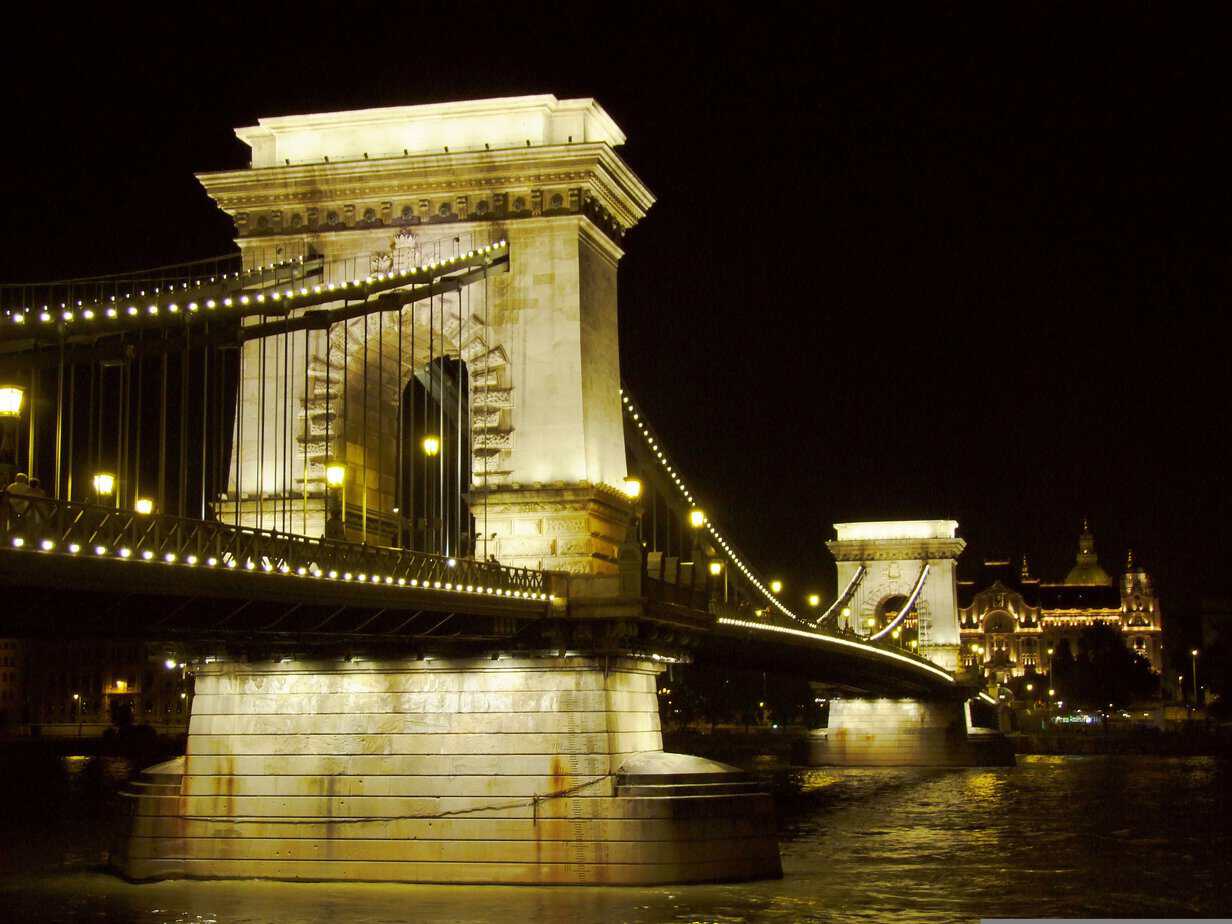
It is the kind of walk where you naturally slow down without realising you have. The city unfolds around you, and the balance between Buda and Pest suddenly makes sense.
The Opera House After Dark 🎭
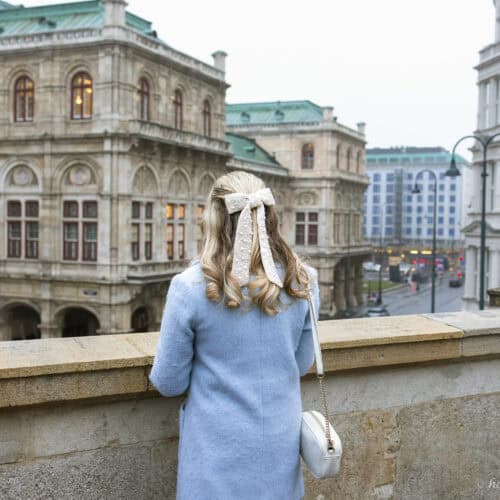
The Hungarian State Opera House feels made for the evening. Lit in deep golden light, its ornate façade looks almost theatrical against the dark sky.
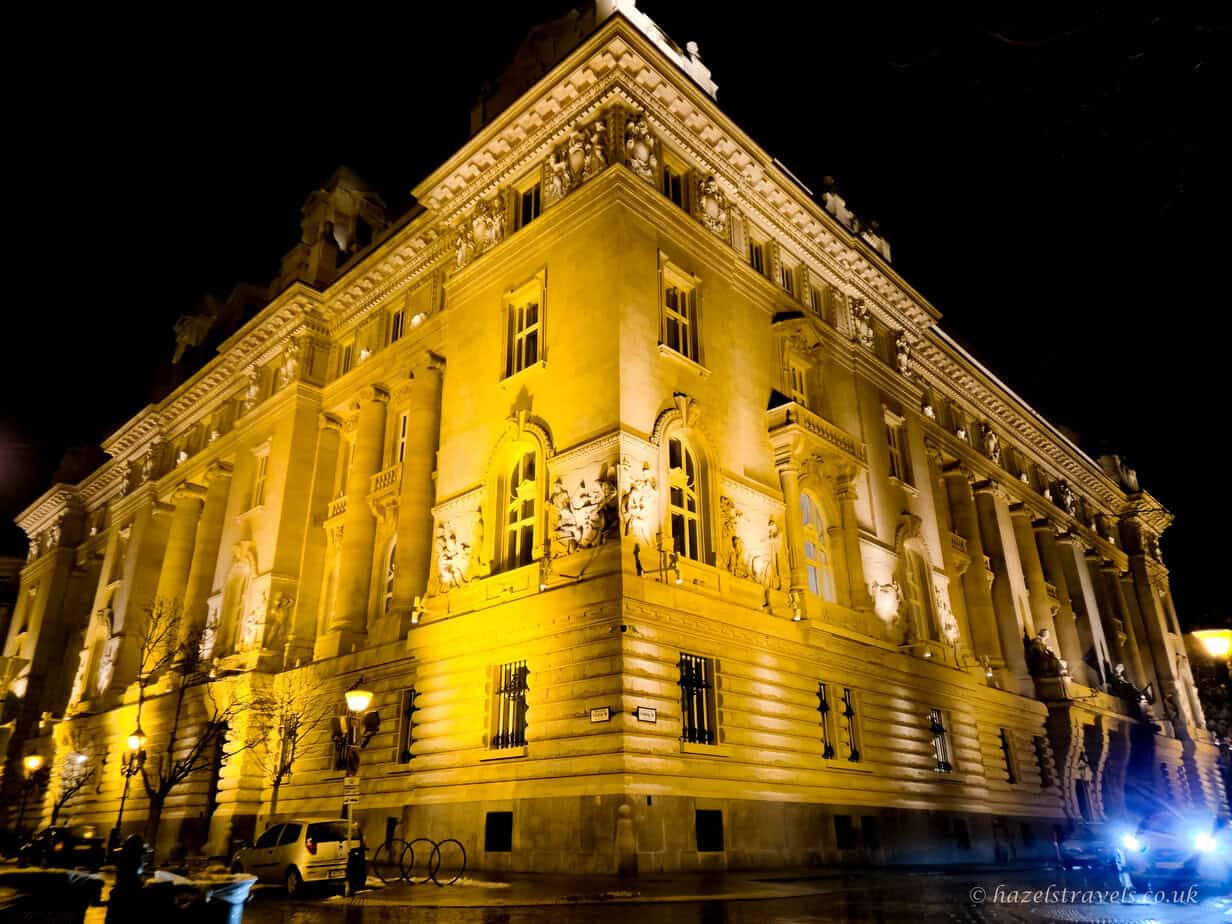
I passed it on a cold winter night, when the streets were already quiet and the light had long faded. The building is stunning at night.
St. Stephen’s Basilica at Night ⛪
The St. Stephen’s Basilica is another landmark that feels especially powerful after dark. Floodlit in warm gold, its vast facade and twin towers glow against the night sky, drawing people into the square even on cold evenings.
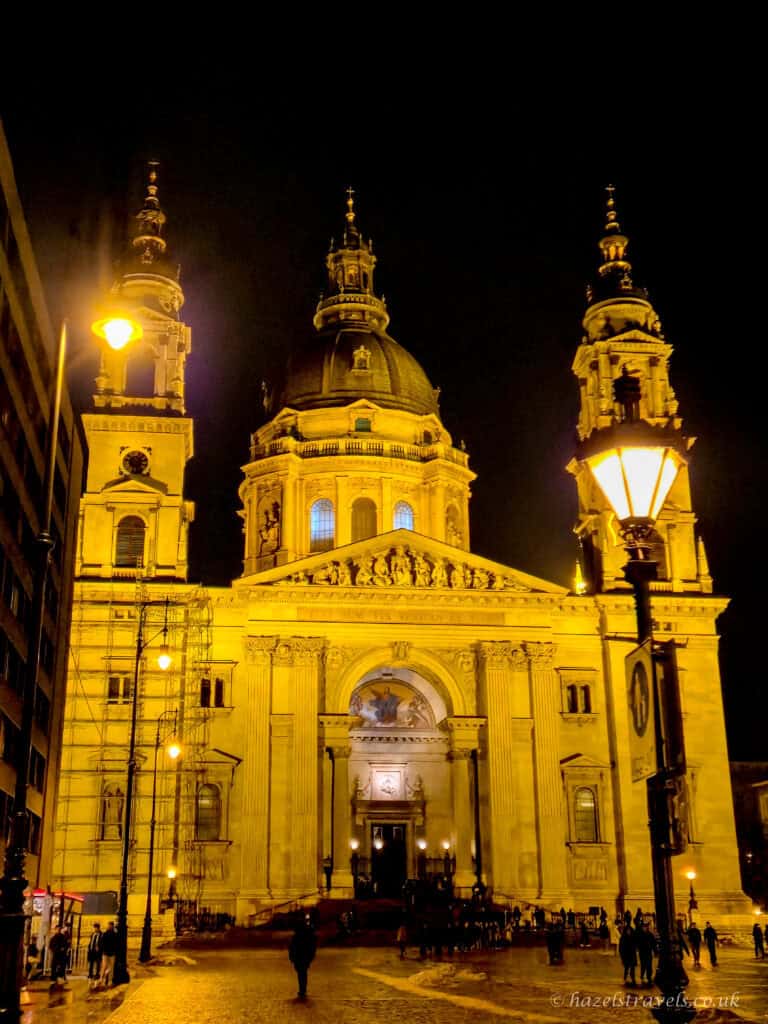
In daylight, the Basilica is impressive. At night, it feels grander and more solemn, its scale softened by shadow and light.
Castle Hill After Dark 🏰
The climb up to Buda feels different at night. There are fewer people, deeper shadows, and a sense of distance from the city below.
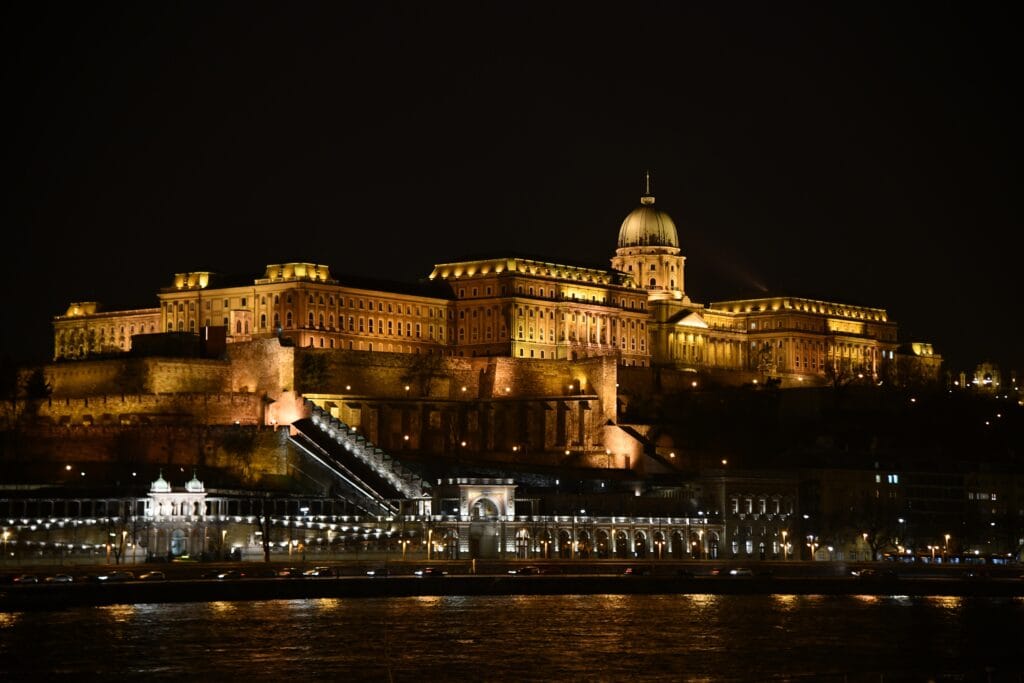
From here, Budapest spreads out in lights rather than landmarks. The noise fades, the perspective widens, and the city feels more contemplative. Even in mist or low cloud, the atmosphere is unmistakable.
Fisherman’s Bastion by Night ✨
Fisherman’s Bastion feels almost dreamlike after dark. The white stone glows softly, the crowds thin out, and the terraces become places to pause rather than pose.
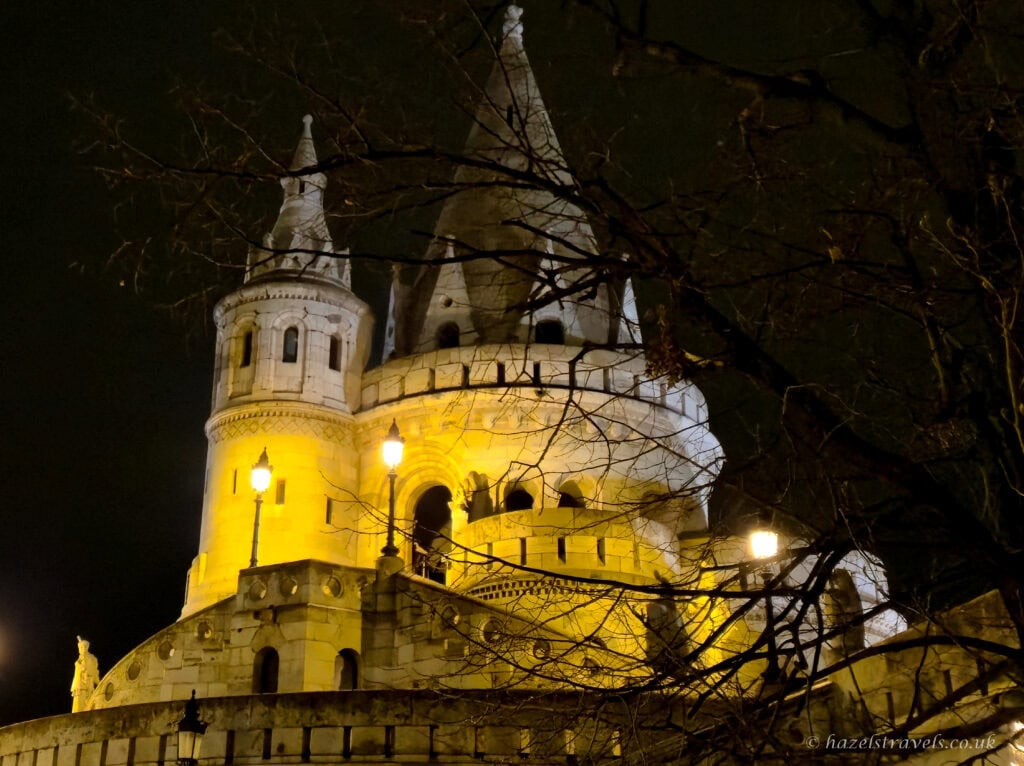
From here, the Parliament lines up perfectly across the river, glowing against the darkness. It is one of the most memorable viewpoints in the city, and at night it feels calmer and more personal.
Matthias Church in Low Light ⛪
Right beside Fisherman’s Bastion, Matthias Church looks especially striking at night. The patterned roof tiles catch the light in unexpected ways, and the Gothic details stand out more clearly than they do during the daytime bustle.
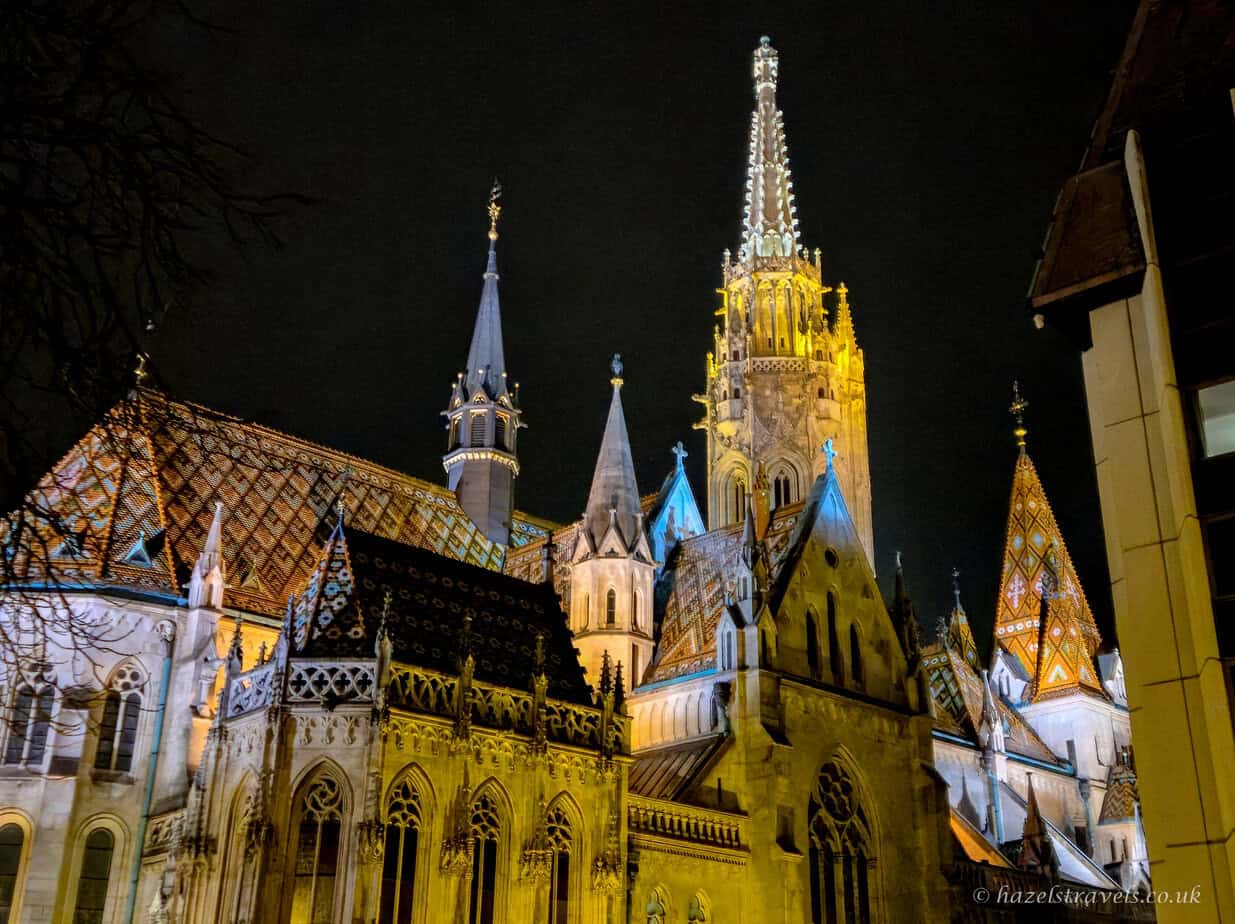
Even without going inside, it is a place that invites a pause. The contrast between the quiet square and the illuminated details makes it feel timeless.
A Different Way to See the City 🌙
Budapest is a city that understands drama. Its landmarks are designed to be lit, reflected, and admired from a distance. At night, imperfections soften, and atmosphere takes over.
The pace slows. The crowds thin. The city feels less performative and more lived in. For short visits especially, evenings can feel fuller and more meaningful than rushed daytime sightseeing.
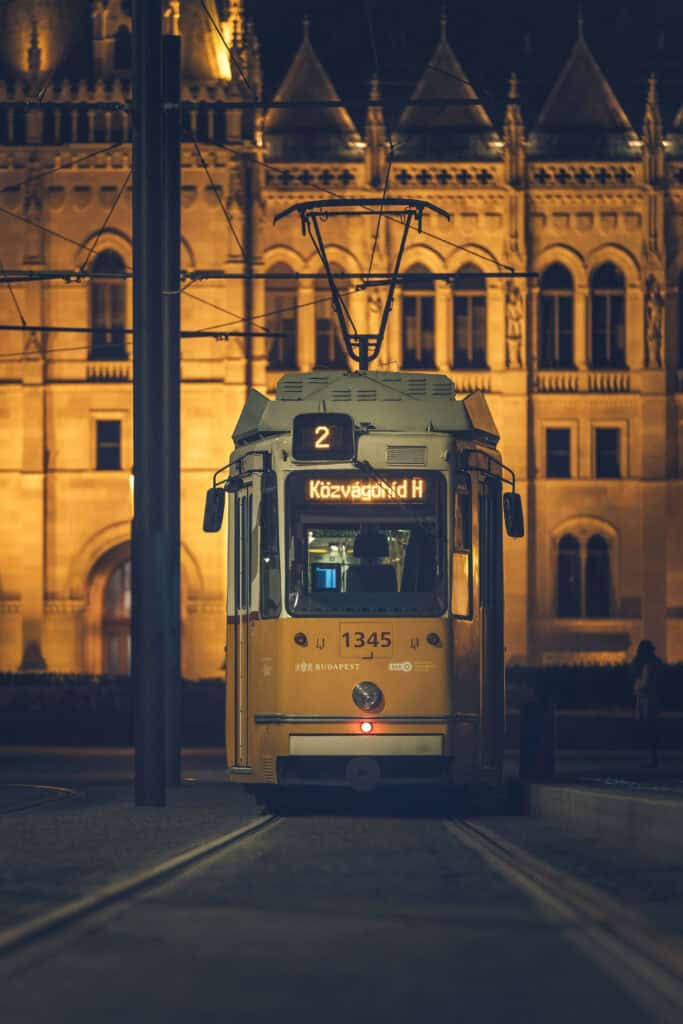
Budapest at night is not about ticking off sights. is not about ticking off sights. It is about mood, movement, and letting the city reveal itself gradually.
If you only see Budapest after dark, you have not missed it. You have simply seen a different side of it.
Map of Night-Time Landmarks 🗺️
To help you visualise the route, these night-time landmarks cluster naturally into a few walkable areas.
Along the Danube and Kossuth Lajos Square you will find the Hungarian Parliament Building and the Ministry of Agriculture, both beautifully lit and close together.
Heading across the river via the Chain Bridge brings you towards Castle Hill, where Fisherman’s Bastion and Matthias Church sit side by side above the city.
In Pest, the Hungarian State Opera House and St. Stephen’s Basilica are an easy walk apart, especially atmospheric in the evening when the streets quieten.
FAQs About Budapest at Night ❓
Common questions about exploring Budapest at night.
Is Budapest safe to walk around at night?
Budapest generally feels calm and walkable in the evening, especially around central landmarks and well-lit areas. As with any city, it is sensible to stay aware of your surroundings and stick to main streets if you are unsure.
Is winter a good time to visit Budapest?
Winter has shorter days, but that is part of its charm. Many landmarks are beautifully illuminated, and the city feels less crowded. Cold evenings suit slow walks, warm food, and atmospheric views.
Do I need to book anything to see Budapest at night?
No bookings are needed for night walks or outdoor landmarks. Many of the most memorable moments come from simply wandering, pausing, and taking in the light and reflections.
Can you see the main sights if you only go out in the evening?
Yes. Budapest is unusually well suited to night-time sightseeing. Major landmarks are floodlit, clearly visible, and often quieter after dark.
If You Enjoyed This, You Might Also Like ✨
If this reflective, short-visit approach appeals, you might enjoy reading:
Is One Day in Budapest Worth It?
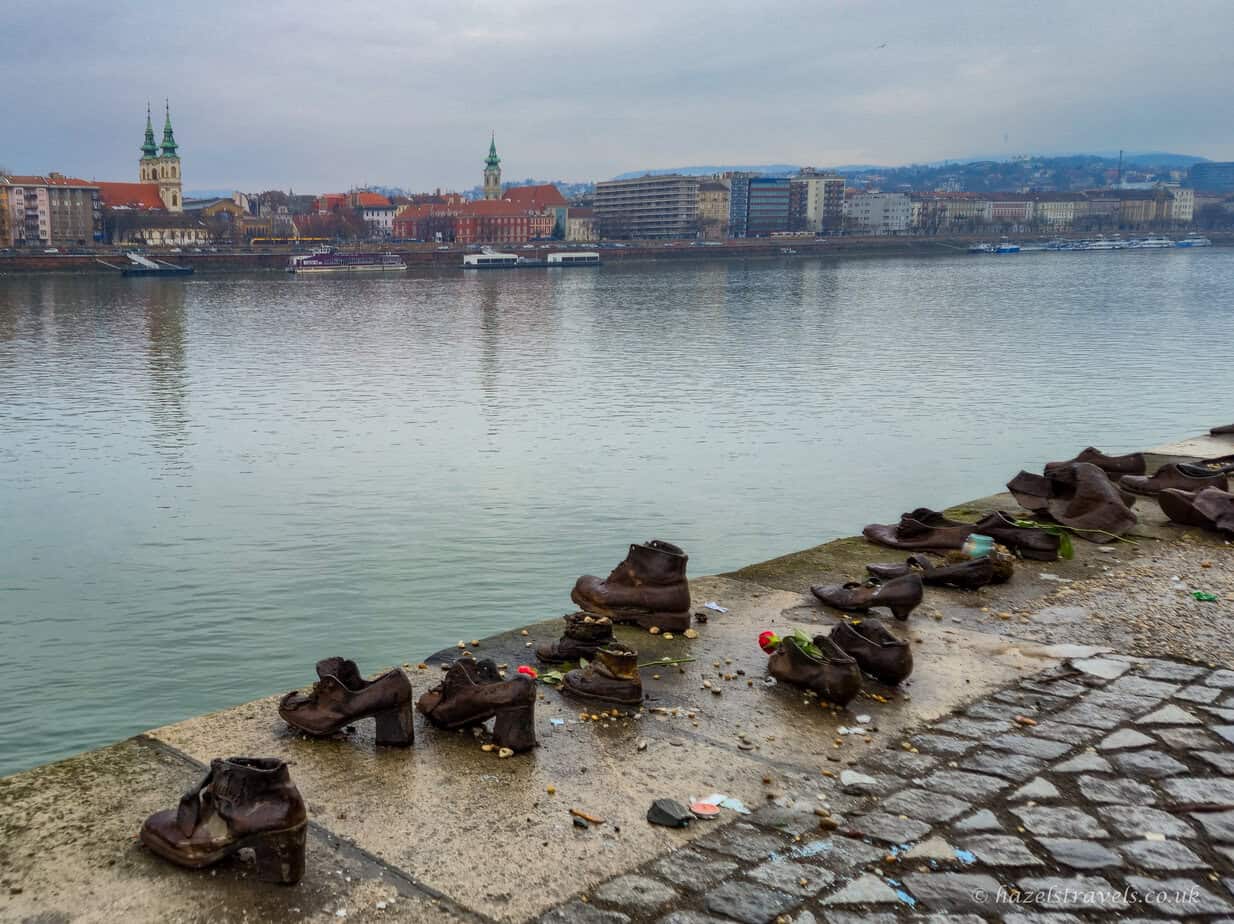
Standing Still at the Danube Shoes Memorial, Budapest
Which Danube Capital Is Best for You?
Things to do in Budapest, Hungary: Main Highlights 🇭🇺
Each looks at cities through experience rather than checklists, and pairs well with a slower travel style.
Save This for Later 📌
Planning a winter trip, a short break, or an evening wander? Save this post to Pinterest so it is easy to find when you are mapping out your route.
Budapest after dark is the kind of experience that lingers, and it is worth coming back to when you need inspiration.
👉 Looking for practical travel tools? Check out my Travel Resources page.
Tags: Budapest, Central Europe, Danube Cities, Hungary
Leave a Reply